Ultimate Yunnan Travel Guide 2026 | 18 Must-Visit Destinations, Itineraries & Tips
Why Yunnan Is a Traveler’s Paradise
Yunnan has always felt to me like a place where the sky keeps repainting itself. The clouds drift low and full, shifting the color of the mountains from one moment to the next. A beam of light slips across a lake, and suddenly the whole landscape breathes differently.
For first-time visitors, there’s usually the same quiet shock:
this corner of China gathers seasons, cultures, languages, mountains, lakes, and rainforests into one astonishing piece of land.
When you stand in Yunnan, the air has a calm generosity to it. Life moves at a pace that quietly rebels against the world’s obsession with “fast,” yet it never feels slow in a dull way. It feels intentional. Balanced. As if the land is whispering,
you don’t have to rush; you’re allowed to feel again.
Before coming here, many international travelers start with the factual introduction on Wikipedia — I did the same on my first trip:
Yunnan – https://en.wikipedia.org/wiki/Yunnan
It’s a great overview: ethnic diversity, dramatic geography, UNESCO-level biodiversity, alpine to tropical climates…
But the real Yunnan is softer, deeper, and infinitely more human than any page can capture.
When you walk in Dali, those facts turn into sensations.
The wind carries the smell of the lake.
The stone alleys glow under late-afternoon sun.
People smile like they have time — real time — to look at you.
I remember sitting by Erhai Lake when an elderly woman sat next to me. She told me that living near the water helps her live longer. In that moment, I understood something:
Yunnan isn’t just beautiful; it rearranges your sense of what a good life feels like.
Lijiang offers another rhythm entirely. Wooden houses framed by mountains, music drifting from narrow lanes, Naxi elders inviting you to sit and talk as if you’ve known each other for years.
And then there’s Shangri-La.
Morning light there doesn’t rise; it unfurls — gold and cold and wide. Every breath feels like it resets your system.
Travel south to Xishuangbanna, and you step into a rainforest pulse. The air thickens, the plants almost glow, and you suddenly understand why this region holds some of the richest biodiversity on earth.
Yunnan is endlessly varied, endlessly generous.
You don’t need perfect planning.
You don’t need to rush between landmarks.
You just need to show up — open, curious, unhurried — and the place will take care of the rest.
Maybe that’s why so many travelers leave a quiet room in their hearts for Yunnan, even long after the trip ends.
Ultimate Yunnan Overview | 18 Must-Visit Destinations
If it’s your first time visiting Yunnan, you might feel overwhelmed by all the different itineraries: 3-day tours, 5-day tours, 8-day tours… Many attractions overlap, and it’s hard to know where to start. As someone who studied Chinese medicine in Kunming and has traveled through Yunnan three times, I want to share a clear way to approach the province: Yunnan’s most worthwhile destinations can be divided into four tiers, helping you capture the essence while leaving room for deeper exploration.
Top 4 Essential Destinations | Must-See Highlights
These are the most iconic destinations in Yunnan, combining breathtaking landscapes and rich cultural experiences. No matter how many days you have, they’re absolutely worth visiting.
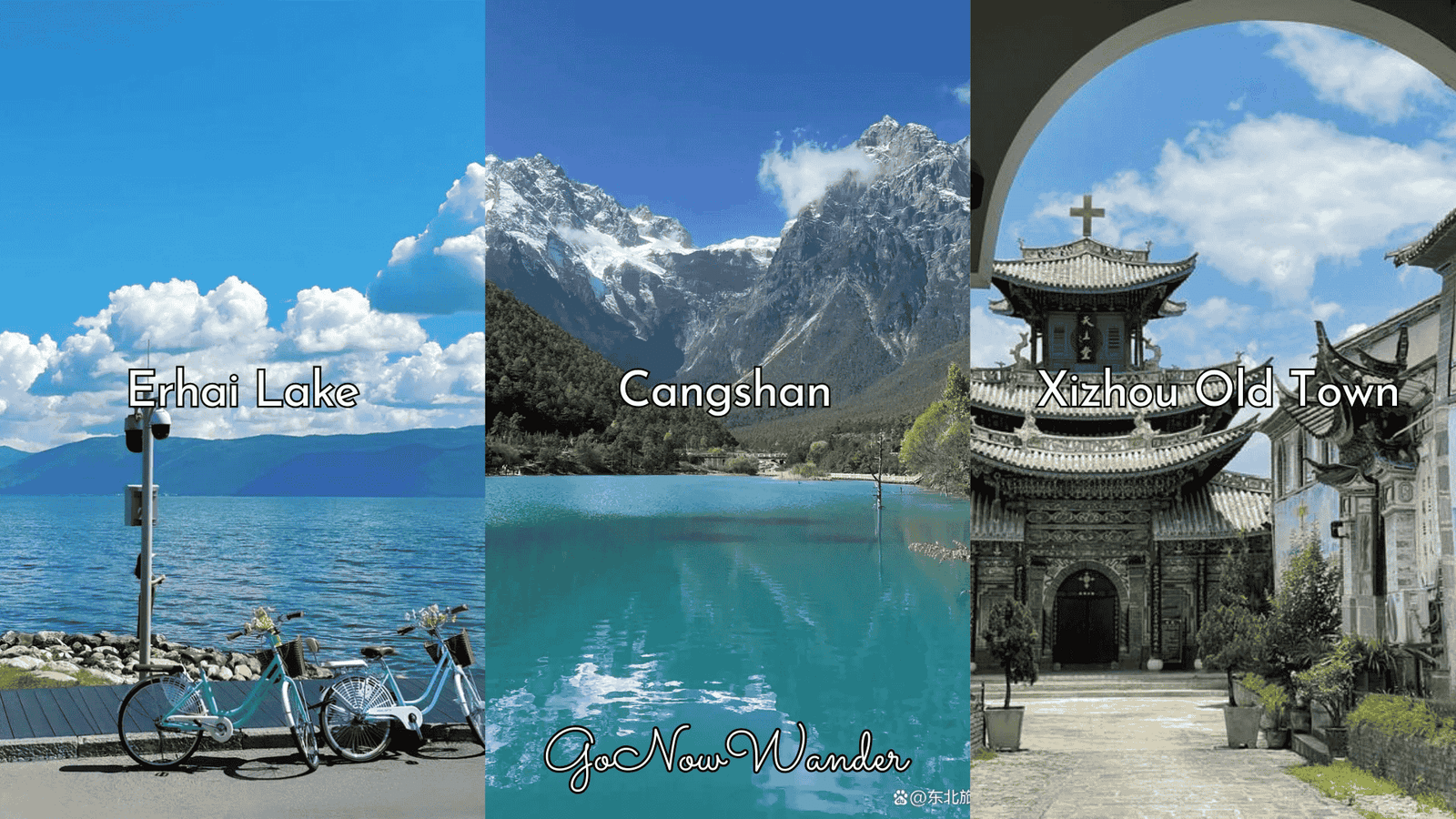
- Dali: Erhai Lake, Cangshan Mountain, slow living, Bai culture. Perfect for slow travel and photography. Recommended stay: 3–5 days.
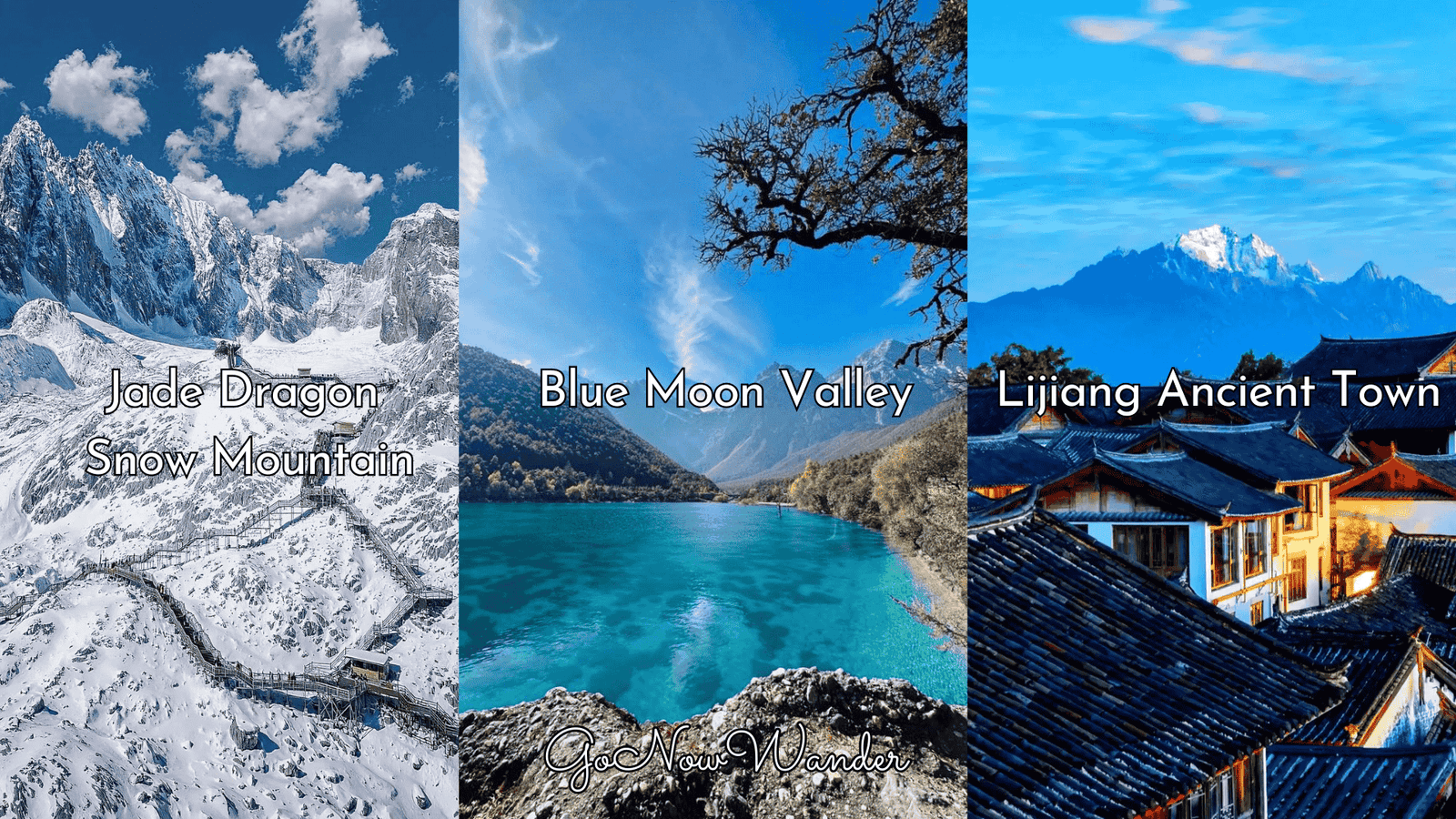
- Lijiang: Ancient town, Jade Dragon Snow Mountain, Blue Moon Valley, Shuhe Ancient Town — a blend of three travel rhythms. Recommended stay: 3–4 days.
- Shangri-La: Tibetan landscapes, Pudacuo National Park, Songzanlin Monastery. Deep nature and cultural immersion. Recommended stay: 3–5 days.
- Xishuangbanna: Tropical rainforest, Wild Elephant Valley, Dai culture, botanical gardens. Rich in ecology and ethnic culture. Recommended stay: 2–4 days.
These destinations form Yunnan’s “core must-visit” experiences — the quickest way to understand its mountains, rivers, and ethnic diversity.
Gateway City | Kunming
Kunming serves as the main transport hub and entry point to Yunnan, but it also has its own charm: Stone Forest, Dianchi Lake, and a unique city lifestyle.
- If your time is limited, Kunming is ideal for a short stop to experience Yunnan’s blend of urban life and nature.
- Recommended stay: 1–2 days. For those interested in culture, botanical gardens, and night markets, a deeper experience of 3 days works well.
Deep & Essential Highlights | Yunnan’s Inland Secrets
For travelers who love slow travel, nature, and cultural exploration, these destinations offer Yunnan at its most profound:
- Tengchong: Volcanic hot springs, Heshun Ancient Town — a mix of wellness and historical culture.
- Lugu Lake: Serene lake scenery and Mosuo culture — ideal for slow travel and photography.
- Yuanyang Rice Terraces: Hani ethnic terraces — a perfect blend of culture and photography.
- Nujiang (Nu River): Canyons, pristine villages, and ethnic exploration.
- Tiger Leaping Gorge: High mountains, deep gorges, trekking adventures, spectacular views.
Typical stay: 2–4 days. Best for travelers interested in nature, ethnic culture, and outdoor activities.
Advanced / Specialty Destinations | For the Curious Explorer
If you’ve already covered the core and deep highlights, or want a more specialized, off-the-beaten-path experience, these destinations are excellent choices:
- Shaxi Ancient Town: Historic town along the Tea Horse Road.
- Meili Snow Mountain: Snow-capped peaks and photography paradise.
- Jianshui Ancient Town: Historic streets and cultural exploration.
- Luoping Canola Fields: Spring flower photography hotspot.
- Puzhehei: Karst lakes and rural scenery.
- Shika Snow Mountain: Alpine snow scenery and trekking.
- Cangyuan (Wa Culture): Authentic ethnic culture immersion.
These sites are not necessarily for first-time visitors, but they’re treasures for photographers, culture enthusiasts, and deep travelers.
Summary & Travel Recommendations
- First-time in Yunnan: Focus on the Top 4 Essential Destinations + Kunming (5–10 days).
- With more time and interest: Add the Deep & Essential Highlights (Tengchong, Lugu Lake, Yuanyang, Nujiang, Tiger Leaping Gorge).
- For specialty travel / photography / ethnic culture: Include the Advanced / Specialty Destinations.
This tiered approach allows you to experience the most worthwhile and complete 18 destinations in Yunnan, balancing pace and depth.
Yunnan is more than just a checklist — it invites you to slow down, feel the wind, the light, and the stories.
Next, let’s dive into detailed guides for all 18 must-visit destinations, each full of unique landscapes, cultural stories, and travel experiences, taking you step by step from the essential highlights to the hidden gems of Yunnan.
Table of Contents
Dali Travel Guide|Where the Wind, Light, and Stories Unfold Slowly
Dali: A Place Where the Wind Speaks First
The first time I arrived in Dali was during my early months studying Traditional Chinese Medicine in Kunming. I wasn’t yet used to Yunnan’s playful climate shifts, nor the way the air carried the scent of flowers even on ordinary streets. And I definitely wasn’t prepared for how gently a city could hold a traveler.
I came back a second time. Then a third. Each visit felt like reopening a well-loved book that somehow gains new pages every time. Dali isn’t just a collection of attractions; it’s a place where the heart finally exhales.
This guide gathers everything I’ve learned across my trips: the landscapes, seasons, culture, food, hotels, itineraries, and tiny moments that make Dali unforgettable for international travelers.
1. Scenery & Experiences|What Dali Feels Like
In Dali, the wind isn’t background noise. It’s the main character.
Erhai Lake sits like a still blue heart, and the wind is its pulse. Whether you arrive in spring to breathe in cherry blossoms and young grass, or in autumn to sip a steaming bowl of rice noodles beneath Cangshan’s ridge, Dali never lets you feel like “just a tourist.”
Across my three visits, these scenes still sit vividly in my memory:
- Cycling through Caicun at sunrise, as if the sun was climbing out of the lake
• A quiet boat ride after the rain, the lake smelling faintly of herbs and wet leaves
• Watching layers of cloud peel back slowly from a Cangshan cable car
Dali is a year-round destination, but the best seasons are March–May and September–November: gentle wind, generous sunlight, steady clouds.
Dali weather by season
- Feb–Apr: Blossoms everywhere; a dream season for photography
• May–Jun: Dramatic clouds, incredible mountain-lake light
• Sep–Nov: Clear skies, ideal temperatures; the perfect “live-like-a-local” season
• Winter (Dec–Feb): Crisp, quiet, fewer crowds; the secret season for deep experiences
Unmissable things to do in Dali
- Slow ride around Erhai Lake on an e-scooter
• A sailing or paddle-board experience on quiet days
• Cangshan hiking or taking the cableway into the clouds
• Bai-style tie-dye in Xizhou
• Caicun sunset
• Wandering Dali Old Town’s cafés, bookstores, and indie shops
My favorite ritual as a travel blogger: break the day into gentle pieces. A lakefront walk in the morning, a bowl of Bai-style cold chicken rice noodles in Xizhou at noon, and a sunset at Caicun to close the day. Dali deserves to be experienced slowly, not rushed through as a checklist.
2. Transportation & Culture|Slow Down to See the Real Dali
I always say Dali is the easiest place in Yunnan for foreigners to relax—really relax. Even when my Chinese was clumsy, locals guided me with a kind of soft, effortless hospitality.
How to get to Dali
Flights
• Dali Airport (DLU)
• Direct flights from Kunming, Guangzhou, Chengdu
• International travelers usually fly into Kunming first, then transfer
High-speed rail
• Kunming → Dali: about 2 hours
• Lijiang → Dali: about 1 hour
Within the city
- E-scooter rental is the most flexible option
• Ride-hailing apps are reliable
• Both the East and West sides of Erhai have scenic cycling routes
But the true Dali experience happens only when you slow your pace. Bai people live with a rhythm that feels like wind chimes—unhurried, light, quietly joyful. Sit in a courtyard with a glass of local craft beer, overhear neighbors discussing the day’s wind, and you’ll feel the city doesn’t rush to welcome you. It simply invites you to exist.
3. Food in Dali|Fresh, Clean, Brimming With Sunlight
Dali’s version of Yunnan cuisine tastes especially “clean,” as if polished by wind and lake air.
My personal must-eat list:
- Clay-pot fish: Erhai’s freshness brightens every spoonful
• Grilled rushan cheese: Milky, smoky, comforting
• Chickpea jelly: A bowl that tastes like pure summer
• Bai craft beer: Lighter and breezier than mainstream beers
And maybe it’s my TCM instincts, but I always end up drinking flower teas here—rose, jasmine, Dianhong. They all taste like sunshine filtered through mountains.
4. Culture & Local Life|Understanding Dali’s Soul
Dali is the heartland of the Bai ethnic group. Their aesthetic is naturally elegant:
- White-washed walls, stone, and warm wooden beams
• The Bai “Three Cups of Tea” ritual—bittersweet, reflective, memorable
• A relaxed, elemental approach to life: nature as lifestyle
Dali is also full of new settlers: artists, writers, digital nomads, musicians. Together they create a soft creative ecosystem that feels neither forced nor touristy.
5. Where to Stay in Dali|Foreign-Friendly Hotels
Over my three trips, I tried three different styles of stays.
Luxury Hotels
Hotel Indigo Dali
A beautiful modern stay with sweeping Erhai views, perfect for travelers who love calm, refined spaces.
The Westin Dali
Reliable international standards, great for first-time foreign visitors.
Cunchao Chunhui Seaview Hotel
A tasteful, design-driven lakeside stay.
Mid-range Boutique Stays
Haidilife / Wind Flower Snow Moon Culture Inns
Excellent English communication, warm design, peaceful courtyards. My second trip was in a boutique stay like this, where the sound of wind in the plants became its own kind of music.
Budget Options
Simple, clean guesthouses around the Old Town.
• Chains like Atour, Holiday Inn Express, Hanting
• Friendly hostels in Xizhou, many with English-speaking staff
These are the best places for experiencing “Dali daily life.”
6. How Long to Stay & Who Dali Is Best For
Recommended duration: 3–5 days
If you can, 4 days is the ideal rhythm.
Perfect for travelers who love:
- Slow travel
• Lakeside and mountain scenery
• Cafés, bookstores, local markets
• Light outdoor activities (hiking, cycling)
• Photography
• A softer, alternative lifestyle
Not ideal for
- Travelers who want to “speed-run” 20 attractions in 2 days
Honestly, Dali is the place where I always catch myself thinking:
Maybe I should stay just one more day.
7. Must-Do & Hidden-Gem Experiences (with Fees)
- Bai tie-dye workshop in Xizhou
• Dawn fog at Erhai around 6 AM
• Sunset behind the wheat fields of Xizhou
• Cangshan Cableway + cloud-sea views
• Creative weekend markets near the Old Town
Fees:
• Tie-dye workshop: 60–120 RMB
• Cangshan Cableway: 190–320 RMB depending on route
• Boat experience on Erhai: 150–400 RMB (varies by type)
8. Dali Travel Budget (RMB + USD)
Accommodation
- Luxury: 1200–2500 RMB/night (165–350 USD)
• Mid-range: 450–900 RMB/night (60–125 USD)
• Budget: 200–350 RMB/night (27–50 USD)
Food
- Average meals: 40–120 RMB
• Lakefront restaurants: 150–250 RMB
Transportation
- E-scooter rental: 80–150 RMB/day
• Taxi starting fare: around 8 RMB
9. Useful Tips for Foreign Travelers
- Sunlight is strong year-round
• Windy near the lake; big day-night temperature swings
• Summer showers appear suddenly
• Roads around the lake get slippery in rain
• No e-scooters allowed inside Old Town
• Visa/Mastercard increasingly accepted; WeChat/Alipay now allow international card binding
10. Best Photography Spots
- Caicun Pier at sunset (my top recommendation)
• South Gate of the Old Town in early morning light
• Wheat fields + Bai architecture in Xizhou
11. Easy Route Combinations
- Dali + Lijiang|5-day soft adventure
• Dali + Shaxi + Lijiang|6–7 days for culture lovers
• Dali + full Erhai loop|3–4 days slow-travel trip
Lijiang Travel Guide|Where Ancient Town Light Meets Snowy Mountain Shadows
1. Lijiang: A City Where Three Rhythms Converge
The charm of Lijiang lies in three distinct “speeds”:
- The slow pace of the ancient town
- The stillness of the snow-capped mountains
- The gentle rhythm of Lashi Lake
Every time I look up in Lijiang, it feels like a new postcard appears before my eyes:
- Sunlight brushing the eaves of the ancient town
- The snow mountain standing like a silent, massive guardian
- Sky so blue it feels freshly washed
Some moments have stayed vivid in my memory:
- On the Jade Dragon Snow Mountain cable car, the wind whispers stories you instinctively understand
- Shuhe Ancient Town at dusk, lights reflecting on the canals, quiet enough to not speak
- Riding a horse at Lashi Lake, the hoofbeats fall into rhythm with the wind
- Early morning streets of the ancient town, waking slowly like a city just stirred
Best Time to Visit Lijiang
Lijiang is great all year round, but the most ideal times are:
- March–June: Clear blue skies, perfect view of Jade Dragon Snow Mountain
- September–November: Golden autumn light, crisp air, perfect for photography
- Winter: Strong mountain presence, though days and nights are chilly
- Summer (July–August): Rainy season creates dramatic cloud formations, loved by photographers
Must-Do Experiences in Lijiang
- Jade Dragon Snow Mountain: Take the cable car straight to the Glacier Park
- Blue Moon Valley: Lakes so milky-blue you’d think you’re in Iceland
- Lijiang Ancient Town: Visit in early morning or evening, avoid noon crowds
- Shuhe Ancient Town: Quieter, more authentic Lijiang vibes
- Lashi Lake: Horseback riding, boating, and sunset views
- Baisha Ancient Town: Even more peaceful, local life experience
Lijiang is a “multi-speed travel city” — you can move fast or slow, depending on your mood.
Personal Travel Experience
1. Jade Dragon Snow Mountain: A Journey to the Clouds
The first time I went up Jade Dragon Snow Mountain was on a calm, sunny morning. I was in my first year studying Traditional Chinese Medicine in Kunming and feeling overwhelmed by my coursework. A friend suggested I go to Lijiang to breathe, but I didn’t expect to ascend above 4,500 meters.
As the cable car lifted off, Lijiang slowly receded beneath me, and the clouds parted like drawn curtains. The air became cold, light, and pure — I felt like the entire sky had just refreshed me.
When the cable car stopped, a vast white world lay quietly before me.
No noise, no flashiness, just stillness.
It felt like the mountain had waited millennia for humans to gaze upon it.
In that moment, I remembered a saying from TCM: “The beauty of heaven and earth speaks without words.”
Jade Dragon Snow Mountain embodies that.
A grandeur that requires no explanation.
Traveler-Friendly Tips:
- Essentials: Oxygen canister, warm jacket, sunglasses, sunscreen
- Best Season: November–March (clear mountain shapes), April–June (deep-blue skies)
- Advice: Go early to avoid lines and afternoon clouds
- Duration: 3–4 hours
Even if your schedule is tight, make sure to “carve out a day” for the mountain — it’s a dialogue between human and nature, not just sightseeing.
2. Blue Moon Valley: A Piece of Earth Painted in Milky Blue
No one told me the lake would be this blue.
Not palette blue, but a blue like the sky dropped a fragment onto the earth.
The first time I saw it, I froze for several minutes — it was surreal.
It looked like a high-resolution CG image or a color from a dream.
When I later visited Jökulsárlón Glacier Lagoon in Iceland, I realized Blue Moon Valley’s water was gentler, warmer — a gift from the Earth itself.
You’ll see milk-blue, peacock-blue, glacier-blue swirling together, cows calmly grazing at the lakeside, and mountains mirrored in the water, reflecting the sky again.
Advice for Visitors:
- Don’t rush
- Don’t just take photos
- Sit, breathe, let the blue reset your heart
It truly has that power.
3. Lijiang Ancient Town: Best Visited in Early Morning or Evening
My deepest memories of the ancient town aren’t from the bustling midday hours, but two extremes:
Morning:
The cobblestones still hold the cool of the night.
Shops half-open, owners sweeping and greeting you with a nod.
Coffee shops just lighting up, with the scent of freshly roasted beans in the air.
The entire town is as soft and gentle as a waking cat — unhurried, quiet, tender.
It makes life feel luxuriously slow. You can hear your own footsteps, your heartbeat, and even the stream flowing over the stones nearby.
Evening:
When lights illuminate the town, Lijiang wears a gentler face.
Warm light spilling on wooden eaves, bridges, and small groups chatting by the water.
Music drifts from alleys — soft, comforting, and never intrusive.
I often walk alone at night, feeling that life suddenly makes a little more sense.
Avoid Noon:
The crowds and harsh sunlight drown out the town’s soul.
To truly experience Lijiang, give it a “clean time” — early morning or evening.
2. Transportation & Local Culture
Lijiang is very traveler-friendly — easy to navigate and easy to connect with.
The first time I came, I asked directions in broken Chinese, and a local shop owner just said, “Follow me.”
That warmth is common here.
Transport:
Flight: Lijiang Sanyi Airport (LJG)
- Direct flights from multiple Chinese cities
- International travelers usually connect via Kunming or Chengdu
High-Speed Rail:
- Dali → Lijiang: ~1 hour
- Kunming → Lijiang: ~3 hours
Local Transport:
- Ride-hailing apps are convenient
- Walking is best in the ancient town
- Shuhe and Baisha: taxis or ride-hailing work well
Naxi Culture:
- People speak slowly
- Music is gentle
Atmosphere calm yet confident
Every time I visit, I feel my breathing deepen.
3. Food in Lijiang
Lijiang food tells stories: simple, warm, with a hint of mountain freshness.
Must-try dishes:
- Smoked Pork Ribs Hotpot: true “snow mountain warmth”
- Wild Mushroom Hotpot: as a TCM student, I can’t help but study each mushroom’s nature
- Naxi Grilled Fish: so fragrant you’ll want seconds
- Yak Yogurt: fluffy as a cloud
- Ba Ba (Rose or Savory): simple but extremely satisfying
Young locals also run charming cafés and tea houses — the vibe is half-arty, half-gentle.
4. Culture & Heritage
Lijiang’s uniqueness comes from three cultural layers: Naxi ethnicity, Tea Horse Road history, Snow Mountain reverence
- Naxi wooden architecture is warm and tactile
- Dongba script looks like painting
- Tea Horse Road history gives ancient streets depth
- Rich music culture (don’t miss a Naxi ancient music performance)
The first time I heard Naxi music, it felt like it could pierce through your thoughts.
5. Lijiang Accommodation
High-End:
- Hyatt Jinmao Lodge: huge windows with mountain views, awe-inspiring at sunrise
- Hotel Indigo Lijiang: quiet, steps from the ancient town
- Pullman Lijiang Resort: mountain-view rooms, beautiful courtyard, perfect for longer stays
Mid-Range / Boutique Inns:
- Hidden courtyard inns in Shuhe (good English service)
- Light-design inns in Baisha (artist community)
I stayed in Shuhe on my third trip — my most memorable experience was watching cats in the courtyard, not the sights.
Budget:
- Clean, safe guesthouses outside the ancient town: All Seasons, Hanting, Ibis
- Youth hostels in Shuhe (English-friendly)
6. Recommended Duration & Traveler Type
Stay: 3–4 days ideal
- 1 day: Ancient Town + Shuhe
- 1 day: Snow Mountain
- 1 day: Blue Moon Valley or Lashi Lake
- 4 days: perfect slow pace
Best for:
- Nature + history lovers
- Ancient town enthusiasts
- Photographers (snow mountains are photogenic)
- Travelers seeking boutique, quiet vibes
- Light outdoor activity lovers (horseback riding, hiking)
Not ideal for:
- Those rushing through attractions
- Travelers sensitive to high altitude
7. Must-Do & Offbeat Experiences
- Jade Dragon Snow Mountain Cable Car: 290–360 RMB
- Blue Moon Valley: 50 RMB
- Shuhe Ancient Town stroll: free (some experiences may cost extra)
- Lashi Lake horseback riding: 200–380 RMB
- Baisha Ancient Town murals: 30 RMB
8. Travel Budget
Accommodation:
- High-end: 1400–2600 RMB (~190–360 USD)
- Mid-range: 450–900 RMB (~60–125 USD)
- Budget: 180–350 RMB (~25–50 USD)
Food:
- 40–120 RMB/person
- Hotpot & specialty meals: 150–260 RMB
Transport:
- Taxi starting fare: 8–10 RMB
- Snow Mountain day trip transport: 80–120 RMB
9. Tips for Overseas Travelers
- Strong UV; snow mountains intensify sun exposure
- Book Jade Dragon Snow Mountain in advance
- High-altitude adaptation varies; pace yourself
- Nights in ancient town can be chilly
- International credit cards accepted in many shops
- No electric bikes inside ancient town
- Avoid peak holiday crowds
10. Best Photography Spots
- Jade Dragon Snow Mountain Glacier Park platform
- Blue Moon Valley lakeside
- Shuhe Ancient Town canal edges
- Lijiang Ancient Town Dongba Cultural Street at sunrise
- Baisha village snow mountain reflections
11. Suggested Nearby Itineraries
- Lijiang + Dali (5 days): Lake views + Snow mountain combo
- Lijiang + Shangri-La (4–6 days): From ancient town to Tibetan highlands
- Lijiang + Shaxi (5–6 days): Deep dive into culture and ancient towns
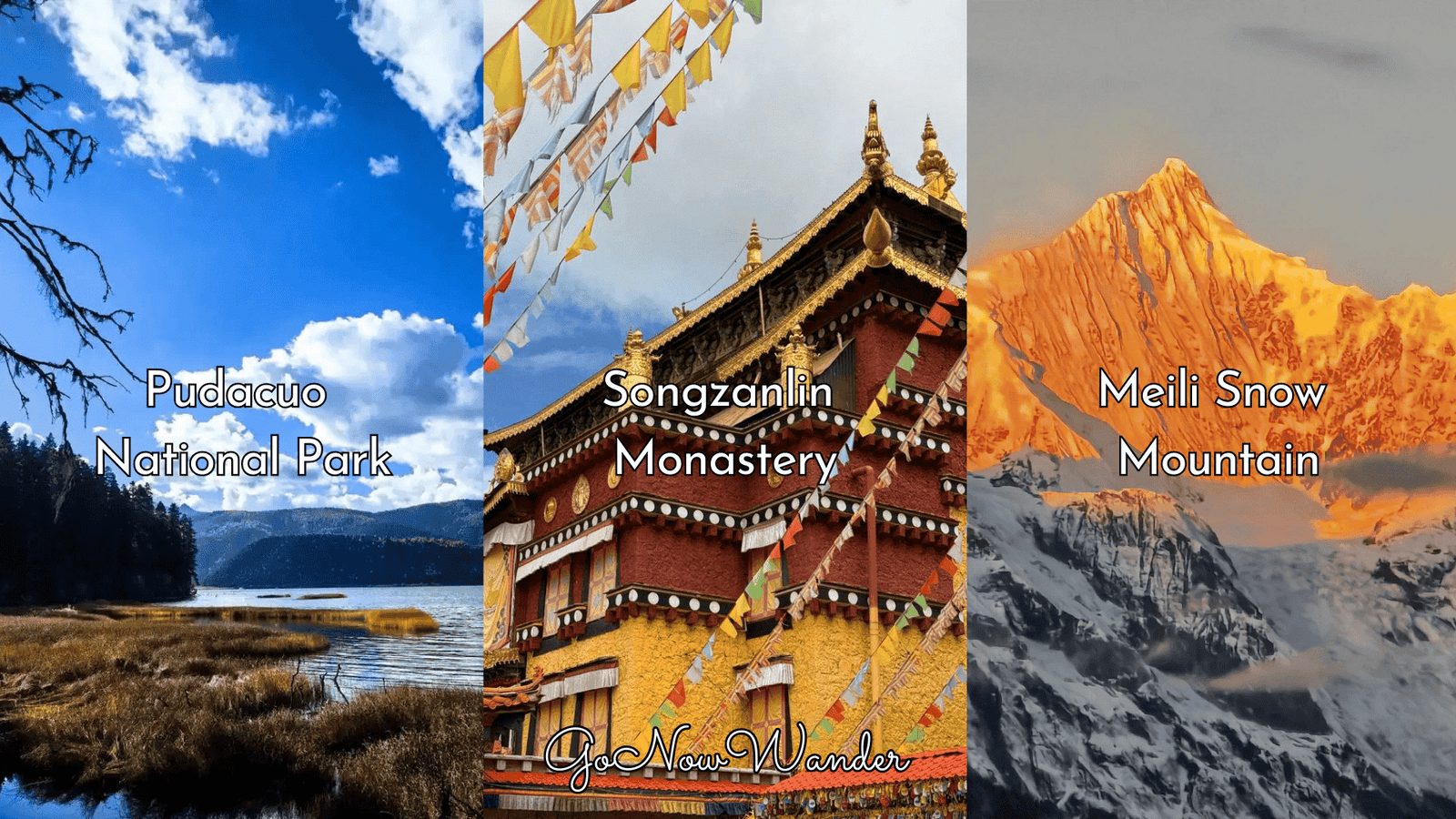
Shangri-La Ultimate Travel Guide|Breathe Slowly in the Tibetan Highlands
Shangri-La: Where Your Soul Slows Down
The first time I set foot in Shangri-La was in autumn, with the sky high and the clouds thin. I had just traveled from Lijiang, and the highland air hit me with a refreshing clarity—every breath felt like a deep reset for my lungs. The streets aren’t wide, but every cobblestone carries history. Shangri-La isn’t a bustling city; it’s like an old, wise cat, letting you slow down naturally.
For me, Shangri-La is the spiritual heart of Yunnan. Snow-capped mountains, Tibetan monasteries, grasslands, and ancient towns interweave here. Every inhale carries stories of wind, earth, and sky.
1. Scenery & Experiences|Mountains, Grasslands, Monasteries, and Lakes
Shangri-La has three main “rhythms”:
- Highland Snow Mountains – serene, awe-inspiring
- Tibetan Monasteries – solemn, mystical
- Pudacuo National Park – lakes, meadows, and forests
Some of my most vivid memories:
- Morning mist over Pudacuo lakes – water like frosted glass, reflections so clear you can almost read them
- Sunset at Songzanlin Monastery – the bell’s slow toll travels across the valley, pine scents carried by the wind
- Distant views of Meili Snow Mountain – peaks glistening in morning light, cold and majestic
Best Time to Visit Shangri-La
- May–June: green grasslands and crystal-clear lakes
- September–October: golden autumn light, perfect for photography and trekking
- November–March: snow peaks at their purest, but large day-night temperature differences
July–August: occasional rains, dramatic cloudscapes, a photographer’s dream
2. Must-Do Experiences
- Pudacuo National Park – hike or paddle among tranquil lakes and meadows
- Songzanlin Monastery – immerse yourself in Tibetan Buddhist culture
- Meili Snow Mountain – catch the first light or sunset for the most magical view
- Shangri-La Old Town – stroll its stone streets, soak in Tibetan town life
- White Water Terrace (Baishu Tai) – mineral terraces with vivid colors under the highland sky
3. Core Site Experiences – From My Travels
Pudacuo National Park: Breathing the Highlands
The first time I stepped into Pudacuo, I was stunned by the clarity of the lakes. The meadows spread like a soft green carpet, and the air carried hints of pine and damp earth. Walking slowly along the wooden boardwalk, I stopped to close my eyes and just listen to the wind. In that moment, the highlands seemed to whisper: slow down, and you’ll truly see the world.
Tips:
- Entrance Fee: 258 RMB (~36 USD)
- Best Time: Early morning or late afternoon for soft light
- Duration: Half a day to a full day
Songzanlin Monastery: Breathing with the Bells
Songzanlin Monastery is the largest Tibetan Buddhist monastery in Yunnan. I remember standing in the courtyard as monks rang the bell—slow, resonant, and calming. The pine-scented breeze touched my face. As a student of Chinese medicine, I could feel my body and mind fully relax.
Tips:
- Entrance Fee: 85 RMB (~12 USD)
- Best Time: Morning light is soft and perfect for photography
- Etiquette: Respect monastery rules, avoid loud talking
Meili Snow Mountain: The Sacred High Peaks
The first time I glimpsed Meili Snow Mountain from Shangri-La, the peaks gleamed silver in the early sunlight. The vast, silent mountains made me want to pause and pay my respects. Meili isn’t just a sightseeing spot—it’s a “sacred mountain” with its own breath and presence.
Tips:
- Best Viewing Time: Sunrise or sunset
- Fees: Free for distant viewing; hiking requires a local guide
Temperature: High-altitude, bring warm layers
4. Transportation & Local Culture
Getting There:
- Flights: Shangri-La Airport (DIG) – direct flights from Kunming, Chengdu
- By Land: Kunming → Shangri-La ~6–7 hours, Lijiang → Shangri-La ~4 hours
- Within Town: Walking in the Old Town is best; taxis or ride-hailing apps for other spots
Local Culture:
- Tibetan life moves at a gentle pace
- Prayer flags and mani wheels are everywhere
- Tibetan incense, horse caravan culture, and folk activities make the highlands feel alive
5. Food|Tibetan Flavors with Highland Air
Shangri-La cuisine is warm, hearty, and full of highland character:
- Yak Hotpot – steaming, flavorful, the perfect cold-highland comfort
- Qingke Tsampa (Barley Flour) – aromatic and traditional
- Tibetan Butter Tea – creamy, slightly salty
- Yak Yogurt – fluffy and rich
6. Culture & Heritage
- Wood architecture with warm tones
- Mani wheels and prayer flags are everywhere
- Tibetan Buddhist heritage at Songzanlin Monastery
- Tea Horse Road history enriches Old Town streets
7. Accommodation
Luxury:
- Songtsam Lodge – snow mountain views, serene and luxurious
- St. Regis Shangri-La – five-star comfort, excellent service
- Hyatt Regency Shangri-La – full amenities, central location
Mid-range / Boutique:
- Courtyard guesthouses in Old Town – English-friendly
- Pudacuo area boutique lodges – close to nature
Budget:
- Clean, safe guesthouses near Old Town
- Youth hostels with English support
8. Recommended Stay & Traveler Type
Duration: 2–4 days
- Day 1: Pudacuo National Park
- Day 2: Songzanlin Monastery + Old Town
- Day 3: Meili Snow Mountain distant view or nearby villages
Ideal For:
- Nature and highland scenery lovers
- Tibetan culture enthusiasts
- Photographers and trekking enthusiasts
- Slow-travel seekers
Not Ideal For:
- People sensitive to high altitude
- Travelers trying to rush multiple attractions
9. Must-Do & Hidden Gems
- Pudacuo National Park hike or paddle – 258 RMB
- Songzanlin Monastery early morning prayer – 85 RMB
- Meili Snow Mountain sunrise viewing
- Shangri-La Old Town folk markets – free
- Baishu Terrace short hike
10. Travel Budget
Accommodation:
- Luxury: 1,600–2,800 RMB (~220–380 USD)
- Mid-range: 500–900 RMB (~65–125 USD)
- Budget: 200–350 RMB (~25–50 USD)
Food:
- Highland restaurants: 50–150 RMB/person
- Street snacks: 20–50 RMB
Transportation:
- Taxis / ride-hailing: ~200–400 RMB/day
11. Travel Tips
- Strong UV, especially on mountains
- High-altitude sensitivity varies, pace yourself
- Wet roads in rainy season; hike carefully
- Walking is best in Old Town; e-bikes prohibited
- Alipay & WeChat increasingly accept international cards
12. Best Photography Spots
- Pudacuo lakes at dawn
- Songzanlin Monastery at sunset
- White Water Terrace mineral steps
- Old Town stone streets in morning light
- Meili Snow Mountain distant view
13. Suggested Combination Itineraries
- Shangri-La + Lijiang (4–6 days): Old Town pace + highland adventure
- Shangri-La + Daocheng Yading (7–10 days): Deep high-altitude exploration
- Shangri-La + Lugu Lake (5–6 days): Tibetan culture + lake & mountain scenery
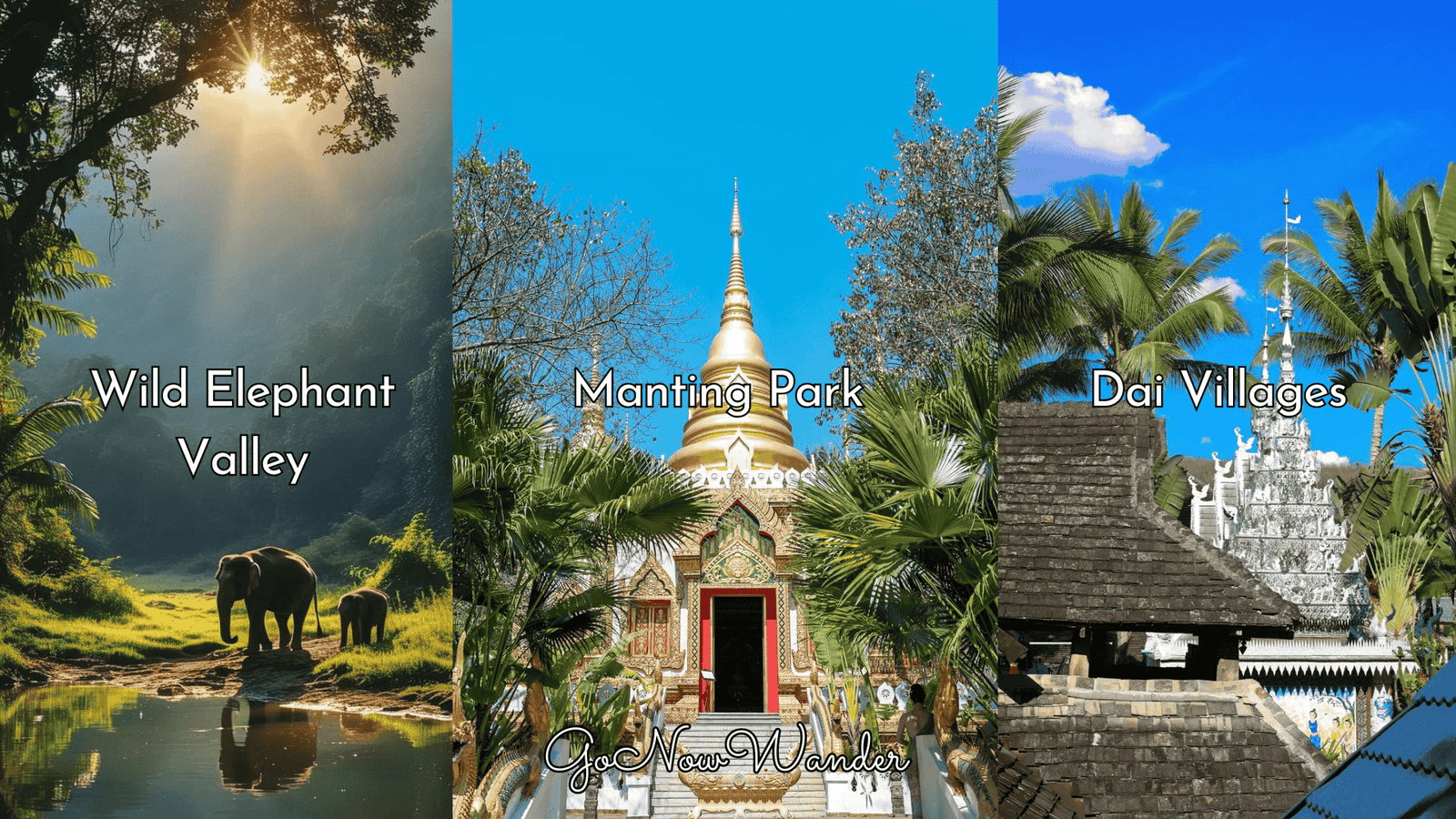
Xishuangbanna Ultimate Travel Guide|Tropical Rainforest, Wild Elephants & Dai Culture
Xishuangbanna: Where Life Pulses in Every Leaf
The first time I arrived in Xishuangbanna was in summer, right after traveling through Kunming and Dali. Stepping into this southern tropical city, I felt instantly awakened by the warm, humid air infused with the scent of wet earth and tropical plants. Sunlight filtered through dense foliage, creating golden patterns on the forest floor.
For me, Xishuangbanna is the most vibrant part of Yunnan. Rainforests, wild elephants, and Dai villages intersect here, and every step feels like tapping into the pulse of tropical life. Unlike the calm highlands of Dali or Shangri-La, Xishuangbanna overflows with vitality and lush greenery.
1. Scenery & Experiences|Rainforests, Wild Elephants, and Dai Villages
Xishuangbanna has three core rhythms:
- Rainforest Exploration – immersive and lush
- Wild Elephant Watching – awe-inspiring yet gentle
- Dai Cultural Experiences – warm, slow-paced
Some of my most vivid memories:
- Walking along rainforest trails, sunlight speckling the moist ground
- Spotting a herd of wild elephants moving calmly through the jungle
- Joining the Dai Water-Splashing Festival, laughing with local children as water dripped over my hands
Best Time to Visit Xishuangbanna
- November–April: dry, sunny, ideal for rainforest walks and elephant watching
- May–October: rainy season, forests are lush and vibrant, but some roads may be slippery
2. Must-Do Experiences
- Wild Elephant Valley – observe Asian elephants up close
- Xishuangbanna Tropical Botanical Garden – walk among exotic tropical plants
- Manting Park – Dai gardens blended with historical culture
- Dai Villages – participate in water-splashing festivals and explore bamboo houses
- Rainforest Trekking – immerse yourself in the tropical jungle atmosphere
3. Key Attractions – My Personal Experiences
Wild Elephant Valley: Gentle Giants in the Jungle
The first time I visited Wild Elephant Valley, a herd was only a few dozen meters away. Their slow, deliberate movements and gentle eyes left me breathless. I stood there for minutes, heart and breath syncing with theirs.
Tips:
- Entrance Fee: 120 RMB (~17 USD)
- Best Time: Early morning or late afternoon
- Safety: Always follow guide instructions
Tropical Botanical Garden: A Breath of the Rainforest
The botanical garden felt like a living, breathing green ocean. Vines, towering trees, and exotic flowers intertwined overhead. The humid air carried a floral-earthy scent, and I spent hours just breathing and observing.
Tips:
- Entrance Fee: 50 RMB (~7 USD)
- Recommended Route: Wooden boardwalks for a half-day visit
- Duration: 3–4 hours
Dai Villages: Immersed in Slow Life
During the Water-Splashing Festival, children laughed as they splashed water over me. The moment felt like a complete welcome into local life. Bamboo houses, vibrant clothing, and garden paths create a sensory tapestry of tropical warmth.
Tips:
- Water-Splashing Festival: April 13–15 annually
- Participation: Village activities or guided cultural tours
- Costs: Some activities 50–80 RMB
4. Transportation & Local Culture
Getting There:
- Flights: Xishuangbanna Gasa Airport (JHG), direct flights from major Chinese cities
- Within City: Taxis and ride-hailing apps are convenient; private day tours available
- Walking: Best for exploring Manting Park and Old Town
Local Culture:
- Dai life is gentle and warm
- Water-Splashing Festival, bamboo houses, folk music
- Local markets offer silver crafts and traditional spices
5. Food|Tropical Flavors & Dai Warmth
Xishuangbanna cuisine is aromatic, fresh, and full of tropical character:
- Dai-Style Grilled Fish – spicy, savory, perfect with rice
- Bamboo Rice – glutinous rice steamed in bamboo, subtly fragrant
- Pineapple Rice – tropical fruits combined with rice
- Seasonal Tropical Fruits – mango, durian, rambutan
- Sour Bamboo Shoot Soup – sour, spicy, with rainforest freshness
6. Culture & Heritage
- Bamboo architecture with a tropical aesthetic
- Traditional festivals and Dai music
- Manting Park combines gardens and history
- Rainforest culture showcases harmony between humans and nature
7. Accommodation
Luxury:
- InterContinental Xishuangbanna Resort – tropical gardens, high-end comfort
- Xishuangbanna Marriott Resort – near Wild Elephant Valley, full amenities
- Crowne Plaza Xishuangbanna – international standards, central location
Mid-Range / Boutique:
- Courtyard guesthouses near Manting Park, English-friendly
- Eco-lodges near rainforest areas, surrounded by streams or bamboo
Budget:
- Clean guesthouses in Jinghong city, international-friendly
- Youth hostels for backpackers, relaxed atmosphere
8. Recommended Stay & Traveler Type
Duration: 3–4 days
- Day 1: Wild Elephant Valley & Rainforest Trek
- Day 2: Manting Park & Dai Villages
- Day 3: Botanical Garden & Leisure
Ideal For:
- Nature and rainforest lovers
- Cultural enthusiasts
- Light trekking and photography
- Slow-travel seekers
Not Ideal For:
- People sensitive to heat and humidity
- Travelers seeking rapid sightseeing
9. Must-Do & Hidden Gems
- Wild Elephant Valley – 120 RMB
- Tropical Botanical Garden – 50 RMB
- Water-Splashing Festival – 50–80 RMB
- Manting Park cultural walk – 30–50 RMB
- Rainforest trekking
10. Travel Budget
Accommodation:
- Luxury: 1,200–2,500 RMB (~170–350 USD)
- Mid-range: 400–800 RMB (~55–110 USD)
- Budget: 150–350 RMB (~20–50 USD)
Food:
- Restaurants: 50–150 RMB per person
- Street food/snacks: 20–50 RMB
Transport:
- Car rental / ride-hailing: 200–350 RMB/day
11. Travel Tips
- Hot, humid, and insect-rich; stay hydrated and use repellent
- Rainy season can make trails slippery
- Follow safety instructions near elephants
- English widely supported in hotels and major attractions
- Alipay and WeChat increasingly accept international cards
12. Best Photography Spots
- Wild Elephant Valley viewing platforms
- Rainforest trails with dappled sunlight
- Manting Park gardens and ponds
- Dai bamboo houses and village paths
- Light filtering through rainforest canopies
13. Suggested Combination Itineraries
- Xishuangbanna + Jinghong + Manting Park (3–4 days): Rainforest, elephants, culture
- Xishuangbanna + Dali/Lijiang (6–7 days): Tropical scenery meets highland landscapes
- Xishuangbanna + Mengla border villages (5–6 days): Deep cultural & ecological immersion
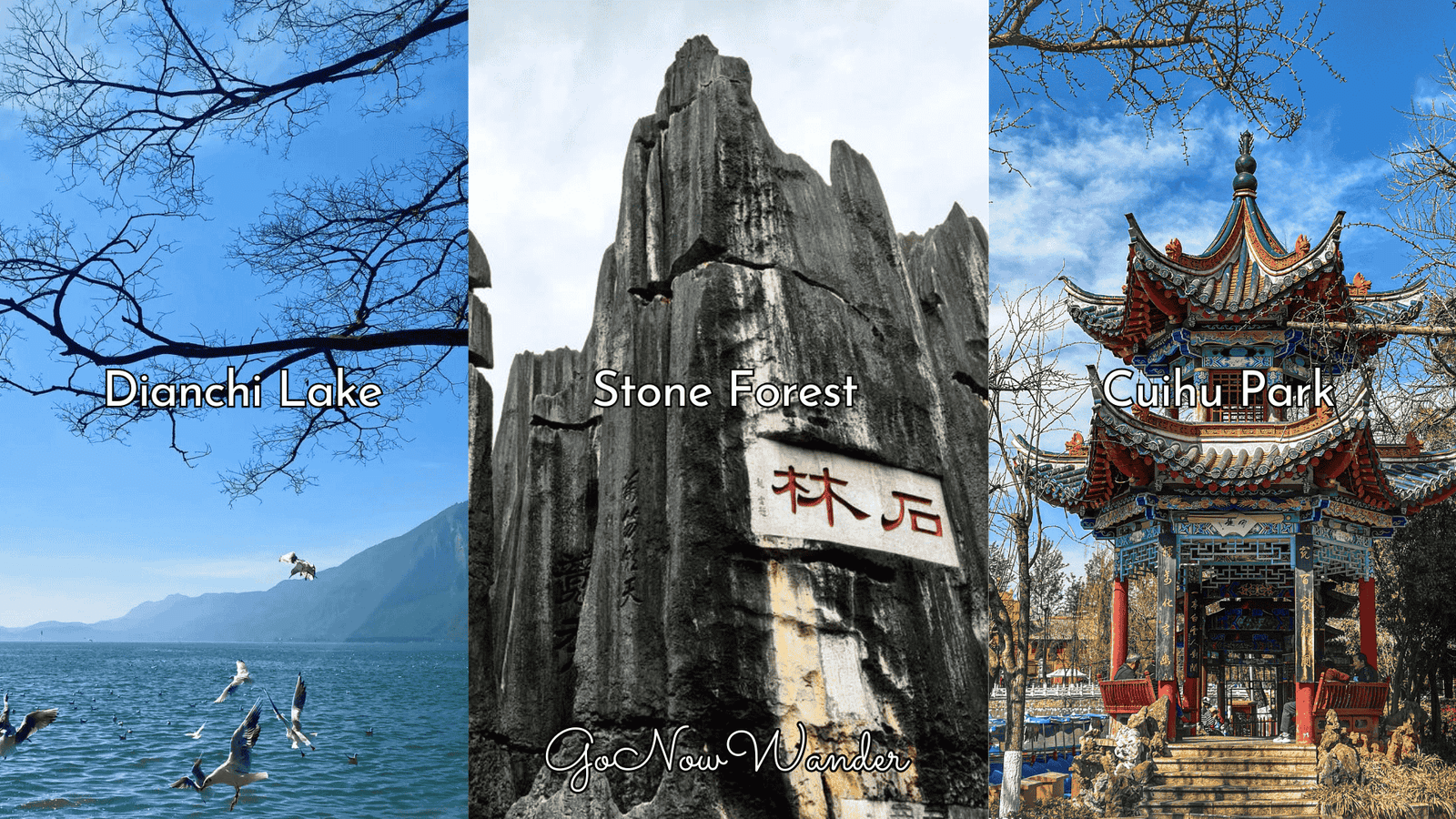
Kunming Ultimate Travel Guide|The Light and Gentle Rhythm of Spring City
Kunming: A City Where Life Flows Slowly and Warmly
Kunming, famously called the “Spring City,” was my first stop in Yunnan when I had just started studying traditional Chinese medicine. Unlike the dramatic highlands of Dali or the tropical vibrancy of Xishuangbanna, Kunming has a gentle, steady energy that makes you immediately relax. Sunlight filters through the leaves of the plane trees, casting soft shadows on stone streets, while the air carries a subtle mix of flowers and earthy freshness.
For me, Kunming is a city that invites you to slow down. Its pace isn’t rushed like the highlands, nor intense like the rainforest. Every time I walk here, I feel the comforting rhythm of life—soft, forgiving, and luminous.
1. Scenery & Experiences|City Life, Lakes, and Nature Intertwined
Kunming’s charm lies in its diversity. Nature and city life coexist beautifully:
Some of my favorite experiences:
- Watching sunset at Dianchi Lake, where the water glows like golden silk under the sun
- Exploring the Stone Forest, a natural maze of karst formations that feels like stepping into a sculpture gallery
- Strolling through Cuihu Park, a tranquil urban oasis with clear waters and elegant white egrets
Best Time to Visit Kunming
- March–May: Spring flowers, sunny days, ideal for outdoor sightseeing
- September–November: Crisp autumn air, perfect for photography
- Kunming’s mild climate makes it suitable for visiting year-round
2. Must-Do Experiences in Kunming
- Dianchi Lake: sunrise & sunset views, lakeside cycling
- Stone Forest: explore karst formations
- Cuihu Park: photography and peaceful strolls
- Kunming Old Streets & Flower Market: experience daily life and Yunnan’s floral culture
- Yunnan Nationalities Village: cultural immersion in ethnic traditions
3. Key Attractions – My Personal Experience
Dianchi Lake: The Rhythm of Wind and Water
On my first visit, I rented a bike and cycled along the lake. The wind brushed my face gently, the sunlight shimmered on the water, and flocks of red-billed gulls flew by as if performing a ballet. In that moment, I felt the essence of “clouds” in Yunnan—a soft, ever-changing presence that calms the heart.
Tips:
- Best time: early morning or late afternoon
- Activity: leisurely cycling or lakeside walks for a slow-travel experience
Stone Forest: Nature’s Masterpiece
The first time I stood amidst the towering karst pillars, I felt like I had entered a giant sculptor’s studio. Light and shadow danced across the stone surfaces, creating natural frames worth pausing for. It’s a place where you can’t help but slow your steps and take it all in.
Tips:
- Entrance Fee: 175 RMB (~25 USD)
- Recommended duration: half-day to full-day
- Go early for softer light and fewer crowds
Cuihu Park: Urban Serenity
Cuihu Park is the heart of Kunming’s slow life. In the morning, locals practice tai chi while white egrets glide across the pond. Tea houses fill the air with the scent of brewing leaves. It’s a perfect place to experience the calm rhythm of this “Spring City.”
Tips:
- Free entry
- Recommended duration: 1–2 hours
4. Transportation & Local Culture
Getting Around:
- Flights: Kunming Changshui International Airport (KMG), well-connected domestically and internationally
- High-Speed Rail: Links Kunming with Dali, Lijiang, Shangri-La
- City Transport: buses, ride-hailing apps, and shared bikes are convenient
- Walking: Old streets, Cuihu Park, and flower markets are best explored on foot
Local Culture:
- A rich mix of Yunnan ethnic minority traditions
- Old streets and flower markets showcase daily life and slow living
- Kunming locals are gentle and approachable, perfect for first-time international visitors
5. Food|Gentle Flavors of Yunnan
Kunming’s cuisine is comforting, fresh, and flavorful:
- Crossing-the-bridge Rice Noodles (Guoqiao Mixian) – the classic Yunnan experience
- Steamed Chicken in Pot (Qiguo Chicken) – light yet rich
- Street Snacks: flower cakes, tofu pudding, and rice cakes
- Flower Tea: rose, jasmine, and Dianhong black tea for relaxation
6. Culture & Heritage
- A hub for Yunnan ethnic minority culture
- Flower markets and ethnic villages highlight folk art and traditions
- Parks, lakes, and streets embody the city’s slow-paced lifestyle
7. Accommodation
Luxury:
- InterContinental Kunming: central, fully equipped, high-end comfort
- Hyatt Regency Kunming: lakeside rooms, convenient transport
Mid-Range / Boutique:
- Design-oriented guesthouses near the Old Streets, English-friendly
- Courtyard lodges near Cuihu Park, ideal for slow-travel experience
Budget:
- City center chain hotels (All Seasons, Hanting, Ibis)
- Youth hostels, safe, clean, and English-friendly
8. Recommended Stay & Traveler Type
Duration: 1–2 days
- Short-stop visitors: Dianchi Lake + Stone Forest + Old Streets
- Deep travelers: add Yunnan Nationalities Village and surrounding towns
Ideal For:
- Those who enjoy a mix of city and nature
- Light cultural exploration and slow travel
- Short-term stay or as a gateway to Yunnan
Not Ideal For:
- Travelers wanting rapid, high-intensity sightseeing
9. Must-Do Experiences & Hidden Gems
- Dianchi Lake lakeside cycling: Free
- Stone Forest karst exploration: 175 RMB
- Cuihu Park morning stroll & tea: Free
- Old Streets browsing: Free
- Yunnan Nationalities Village cultural activities: 50–100 RMB
10. Travel Budget
Accommodation:
- Luxury: 900–2,000 RMB (~130–280 USD)
- Mid-range: 400–800 RMB (~55–110 USD)
- Budget: 150–350 RMB (~20–50 USD)
Food:
- Street food: 20–50 RMB
- Restaurant meals: 50–150 RMB per person
Transport:
- Ride-hailing: 8–10 RMB base fare
- Bus / shared bikes: 5–15 RMB per day
11. Travel Tips
- Strong UV exposure, especially outdoors
- Morning and evening can be cool; bring layers
- English widely supported in hotels and main attractions
- Alipay and WeChat increasingly accept international cards
- Stone Forest requires walking; wear comfortable shoes
12. Best Photography Spots
- Dianchi Lake sunrise and sunset
- Stone Forest high points and light shadows
- Cuihu Park early morning reflections
- Flower market and old street alleyways
- Yunnan Nationalities Village traditional architecture
13. Suggested Combination Itineraries
- Kunming + Dali / Lijiang (5–6 days): gentle city life + highland lakes
- Kunming + Stone Forest + Xishuangbanna (7–8 days): city meets tropical rainforest
- Kunming Short Stop (1–2 days): Dianchi Lake + Stone Forest + Old Streets, perfect gateway city
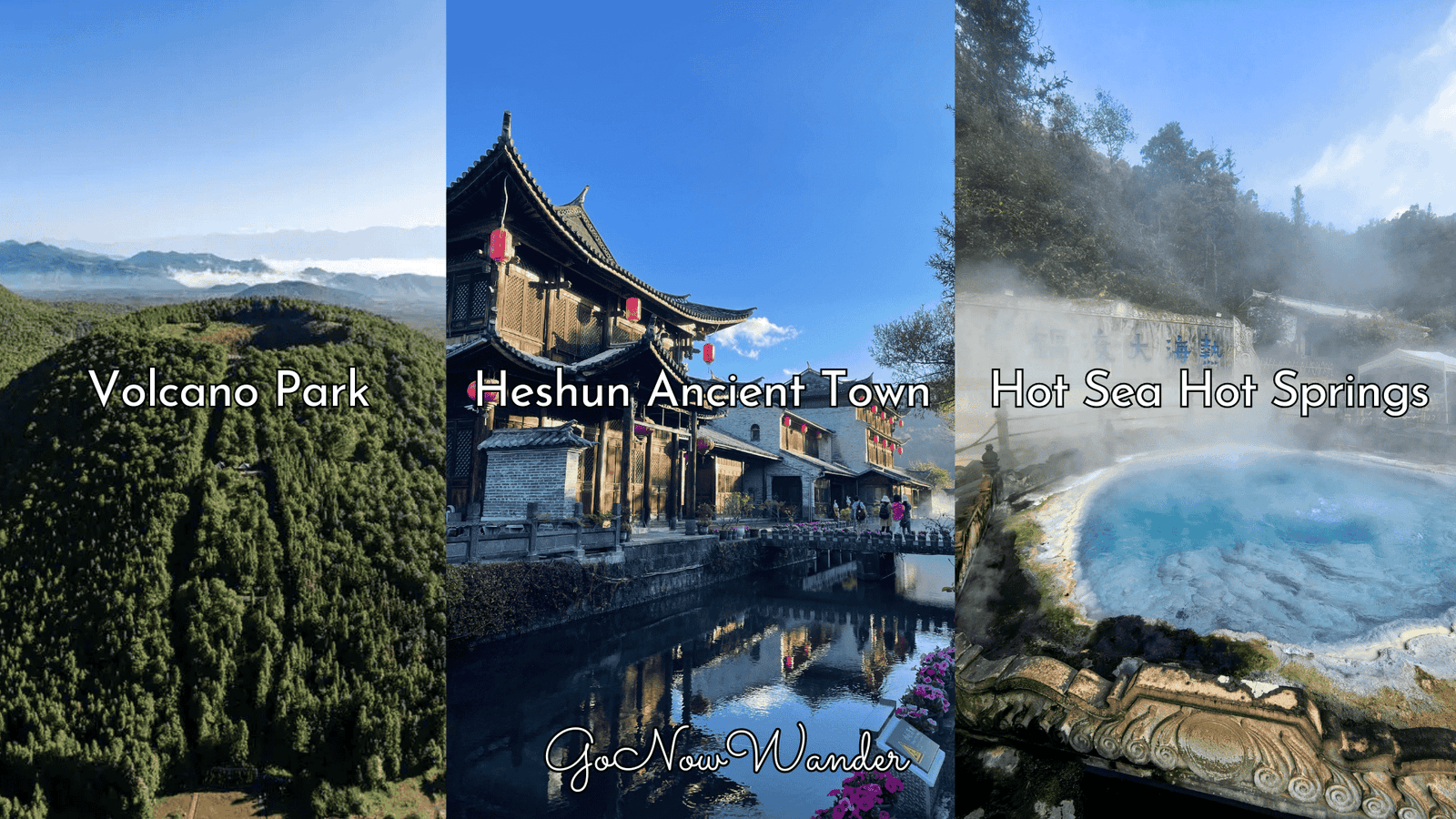
Tengchong Ultimate Travel Guide|The Gentle Heat of Volcanoes, Hot Springs, and Ancient Towns
Tengchong: Yunnan’s Quiet Corner of Warmth and Fire
Tengchong is one of my favorite “slow-heat” cities in Yunnan. My first visit was in late spring, right after a trip to Lijiang’s highlands, when my body was still adjusting to high altitudes. Unlike the dramatic peaks of Lijiang or the serene lakes of Dali, Tengchong has a gentle yet alive energy—volcanic heat, soothing hot springs, and tranquil ancient towns that invite your body and mind to relax.
Every street, every breeze, every plume of hot spring steam whispers to travelers: “Slow down. You deserve to be treated gently.”
1. Scenery & Experiences|Nature and History Intertwined
Tengchong’s charm comes from the mix of natural wonders and historical depth: volcanoes, hot springs, and ancient towns form a kind of natural wellness retreat.
Some of my favorite experiences:
- Volcano Park: Explore lava fields and volcanic craters, feel the raw power of the earth
- Heshun Ancient Town: Wander through alleys lined with wooden houses and stone streets, soak in the old-world charm
- Hot Sea Hot Springs: Relax in steaming pools while clouds drift across the sky
Best Time to Visit Tengchong
- March–May: Warm, flowers in bloom, perfect for hot spring bathing
- September–November: Dry autumn air, ideal for photography at volcanoes and ancient towns
- June–August: Hot summer, but the springs feel particularly relaxing
- Winter: Hot springs and volcanic steam make the cool season especially comfortable
2. Must-Do Experiences
- Volcano Park: Hike volcanoes, explore lava formations
- Heshun Ancient Town: History, traditional architecture, handcraft workshops
- Hot Sea Hot Springs: Outdoor soaking, herbal hot baths
- Tengchong Museum: Learn about border history and ethnic cultures
- Ginkgo Village (seasonal): Golden autumn leaves, perfect for photographers
3. Core Attractions – My Personal Experience
Volcano Park: A Dialogue with the Earth
The first time I stood at the edge of a volcanic crater, I was in awe of the earth’s power. The lava patterns looked like nature’s own artwork, and the warm, mineral-rich air filled my lungs. Walking slowly along the stone paths, with only the wind and my own breath around me, I felt the “chōng” (冲) in Tengchong’s name—the energy beneath its gentle surface.
Tips:
- Entrance Fee: 80–120 RMB (~12–18 USD)
- Recommended Duration: 2–3 hours
- Wear comfortable shoes; early morning light is best
Heshun Ancient Town: Where Time Stands Still
Heshun Ancient Town is my favorite small town in Yunnan. I remember my first afternoon wandering through its alleys—the sunlight falling on blue stone streets, coffee aromas drifting from small cafés, the wooden floors of tiny bookshops creaking under my steps. I loved simply sitting and drinking flower tea, watching light fall on old windows, feeling like I was conversing with the past.
Tips:
- Free to explore
- Some handcraft or tie-dye experiences: 50–80 RMB
- Recommended duration: half a day
Hot Sea Hot Springs: A Deep Relaxation
Tengchong’s hot springs are a full-body and soul therapy. The first time I soaked in the steaming water, the faint scent of sulfur, the warmth enveloping me, made all stress melt away. At night, under a starlit sky, the rising steam felt like a soft blanket wrapping the city.
Tips:
- Entry Fee: 80–150 RMB (~12–22 USD)
- Recommended Duration: 1–2 hours
- Mind slippery surfaces and water temperature
4. Transportation & Local Culture Transportation:
- Flights: Tengchong Tuofeng Airport (TCG), direct flights from Kunming and major domestic cities
- Road Travel: Main transport is by road; Kunming–Tengchong takes about 7–8 hours
- Local Transport: Taxis, ride-hailing, and rental bikes/electric scooters
Local Culture:
- A historic border town with deep heritage
- Heshun Ancient Town is full of cultural stories
- Locals are friendly and slow-paced, perfect for travelers seeking calm
5. Food|Flavors of Volcano and Border Cuisine
Tengchong cuisine carries the earth’s warmth and border influences:
- Tengchong Tofu (Dougan): Aromatic and light
- Hot Spring Eggs: Cooked by geothermal heat, uniquely savory
- Pickled Vegetables & Wild Mushroom Hotpot: Natural, earthy flavors
- Local Snacks: Butter tea, roasted milk fan, glutinous rice cakes
6. Culture & Heritage
- Heshun Ancient Town: over 400 years old, full of scholar residences and craft workshops
- Border culture blends with minority traditions
- Volcanic geology and hot spring bathing have shaped local wellness customs
7. Accommodation
Luxury:
- Tengchong Hot Spring Resort: Direct access to hot springs, beautiful courtyards
- Hot Sea Hot Springs Boutique Hotel: Rooms overlooking the thermal pools
Mid-range / Boutique:
- Courtyard guesthouses in Heshun, English-friendly
- Volcano Park nearby lodges, ideal for nature lovers and photographers
Budget:
- Clean, comfortable city guesthouses
- Youth hostels around Heshun Ancient Town
8. Recommended Stay & Traveler Type
Duration: 2–3 days
- Day 1: Volcano Park + Hot Sea Hot Springs
- Day 2: Heshun Ancient Town and local exploration
- Optional: Half-day Ginkgo Village (autumn only)
Ideal For:
- Hot spring lovers, slow travel enthusiasts
- Nature, history, and small town culture aficionados
- Photography enthusiasts
Not Ideal For:
- Travelers seeking intensive sightseeing
9. Must-Do Experiences & Hidden Gems
- Volcano Park hike: 80–120 RMB
- Heshun Ancient Town crafts & tie-dye: 50–80 RMB
- Hot Sea Hot Springs soak: 80–150 RMB
- Ginkgo Village photography (autumn): Free
10. Travel Budget
Accommodation:
- Luxury: 800–1,500 RMB (~110–210 USD)
- Mid-range: 400–700 RMB (~55–95 USD)
- Budget: 150–300 RMB (~22–45 USD)
Food:
- Street food: 20–50 RMB
- Restaurants: 50–150 RMB per person
Transport:
- Taxi / ride-hailing: 8–10 RMB base fare
- Volcano Park round trip: ~50 RMB
11. Travel Tips
- Hot spring water can be very hot; mind slippery surfaces
- Wear comfortable shoes for Volcano Park
- Road trip from Kunming is long; plan sufficient travel time
- Autumn at Ginkgo Village is popular; plan ahead
12. Best Photography Spots
- Volcano craters and lava textures
- Hot Sea Hot Springs with sunset
- Heshun Ancient Town alleyways and courtyards
- Golden ginkgo forests (autumn)
- Volcano sunrise/sunset light
13. Suggested Combination Itineraries
- Tengchong + Ruili + Dehong (4–5 days): Border culture, hot springs, volcanoes
- Tengchong + Lijiang / Dali (5–6 days): Highland scenery + slow travel in hot springs
- Tengchong Deep 2–3 days: Volcano + Hot Springs + Ancient Town + Hidden Photo Spots
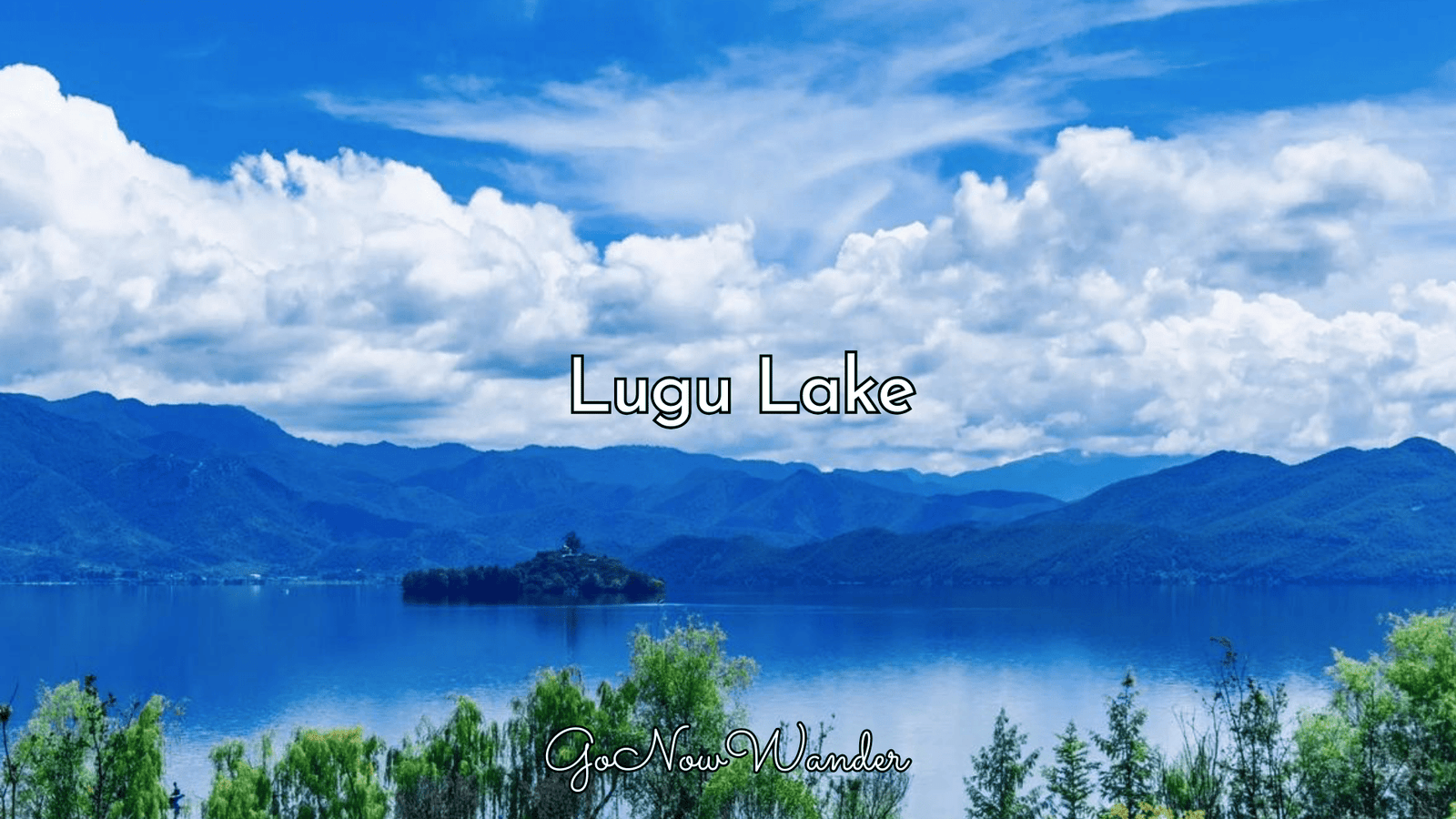
Lugu Lake Ultimate Travel Guide|Tranquil Waters, Mosuo Culture, and Slow Living
Lugu Lake: A Mirror of Serenity and Culture
Lugu Lake is one of the places in Yunnan I always want to return to. My first time visiting, I had just finished a highland trek in Shangri-La, still soaking in the snow-capped mountains and Tibetan landscapes. Unlike the sharp altitude of Lijiang or the fiery warmth of Tengchong, Lugu Lake feels like a calm mirror—softening mountains, water, sky, and even the traveler’s heart.
Every gust of wind, every ripple across the lake seems to whisper: “Slow down, breathe, let yourself exist gently.” Here, nature’s tranquility blends with the Mosuo people’s matriarchal culture, offering a rhythm of life unlike anywhere else.
1. Scenery & Experiences|Nature and Culture in Harmony
Lugu Lake’s beauty lies in its peaceful, untouched charm. Early mornings, the water is as smooth as glass; at sunset, the lake reflects the golden sky.
Some of my most vivid memories:
- Paddling a traditional dugout boat at dawn, the mirror-like surface reflecting mountains and sky
- Riding an electric bike around the lake, wind brushing my face, the lake and mountains like a living painting
- Staying in a Mosuo homestay, watching the sunset paint the rooftops and water in warm light
Best Time to Visit Lugu Lake
- May–October: Clear lake water, warm weather, perfect for biking and photography
- November–March: Cooler and quieter, ideal for introspective, slow travel
2. Must-Do Experiences
- Dugout boat ride (猪槽船 / Boat Ride on Lugu Lake): Experience the serenity of the lake
- Lake circuit by bike or electric scooter
- Mosuo homestay experience: Learn about matriarchal culture
- Island exploration: Lige or Caohai Islands
- Sunrise and sunset photography: Capture reflections, mountains, and sky
3. Core Attractions – My Personal Experience
Dugout Boat Ride: A Gentle Dialogue with the Lake
The first time I stepped onto a dugout boat, I was struck by the lake’s stillness. The surface was like a mirror, only lightly rippled by the paddle. Reflections of distant mountains were perfect, and the gentle splash of water became a quiet rhythm. I felt as if I had stepped into a living watercolor painting—every stroke of the paddle was a conversation with the lake.
Tips:
- Price: 80–120 RMB (~12–18 USD)
- Duration: 1–2 hours
- Best time: Early morning or late afternoon for soft light
Mosuo Homestays: A Soft Touch of Matriarchal Life
I stayed in a Mosuo family homestay for the first time and spent the evening watching stars from the courtyard while the host shared stories about matriarchal family traditions. The people are gentle, honest, and live at a pace as calm as the lake. Experiencing this lifestyle makes you feel your own heartbeat slow down.
Tips:
- Some homestays offer family-style dinners
- Recommended stay: 1–2 nights for deep cultural immersion
Lake Circuit Biking: Close to Wind and Light
Biking around Lugu Lake is one of my favorite ways to explore. The wind brushes your face, mountains and water stretch into an endless painting. You can pause in small villages or lakefront cafés for tea, watching light dance on the water. There’s no rush, just you, wind, and light.
4. Transportation & Local Culture
Transportation:
- Flights: Nearest airport is Lijiang Sanyi Airport (~4 hours by car)
- Road: Lijiang to Lugu Lake is ~180 km, 3–4 hours by car
- Local: Electric bike or bicycle rentals, occasional taxis
Culture:
- The Mosuo people practice a rare matriarchal culture
- Villages are peaceful and life moves slowly
- Locals are friendly and enjoy sharing their stories
5. Food|Flavors of Lake and Highlands
Lugu Lake cuisine is simple, fresh, and earthy:
- Smoked pork and grilled fish: Lakefront flavors that warm the soul
- Highland chicken hotpot: Rich and comforting
- Mosuo snacks: Highland barley cakes, glutinous rice cakes, yak yogurt
- Lakefront tea houses: Drink Pu’er or highland tea while watching reflections on the water
6. Culture & Heritage
- Mosuo matriarchal society is unique and rare
- Lige and Caohai Islands preserve traditional Mosuo houses
- Village life flows as gently as the lake itself
7. Accommodation
Luxury:
- Lakeview boutique hotels with direct lake access
- Private courtyard resorts, quiet and serene
Mid-range / Homestays:
- Mosuo homestays, English-friendly, cultural immersion
- Lakeside guesthouses, ideal for photography and slow travel
Budget:
- Youth hostels by the lake
- Simple village guesthouses, clean and safe
8. Recommended Stay & Traveler Type
Duration: 2–3 days
- Day 1: Dugout boat + lakeside walks
- Day 2: Lake circuit biking + Mosuo homestay experience
- Day 3 (optional): Island exploration
Ideal For:
- Slow travelers, photography enthusiasts
- Culture and history lovers
- Light outdoor enthusiasts
Not Ideal For:
- Travelers seeking a packed sightseeing schedule
9. Must-Do Experiences & Hidden Gems
- Dugout boat ride: 80–120 RMB
- Mosuo homestay cultural experience: 100–200 RMB
- Lakeside cafés: 30–50 RMB
- Caohai/Lige Island tour: ~150 RMB
10. Travel Budget
Accommodation:
- Luxury: 800–1,500 RMB (~110–210 USD)
- Mid-range: 400–800 RMB (~55–115 USD)
- Budget: 150–300 RMB (~22–45 USD)
Food:
- Street food/snacks: 20–50 RMB
- Restaurants: 50–150 RMB per person
Transport:
- Lake bike rental: 80–120 RMB/day
- Taxi: base fare ~8 RMB
11. Travel Tips
- Early morning and evening temperatures vary—bring layers
- UV is strong; sunscreen is essential
- Windy lake; take care when boating
- Respect local Mosuo customs; ask permission before photography
12. Best Photography Spots
- Sunrise over the lake (east shore or Lige Island)
- Sunset reflections on the water
- Mosuo homestead courtyards
- Mountains reflected in the lake
- Caohai Island and clear blue skies
13. Suggested Combination Itineraries
- Lugu Lake + Lijiang (3–4 days): Ancient town + tranquil lake slow travel
- Lugu Lake + Shangri-La (5–6 days): From peaceful lake to snow-capped mountains
- Lugu Lake Deep 2–3 days: Boat ride + homestay + island exploration + hidden photo spots
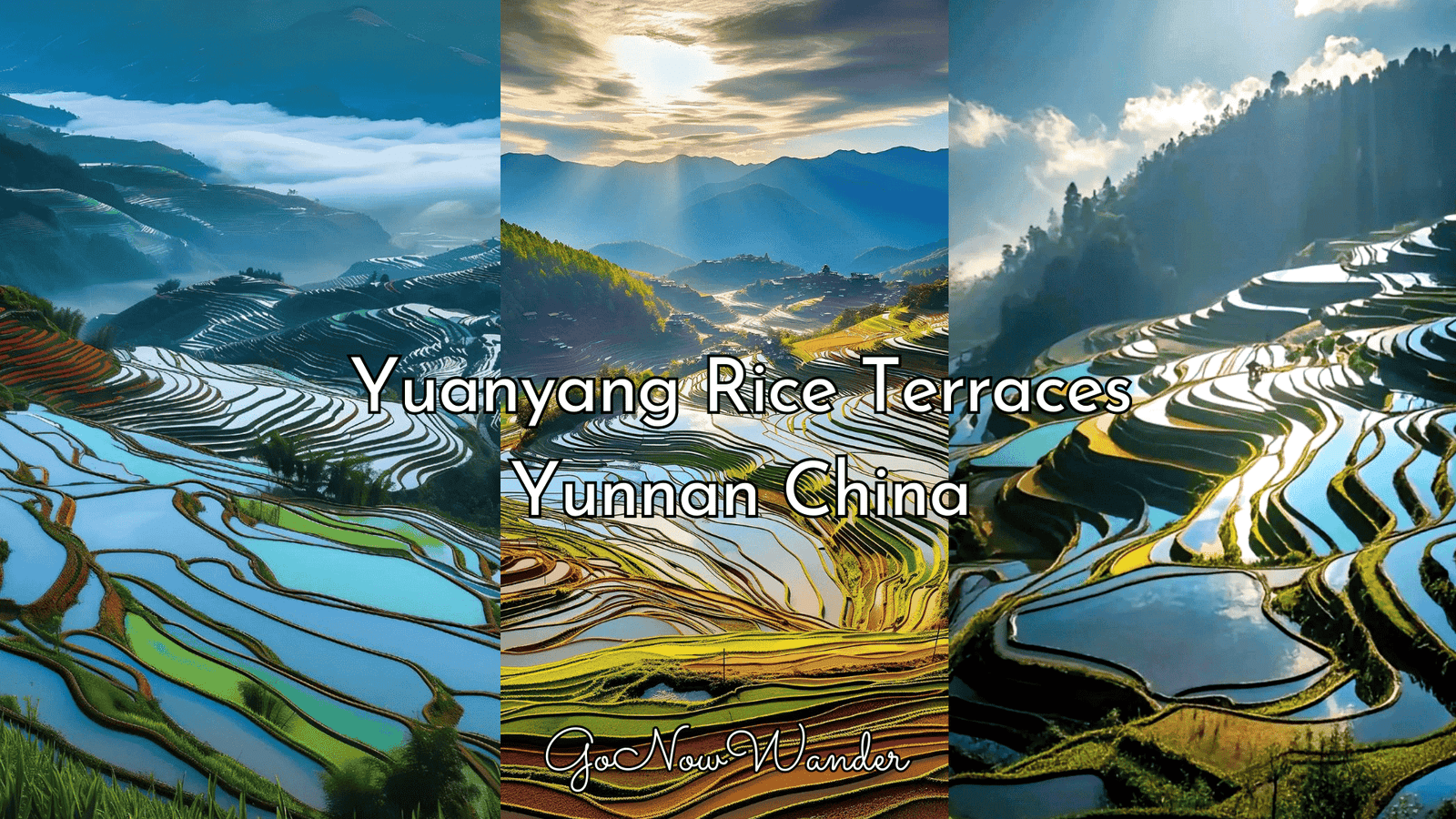
Yuanyang Rice Terraces Ultimate Travel Guide|Light, Shadow, and Cultural Masterpiece
Yuanyang: Terraced Fields Carved by Time
Yuanyang is one of the most awe-inspiring places I’ve ever visited in Yunnan. The first time I stood on the Badah viewing platform, the layered rice terraces beneath me reflected the morning light like molten metal. In that moment, I understood the meaning of “heaven, earth, and human in harmony.”
As a Chinese medicine student, I particularly appreciate the natural rhythm here—season, light, water, and soil perfectly aligned. Yuanyang isn’t just a tourist spot; it’s a living art gallery of human labor and nature. Every visit reveals new shadows, reflections, and details that never fail to amaze me.
1. Scenery & Experiences|Nature and Culture in Harmony
The core charm of Yuanyang lies in the interplay of light and seasons. Each viewing, from different angles or times of day, creates a unique experience.
My most vivid memories:
- Sunrise at Yin Yang Ba: Water-filled terraces mirror the sky as morning mist rises
- Golden hour in the evening: Sunlight bathes the terraces in warm gold
- After winter rain: Puddled terraces reflect the sky, creating ethereal blue mirrors
Best Time to Visit Yuanyang
- Nov–Apr: Water-filled terraces, ideal for reflective photography
- May–Jun: Young green terraces, perfect to observe agricultural life
- Sep–Oct: Golden rice harvest, vibrant and culturally rich
2. Must-Do Experiences
- Sunrise at Yin Yang Ba viewpoint
- Photography at Badah Rice Terraces
- Village walks to experience Hani architecture and culture
- Interacting with local farmers to learn traditional terrace farming
- Overnight stay in terrace-side homestays to enjoy early morning mist
3. Key Attractions – My Personal Experience
Badah Rice Terraces: Miracle of Light and Mist
The first time I watched the sunrise at Badah, I was mesmerized by the golden reflections. As the sun rose, the terraces shimmered like gold, and mist curled gently around the paths. It felt like stepping into a living watercolor painting, each paddle stroke a dialogue with the lake-like terraces. In that moment, I understood the harmony between humans and nature.
Tips:
- Best photography: 4:30–6:30 am
- Recommended to arrive a day early to pick the ideal viewpoint
Duoyishu Terraces: Panorama of Layers
Duoyishu is the most famous full-view terrace spot. From the mountaintop, terraces snake down like dragons, reflecting sky and light. Every cloud, every sunbeam changes the composition—each visit is a living painting.
Hani Villages: Culture in Every Corner
I love strolling through Hani villages near the terraces. The houses, built from bamboo, wood, and stone, blend perfectly with the terraces. Residents are welcoming, and conversations about terrace farming provide deep cultural insight.
4. Transportation & Local Culture
Transportation:
- Kunming → Yuanyang: Flight to Yuanyang Airport, or high-speed train/long-distance bus
- Yuanyang Airport: Domestic flights only
- Local: Best explored by hired car or motorcycle; public transport is limited
Culture:
- Villages maintain authentic Hani farming life
- Residents are friendly and share cultural stories
- Rich matriarchal and communal traditions worth exploring
5. Food|Simple Flavors of the Highlands ( What to Eat in Yuanyang)
Yuanyang cuisine is rustic, fresh, and full of local flavor:
- Hani pickled vegetables: Lightly sour and refreshing
- Terrace fish: Naturally fresh from irrigation water
- Red rice and wild vegetables: Healthy, authentic
- Smoked pork and roast chicken: Aromatic with local chili sauces
6. Culture & Heritage ( Yuanyang Culture / Hani Culture)
- Terrace farming reflects “heaven and human harmony”
- Matriarchal family structures still persist
- Traditional festivals like the Torch Festival highlight local customs
7. Accommodation (Yuanyang Accommodation / Where to Stay in Yuanyang)
Luxury:
- Terrace-view boutique hotels with panoramic views
- High-altitude resorts offering comfort and breakfast
Mid-range / Homestays:
- Village homestays, English-friendly, culturally immersive
- Lakeside guesthouses with terrace views
Budget:
- Guesthouses in Yuanyang town
- Youth hostels near the terraces, clean and safe
8. Recommended Stay & Traveler Type
Duration: 2–3 days
- Day 1: Yin Yang Ba sunrise + Duoyishu panorama
- Day 2: Village exploration + terrace photography
- Day 3 (optional): Cultural immersion and relaxation
Ideal For:
- Photography enthusiasts
- Cultural explorers
- Slow travelers seeking reflection and serenity
Not Ideal For:
- Visitors aiming to check off crowded tourist spots
9. Must-Do Experiences & Hidden Gems
- Sunrise at Yin Yang Ba: free
- Duoyishu viewpoint: 30–50 RMB (~5–8 USD)
- Hani village visits and homestay: 100–200 RMB (~15–30 USD)
- Agricultural experiences (seasonal): 50–100 RMB (~8–15 USD)
10. Travel Budget
Accommodation:
- Luxury: 800–1,500 RMB (~110–210 USD)
- Mid-range: 400–800 RMB (~55–115 USD)
- Budget: 150–300 RMB (~22–45 USD)
Food:
- Snacks/local dishes: 20–50 RMB
- Full meals: 50–120 RMB/person
Transport:
- Hired car/motorcycle: 200–350 RMB/day
- Public transport: Limited
11. Travel Tips
- Altitude 1,400–2,000m; bring layers for morning and evening
- Sunrise photography requires early wake-up
- Weather and mist change quickly; be prepared
- Respect Hani culture and customs
12. Best Photography Spots
- Sunrise at Yin Yang Ba
- Duoyishu panoramic terraces
- Hani village with terraces in background
- Sunset reflections on terraces
- Misty mountain valleys
13. Suggested Combination Itineraries
- Yuanyang + Mengzi (2–3 days): Cultural and natural highlights
- Yuanyang + Jianshui Ancient Town (3–4 days): Terraces + historic city
- Yuanyang + Red River Valley deep tour (3–5 days): Photography and folklore experience
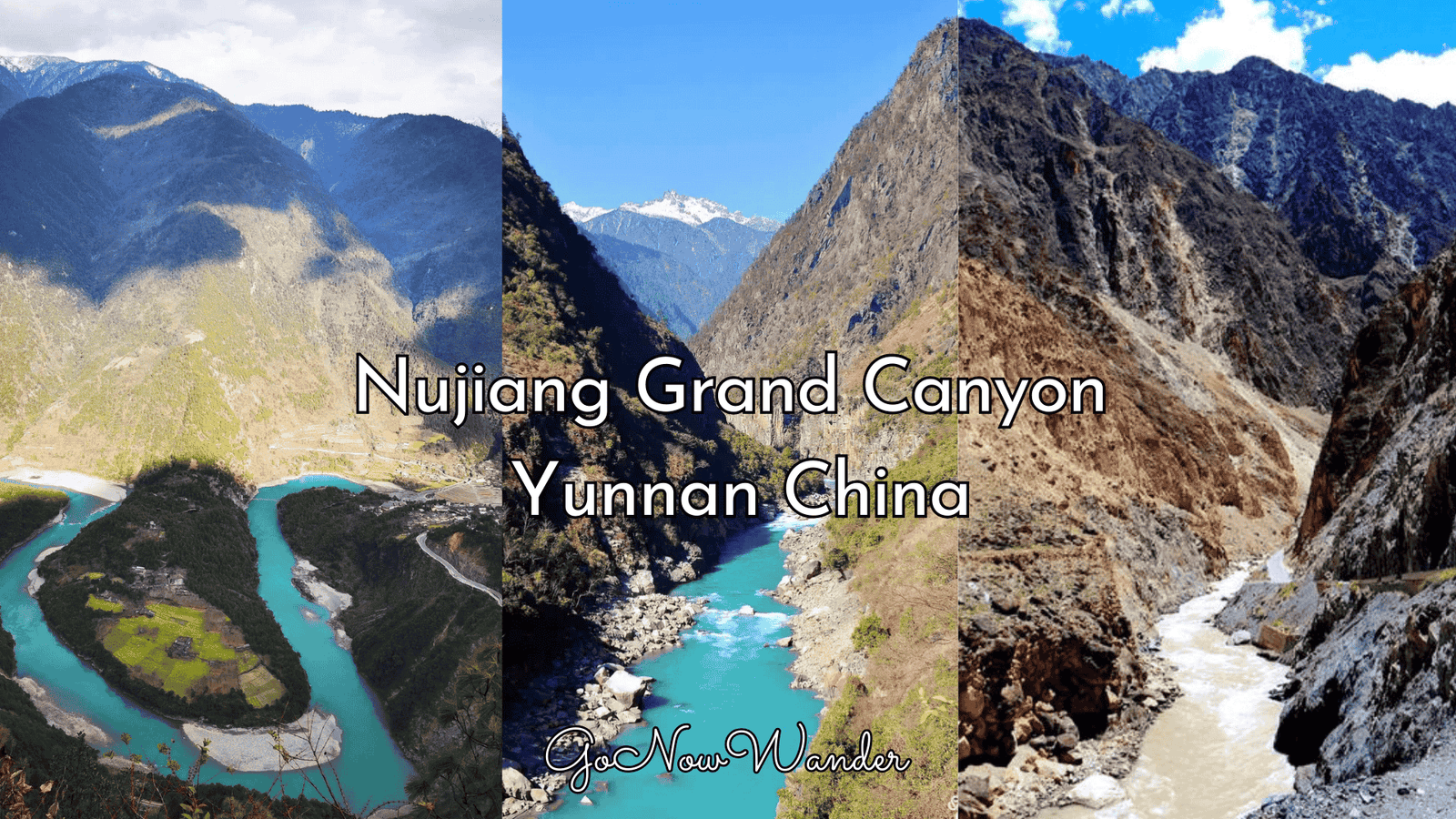
1. Scenery & Experiences|Nature and Culture in Harmony
Nujiang Grand Canyon offers some of China’s most dramatic landscapes: steep mountains, rushing rivers, terraced fields, and scattered villages. Each season brings its own magic.
My most unforgettable moments:
- Sunrise at Liuku or the Six-Ku riverside, where morning mist rises like ribbons from the canyon
- Afternoon sunlight painting terraces and Tibetan villages in golden light
- Evening mountain winds reflecting on the river, creating shimmering golden waves
Best Time to Visit Nujiang
- March–June: Water-filled rivers, misty mornings, ideal for photography
- September–November: Clear skies, golden terraces, perfect for exploring villages
- July–August: Rainy season, rivers are dramatic but roads can be slippery
2. Must-Do Experiences ( Things to Do in Nujiang )
- Hike along canyon viewpoints to admire the rushing Nujiang River
- Explore Tibetan and Lisu villages along the canyon
- Capture terraces and river reflections at sunrise or sunset
- Overnight in village homestays to experience local life
- Learn traditional farming practices and cultural crafts
3. Key Attractions – My Personal Experiences
Canyon Viewpoints: Raw and Untamed
The first time I reached a Nujiang canyon viewpoint, the sheer scale of the cliffs and the rushing river left me breathless. The wind carried the canyon’s energy, and every glance seemed alive. The scenery here is unpolished and wild—each moment is a living painting.
Tips:
- Best photography: early morning or late afternoon
- Safety first: some viewpoints are near steep drops
- Transportation: easiest by hired car or guided tour
Tibetan & Lisu Villages: Life in Harmony with Nature
Walking through the villages, I loved seeing homes made of wood and stone blending perfectly with terraces. Villagers warmly welcomed me to taste barley wine or try traditional clothing. Every conversation revealed the depth of local traditions and beliefs.
Terraced Fields and River Reflections
Nujiang’s terraces are less dense than Yuanyang’s but layered beautifully. Rainy mornings or misty dawns create magical reflections. Every visit is unique, and as a photography enthusiast, I always find new angles to capture.
4. Transportation & Local Culture (Nujiang Transportation / Tibetan and Lisu Culture)
Getting There:
- Kunming → Nujiang: Fly to Lijiang or Lincang, then hire a car to reach the canyon
- Nujiang Airport: Domestic flights only
- Local Transport: Best explored by car or motorcycle; public transport is limited
Culture:
- Tibetan, Lisu, and Dulong ethnic groups co-exist
- Villages preserve traditional agricultural life
- Festivals, handicrafts, and music are integral to the cultural experience
5. Food|Rustic Highland Flavors (Nujiang Food / What to Eat in Nujiang)
Nujiang cuisine is simple, fresh, and flavorful:
- Tibetan Barley Wine: Light, malty, warming
- Butter Tea: A traditional staple
- Highland Wild Vegetables: Fresh, crisp, healthy
- Smoked Pork and Yak Meat: Rich aroma and authentic taste
6. Culture & Heritage ( Nujiang Culture / Lisu and Tibetan Culture)
- Vibrant Tibetan, Lisu, and Dulong architecture and clothing
- Festivals like Torch Festival highlight local traditions
- The culture reflects harmony with the dramatic canyon environment
7. Accommodation (Nujiang Accommodation / Where to Stay in Nujiang)
Luxury:
- Boutique homestays with panoramic canyon views
- High-altitude resorts with comfort and scenic beauty
Mid-Range / Homestays:
- Village homestays with English-friendly staff
- Local guesthouses offering cultural immersion
Budget:
- Clean and safe town guesthouses
- Youth hostels in villages, simple and cozy
8. Recommended Stay & Traveler Type
Duration: 2–3 days
- Day 1: Canyon viewpoints + riverside hikes
- Day 2: Village exploration + terraces photography
- Day 3: Optional cultural immersion and relaxation
Ideal For:
- Hikers and nature lovers
- Photographers
- Cultural explorers
- Slow travelers seeking reflection
Not Ideal For:
- Visitors aiming for crowded tourist checklists
9. Must-Do Experiences & Hidden Gems
- Canyon viewpoints: free
- Village homestay: 100–200 RMB/night (~15–30 USD)
- Lisu handicraft experience: 50–100 RMB (~8–15 USD)
10. Travel Budget
Accommodation:
- Luxury: 800–1,500 RMB (~110–210 USD)
- Mid-range: 400–800 RMB (~55–115 USD)
- Budget: 150–300 RMB (~22–45 USD)
Food:
- Snacks/local dishes: 20–50 RMB
- Full meals: 50–120 RMB/person
Transport:
- Car or motorcycle hire: 200–350 RMB/day
- Public transport: limited
11. Travel Tips
- Temperature varies greatly in the canyon—bring layers
- Hiking near viewpoints requires caution
- Rainy season roads can be slippery
- Respect local customs and traditions
- Plan accommodations and transport in advance
12. Best Photography Spots
- Canyon viewpoints along the river
- Highland terraces reflecting river waters
- Tibetan and Lisu villages with terraces in the background
- Sunrise and sunset along the river
- Misty mountain valleys
13. Suggested Combination Itineraries
- Nujiang + Lijiang (4–5 days): Canyon + ancient town experience
- Nujiang + Shangri-La (4–6 days): Canyon into Tibetan highlands
- Nujiang + Meili Snow Mountain (5–6 days): High-altitude adventure & photography
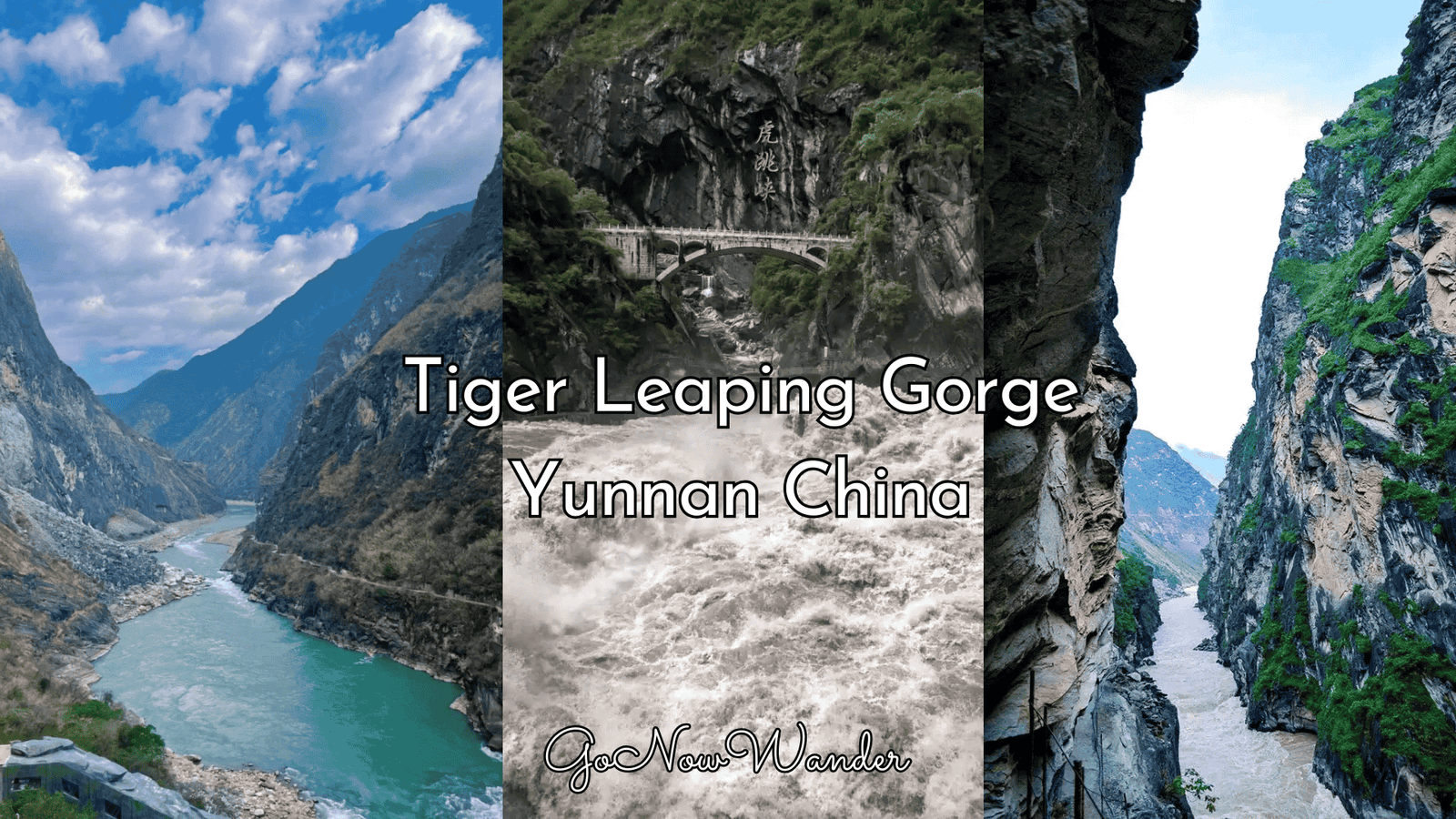
Tiger Leaping Gorge Ultimate Travel Guide|Rushing Rivers, Towering Cliffs & Cultural Immersion
1. Scenery & Experiences|Where the Canyon Makes Your Breath Pause
Tiger Leaping Gorge lies along the Jinsha River between Lijiang and Shangri-La, one of the most dramatic river gorges in the world. Meltwater from snow-capped mountains plunges violently through the canyon, flanked by towering cliffs, as if the earth and sky are quietly competing.
The first time I stood on the cliff edge, the roar of the river and the wind brushing my face made my breathing slow naturally. As a Chinese medicine student, I felt the energy of the place—here, the concept of “harmony between humans and nature” becomes tangible.
Best Time to Visit Tiger Leaping Gorge
- March–June: Rivers full, dramatic water flow, perfect for photography
- September–November: Clear skies, crisp air, ideal for hiking and exploring
- July–August: Rainy season; rivers are wild and dynamic, but trails can be slippery
Must-Do Experiences ( Things to Do in Tiger Leaping Gorge )
- Core hiking trail 1–2 days through the gorge
- Capture panoramic views of snow-capped mountains and the Jinsha River
- Visit Naxi villages and experience local culture
2. Key Experiences – My Personal Travel Moments
Hiking the Gorge: Breathing with the River
I first hiked the intermediate trail (~12 km) from Upper Tiger Leaping to Middle Tiger Leaping. Each step revealed the river roaring below and cliffs echoing every sound. The air was crisp, dry, and cold from the snowmelt. It was as if the gorge itself was breathing with me.
Tips:
- Wear non-slip shoes and bring trekking poles
- Start early to avoid afternoon fog
- Core trail takes 4–6 hours; you can overnight midway or return the same day
Panoramic Views of the Gorge: A Photographer’s Paradise
From the observation platforms, you can see the full canyon stretch: rushing river, steep cliffs, and snow-capped mountains. The first time I saw it, I held my breath. Every glance felt alive and cinematic.
Naxi Village Immersion
Walking through Naxi villages, I sipped locally brewed barley wine and chatted with villagers about the Tea Horse Road. Life here is slow, smiles are warm, and the human connection enriches the natural experience.
3. Transportation & Local Culture (Tiger Leaping Gorge Transportation / Naxi Culture)
Getting There:
- Lijiang → Tiger Leaping Gorge: ~2-hour drive, private car or guided day trip
- Shangri-La → Tiger Leaping Gorge: ~4-hour drive
- Core hiking routes: Upper → Middle → Lower Gorge, transportation flexible
Culture:
- Naxi and Han villages dot the gorge
- Rich Tea Horse Road history
- Warm, welcoming locals enhance cultural immersion
4. Food|Warm Highland Flavors (Tiger Leaping Gorge Food )
- Local chicken hotpot: hearty and warming
- Barley cakes (Zanba): energizing and traditional
- Fresh mountain vegetables boiled in spring water
- Naxi homemade alcohol: authentic village flavor
5. Culture & Heritage ( Naxi Culture )
- Traditional Naxi architecture and cobblestone paths
- Tea Horse Road remnants along the gorge
- Village festivals and rituals
- Hiking here is as much a cultural journey as a natural one
6. Accommodation (Tiger Leaping Gorge Accommodation / Where to Stay in Tiger Leaping Gorge)
Luxury:
- Gorge-view boutique lodges: panoramic views of the canyon, ideal for sunrise
- Lijiang high-end hotels: convenient for arrival/departure
Mid-Range / Homestays:
- Middle Tiger Leaping homestays: comfortable, English-friendly
- Village boutique guesthouses: authentic local life experience
Budget:
- Upper/Middle Gorge hostels: clean and safe
- Simple village inns: affordable, ideal for hikers
7. Recommended Stay & Traveler Type
- Stay Duration: 1–2 days (core trail can be half-day or full-day)
- Best For:
- Hiking enthusiasts
- Photographers
- Nature and culture seekers
- Hiking enthusiasts
- Not Ideal For:
- Those afraid of altitude or steep trails
- Travelers wanting rapid “checklist tourism”
- Those afraid of altitude or steep trails
8. Must-Do Experiences & Hidden Gems
- Core hike: Upper → Middle → Lower Gorge
- Capture river & mountain panoramas
- Village stopovers: taste barley wine or Zanba
- Sunset observation points
Entrance Fees / Costs:
- Tiger Leaping Gorge ticket: ~65–80 RMB (~10–12 USD)
- Hiking is self-guided; minimal extra cost
9. Travel Budget
- Accommodation:
- Luxury: 1200–2000 RMB (~170–280 USD)
- Mid-range: 400–800 RMB (~55–110 USD)
- Budget: 150–350 RMB (~22–50 USD)
- Luxury: 1200–2000 RMB (~170–280 USD)
- Food: 40–120 RMB (~6–18 USD) per person
- Transport: Private car ~400–600 RMB/day (~55–85 USD)
10. Travel Tips
- Trails are steep; wear proper shoes
- Altitude may affect some travelers; pace yourself
- Summer months may have fog or sudden rain
- Respect Naxi culture and village customs
- Plan accommodation and transport in advance
11. Best Photography Spots
- Upper Tiger Leaping observation platform
- Core canyon sections near Middle Tiger Leaping
- Sunset along the river
- Villages with terraces and canyon backdrop
12. Suggested Combination Itineraries
- Lijiang + Tiger Leaping Gorge + Shangri-La (4–6 days): Ancient towns, canyon, Tibetan highlands
- Lijiang + Tiger Leaping Gorge (1-day trip): For travelers on a tight schedule
- Tiger Leaping Gorge + Jade Dragon Snow Mountain + Blue Moon Valley: Deep natural scenery immersion
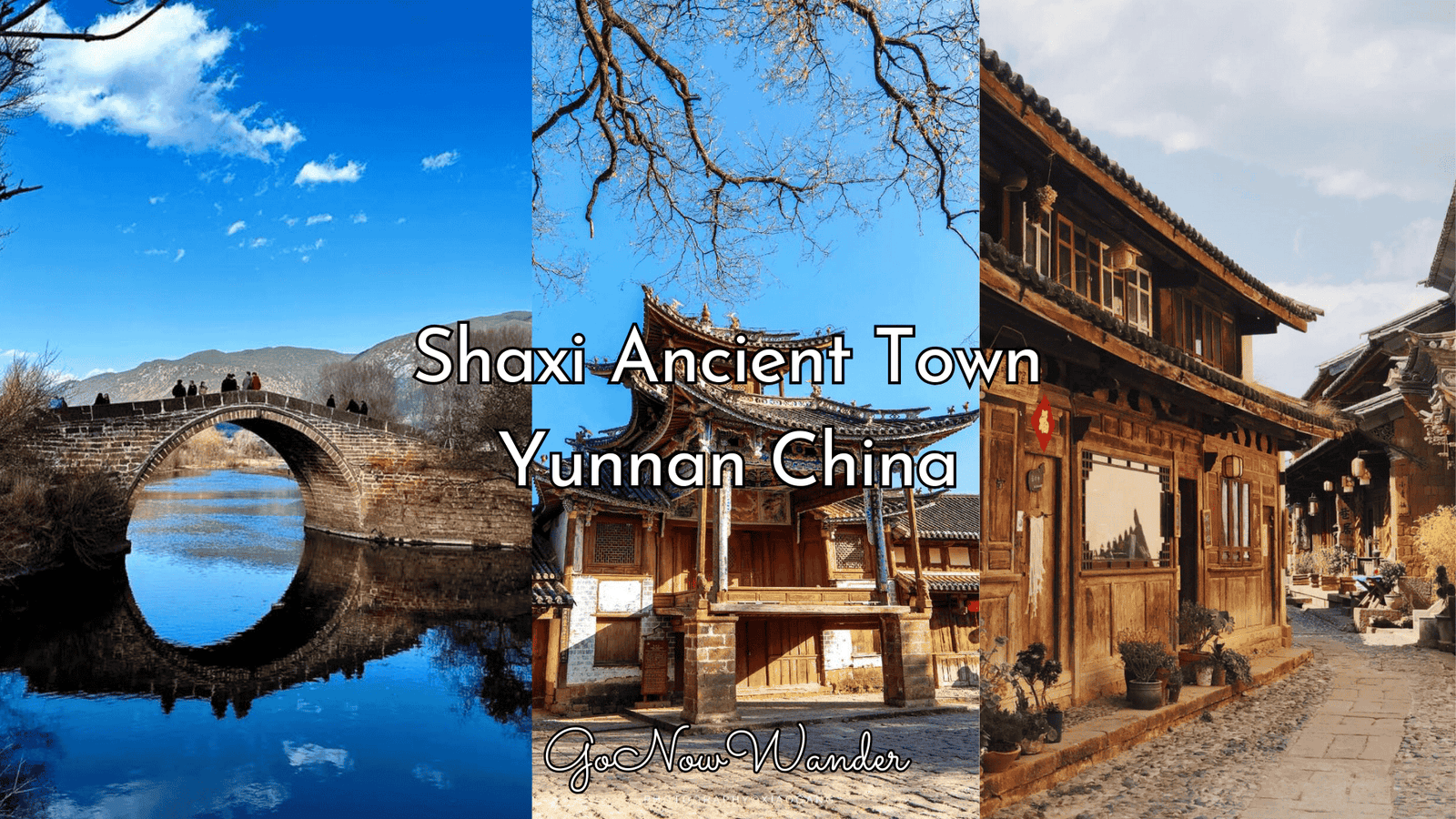
Shaxi Ancient Town Ultimate Travel Guide|Where Time Slows Along the Tea Horse Road
1. Scenery & Experiences|A Town That Whispers History
Shaxi Ancient Town, nestled between Dali and Lijiang, was once a key post on the ancient Tea Horse Road. Unlike the bustling streets of Lijiang or Dali, Shaxi feels untouched, authentic, and timeless.
The first time I wandered its cobblestone streets, the air carried the scent of earth and grass. Tea houses and old residences quietly told stories of traders and travelers from centuries past. Every step felt like stepping into history.
Best Time to Visit Shaxi Ancient Town (Best Time to Visit Shaxi)
- March–June: Spring bloom, crisp mountain air, perfect for photography
- September–November: Clear skies, soft sunlight, ideal for walking and capturing light
- Winter (December–February): Cool and dry, fewer tourists, perfect for deep cultural immersion
Must-Do Experiences Things to Do in Shaxi Ancient Town )
- Stroll the cobblestone streets and main square, absorbing the historical atmosphere
- Visit the ancient theater to explore Tea Horse Road culture
- Sip Pu’er or Dianhong tea in a local teahouse
- Photograph the town at sunrise or sunset for magical light
2. Core Attractions & Personal Travel Moments
Cobblestone Streets & Main Square
The centuries-old stones underfoot seem to hold stories. Early morning mist and soft sunlight create a serene backdrop, with shops just opening and tea aromas mingling with the fresh air.
Ancient Theater & Traditional Houses
My favorite spot is the bench in front of the ancient theater, listening to locals share Tea Horse Road tales. The wooden carved homes feel warm and inviting, perfect for lingering hours.
Teahouse Experience
At a small Shaxi teahouse, I sipped freshly roasted Pu’er tea. The aroma carried the essence of land and time. Sitting there, I could almost feel history flowing around me.
3. Transportation & Local Culture ( Shaxi Transportation / Naxi Culture)
Getting There:
- Dali → Shaxi: ~2 hours by car, private transfer or self-drive
- Lijiang → Shaxi: ~3 hours by car
- Walking is the best way to explore the town; streets are pedestrian-friendly
Culture:
- A mix of Naxi and Bai ethnic architecture
- Clear remnants of the historic Tea Horse Road
- Local handicrafts and cultural activities add depth to the visit
4. Food|Rustic Flavors of the Ancient Town (Shaxi Food )
- Local chicken rice noodles: warm and comforting
- Roasted milk fan (Kaofu): subtly smoky and creamy
- Snacks: wild vegetables, Zanba, handmade pastries
- Teahouses serving Pu’er, Dianhong, and herbal teas
5. Culture & Heritage (Tea Horse Road )
- Explore Tea Horse Road heritage sites
- Traditional wooden architecture and cobblestone streets
- Handicraft workshops and local artisan experiences
- Ancient theater and village festivals
6. Accommodation (Shaxi Accommodation / Where to Stay in Shaxi)
Luxury:
- Boutique lodges: peaceful courtyards, panoramic views of the town
- High-end inns blending modern comfort with traditional architecture
Mid-Range / Guesthouses:
- Guesthouses in the town center: English-friendly, attentive service
- Courtyard inns: intimate, quiet, authentic experience
Budget:
- Surrounding inns: clean, safe, affordable
- Youth hostels: often English-speaking, ideal for backpackers
7. Suggested Stay & Traveler Type
- Recommended Duration: 1–2 days
- Ideal for:
- Slow travelers
- History and culture enthusiasts
- Visitors looking to escape crowded tourist towns
- Slow travelers
- Not Ideal for:
- Fast-paced “checklist” travelers
- Fast-paced “checklist” travelers
8. Must-Do Experiences & Hidden Gems
- Sunrise along cobblestone streets
- Explore the ancient theater and watch local performances
- Deep dive into teahouse culture
- Handicraft workshops in quiet alleys
- Evening strolls to soak in sunset lighting
Entrance Fees / Costs:
- Town free to enter; some craft or cultural activities: 30–50 RMB (~4–7 USD)
9. Travel Budget
- Accommodation:
- Luxury: 800–1500 RMB (~110–210 USD)
- Mid-range: 350–700 RMB (~50–95 USD)
- Budget: 150–300 RMB (~22–45 USD)
- Luxury: 800–1500 RMB (~110–210 USD)
- Food: 40–100 RMB (~6–15 USD) per person
- Transport: Private car from Dali or Lijiang: 300–500 RMB (~40–70 USD)
10. Travel Tips
- Streets are uneven; wear comfortable shoes
- Respect local residents and keep noise low
- Evenings can be chilly; bring a light jacket
- Walking is primary; few vehicles but stay aware
11. Best Photography Spots
- Cobblestone streets at sunrise
- Ancient theater with morning light
- Alleyways and courtyard details
- Main square at sunset
12. Suggested Combination Itineraries
- Shaxi + Lijiang (2–3 days): Slow travel and deep cultural immersion
- Shaxi + Dali (3–4 days): Ancient town + Tea Horse Road cultural route
- Shaxi + Tiger Leaping Gorge (3 days): Natural scenery meets historic town
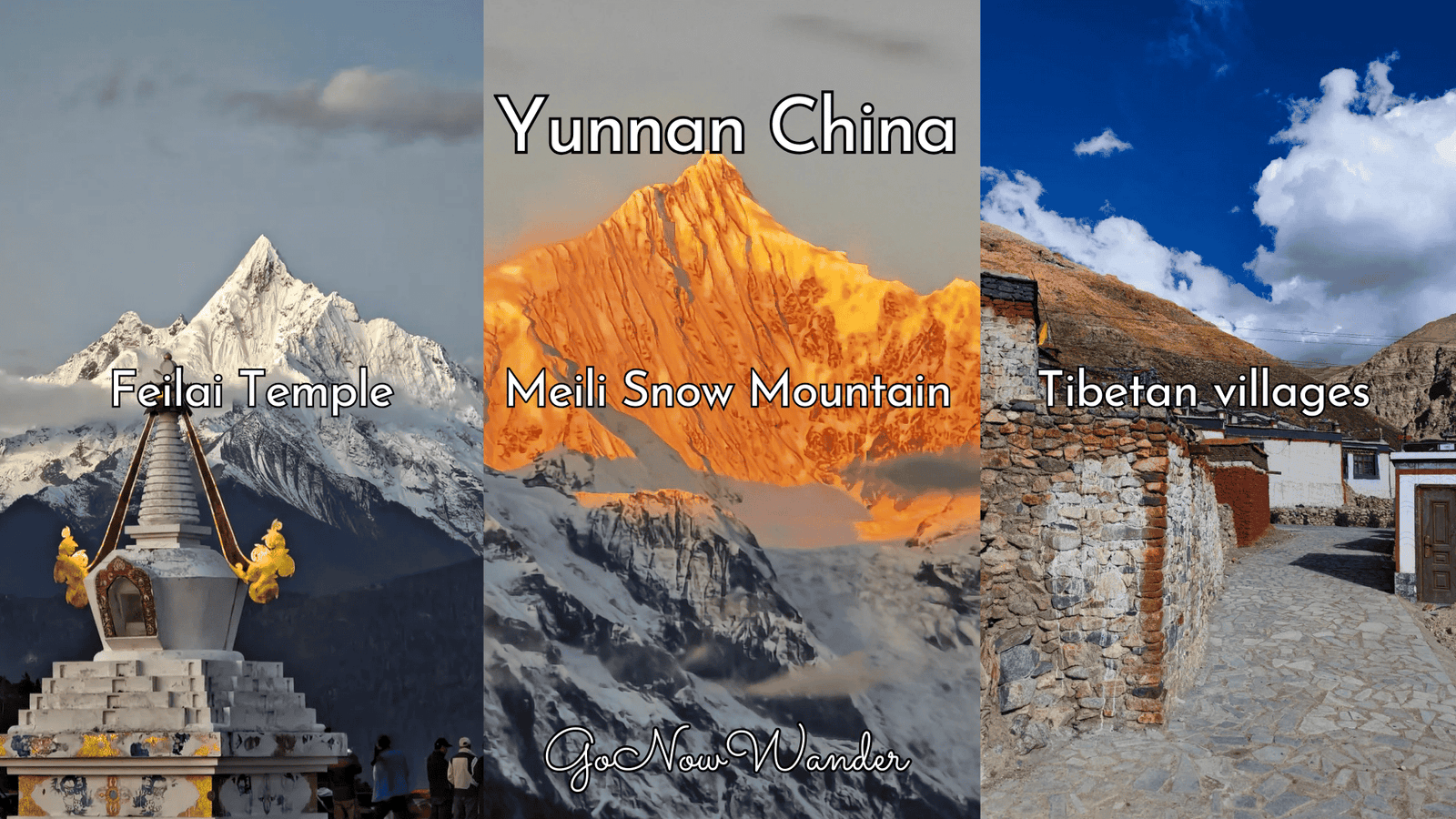
Meili Snow Mountain Ultimate Travel Guide|Mystery in the Clouds, Whispers of Snow
1. Scenery & Experiences|Sacred Peaks and Serene Heights
Meili Snow Mountain, located north of Shangri-La, is the sacred Kawagebo Peak revered by Tibetan locals. Its allure lies in the interplay of snow-capped peaks, flowing clouds, deep valleys, and remote Tibetan villages. Every glance feels like a conversation with nature.
I first saw Meili Snow Mountain at sunrise. Golden light kissed the snowy peaks, clouds curled around the valleys, and I felt my breath stretch with the mountain’s serenity. It was humbling, grounding, and unforgettable.
Best Time to Visit Meili Snow Mountain (Best Time to Visit Meili Snow Mountain )
- October – April: Clear skies, crisp snow, ideal trekking conditions
- May – June: Snow melts, valleys come alive with streams and greenery
- July – August: Rainy season; dramatic clouds, though visibility may be low
Must-Do Experiences ( Things to Do at Meili Snow Mountain )
- Sunrise at Feilai Temple
- Trekking the Meili Snow Mountain loop
- Visiting Tibetan villages to experience local culture
- Photographing mountain reflections in high-altitude lakes
2. Key Attractions & Personal Travel Moments
Feilai Temple
Watching the first sunlight touch the peaks from Feilai Temple is magical. Clouds drift slowly around the mountain, and for a moment, everything feels still and sacred. My heartbeat synchronized with the calm, vast landscape.
Meili Snow Mountain Loop Trek
Hiking the loop brings you close to the grandeur of the mountains and valleys. The wind carries the scent of snowmelt and alpine plants—refreshing and clarifying your mind instantly.
Tibetan Village Immersion
I joined a local Tibetan family for butter tea, listening to elders recount snow mountain legends. At night, under the starry sky, Kawagebo Peak stood silently, a guardian watching over the valley.
3. Transportation & Local Culture (Meili Snow Mountain Transportation / Tibetan Culture)
- Shangri-La → Deqin County: ~4–5 hours by car, private transfer or self-drive
- Deqin Airport: Small local airport; flights connect from Shangri-La, Lijiang
- Trekking transport: Arrange accommodations along the loop
- Culture: Rich Tibetan traditions, pilgrimage routes, mountain worship
4. Food|Highland Flavors (Meili Snow Mountain Food )
- Butter tea: Essential highland drink
- Barley wine: Local Tibetan specialty
- Highland meats, potatoes, barley-based dishes
- Simple, hearty meals in local mountain inns
5. Culture & Heritage ( Tibetan Culture )
- Pilgrimage and circumambulation traditions
- Tibetan-style wooden homes
- Snow mountain spiritual beliefs and local festivals
- Tibetan medicinal herbs knowledge
6. Accommodation
Luxury:
- Boutique inns in Deqin: panoramic mountain views, serene mornings
- Highland resorts with modern amenities, ideal for extended stays
Mid-Range / Guesthouses:
- Guesthouses along Feilai Temple route: English-speaking staff, trekking guidance
Budget:
- Deqin town hostels: clean, safe, practical
7. Suggested Stay & Traveler Type
- Recommended Duration: 2–3 days
- Ideal for:
- High-altitude trekking enthusiasts
- Culture and photography lovers
- Spiritual and slow-travel seekers
- High-altitude trekking enthusiasts
- Not ideal for:
- Travelers with severe altitude sensitivity
- Fast-paced, checklist-style travelers
- Travelers with severe altitude sensitivity
8. Must-Do Experiences & Hidden Gems
- Sunrise at Feilai Temple
- Meili Snow Mountain loop trek
- High-altitude lake reflections of the peaks
- Tibetan village cultural immersion
- Sharing butter tea with local families
Entrance Fees / Costs:
- Feilai Temple: 50 RMB (~7 USD)
- Loop trek: no entrance fee; costs depend on accommodation and guides
9. Travel Budget
- Accommodation:
- Luxury: 800–1500 RMB (~110–210 USD)
- Mid-range: 350–700 RMB (~50–95 USD)
- Budget: 150–300 RMB (~22–45 USD)
- Luxury: 800–1500 RMB (~110–210 USD)
- Food: 30–100 RMB (~5–15 USD) per person
- Transport: Private car from Shangri-La: 400–600 RMB (~60–85 USD)
10. Travel Tips
- Acclimate to high altitude; monitor for altitude sickness
- Strong UV exposure; use sunscreen and sunglasses
- Trekking safety is critical; check weather forecasts
- Mountain visibility depends on weather; remain flexible
11. Best Photography Spots
- Sunrise at Feilai Temple
- Clouds drifting over the mountain loop
- Reflections in alpine lakes
- Distant views from Deqin town
12. Suggested Combination Itineraries
- Shangri-La + Meili Snow Mountain (3–5 days): Tibetan landscapes + highland trekking
- Lijiang + Shangri-La + Meili Snow Mountain (5–7 days): Ancient towns + sacred peaks + cultural immersion
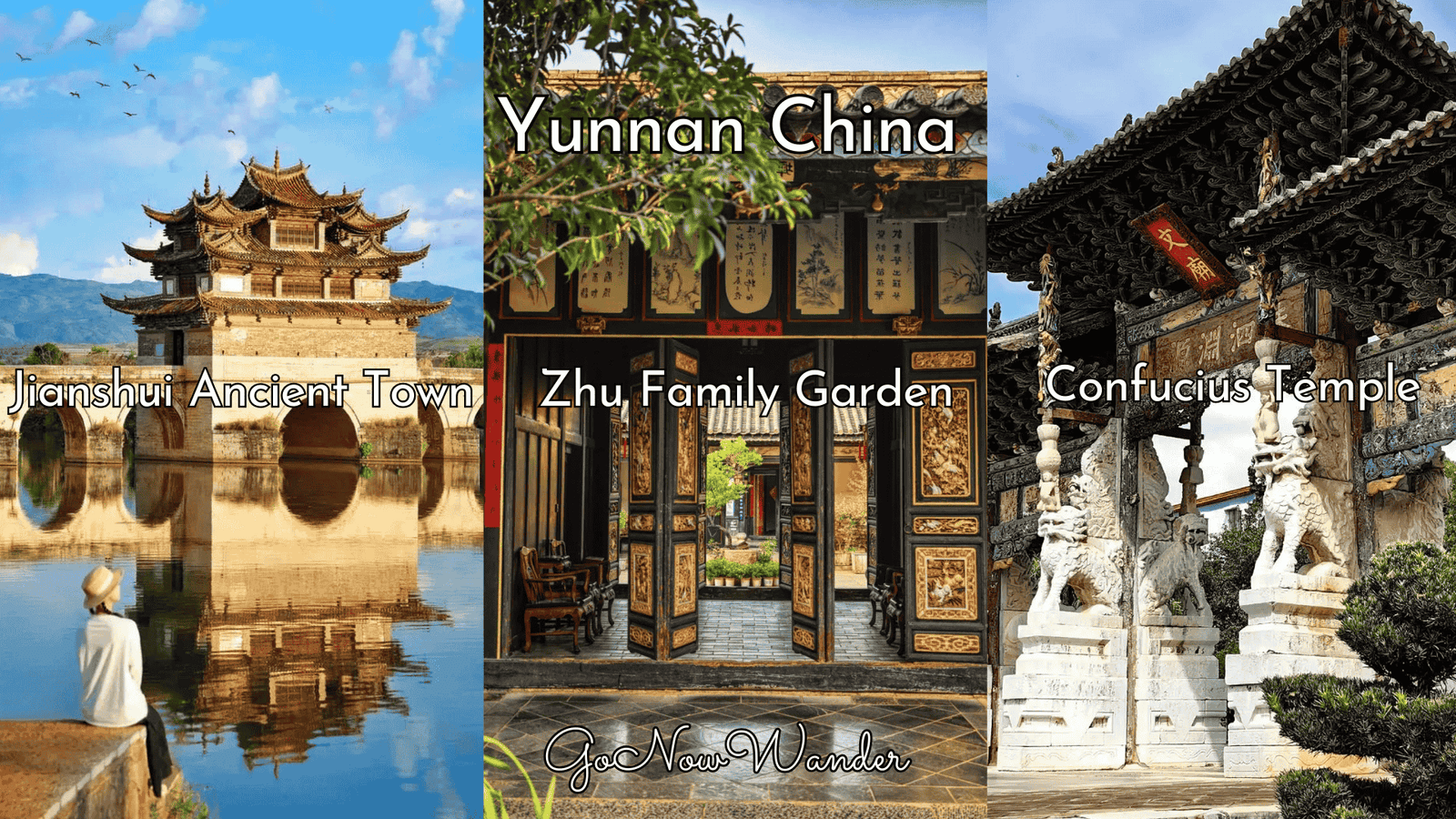
Jianshui Ancient Town Ultimate Travel Guide|History and Life in Slow Motion
1. Scenery & Experiences|Breathing History on Stone Streets
Jianshui Ancient Town, located in southern Yunnan, is one of the best-preserved ancient towns in southern Yunnan. Its charm lies in historic alleys, red city walls, stone streets, and century-old courtyards, where every step feels like touching the heartbeat of history.
I first walked into Jianshui in the afternoon when the sun slanted gently across the streets. The stone paths reflected a warm glow, and the shadows of the city walls felt like wrinkles of time. I wandered slowly, smelling tea and hearing laughter from distant alleys, feeling my heartbeat align with the town’s unhurried rhythm.
Best Time to Visit Jianshui Ancient Town
- March – June: Spring sunlight, flowers blending with the ancient town
- September – November: Autumn air is crisp, sunlight soft, perfect for photography
- December – February: Winter is quiet, fewer tourists, ideal for deep exploration
Must-Do Experiences ( Things to Do in Jianshui Ancient Town)
- Strolling along the historic stone streets
- Visiting Zhu Family Garden
- Exploring the Confucius Temple
- Tasting authentic southern Yunnan snacks
- Experiencing the tranquil night atmosphere of the ancient town
2. Key Attractions & Personal Travel Moments
Zhu Family Garden
As the largest and best-preserved private garden in Yunnan, Zhu Family Garden impressed me with its harmony between architecture and nature. Every carved window, stone bridge, and courtyard felt like a page from history waiting to be explored.
Confucius Temple
The Confucius Temple embodies the town’s cultural soul. Walking among its halls, I could sense the footsteps of students spanning centuries, feeling as if I were moving through time.
Ancient Streets & Alleys
The streets preserve the town’s traditional layout. Walking here, you encounter tea houses, handicraft shops, and locals going about their lives, giving the place a genuine, lively atmosphere.
3. Transportation & Local Culture ( Jianshui Transportation / Jianshui Ancient Town Transportation)
- Kunming → Jianshui: 3–4 hours by high-speed train or long-distance bus
- Jianshui Train Station: Convenient for local travel
- Within the Town: Walking is best; bikes or e-scooters are optional
- Culture: Rich southern Yunnan heritage, preserved courtyards, Confucius Temple, traditional theaters, and artisan workshops
4. Food|Authentic Southern Yunnan Flavors ( Jianshui Food )
- Jianshui Tofu Balls: Tender, subtly sweet
- Crossing-the-Bridge Rice Noodles: Classic Yunnan snack
- Grilled Rice Cakes: Aromatic and flavorful, street food favorite
- Southern Yunnan Tea Houses: Enjoy local tea while listening to ancient town stories
5. Culture & Heritage ( Jianshui Culture)
- Zhu Family Garden and Ming-Qing courtyards
- Confucius Temple and historical study halls
- Local festivals and theater performances
- Traditional crafts and folk storytelling
6. Accommodation
Luxury:
- Boutique courtyard hotels in the ancient town, combining traditional architecture with modern comfort
- High-end resorts with gardens or balconies overlooking the town
Mid-Range / Guesthouses:
- Guesthouses along stone streets, English-speaking staff, offering authentic daily life experiences
Budget:
- Hostels and small inns near the town center, clean, safe, and convenient
7. Suggested Stay & Traveler Type
- Recommended Duration: 1–2 days
- Ideal for:
- History and culture enthusiasts
- Slow-travel lovers and photographers
- Travelers seeking authentic Yunnan town life
- History and culture enthusiasts
- Not ideal for:
- Fast-paced “checklist” tourists
- Fast-paced “checklist” tourists
8. Must-Do Experiences & Hidden Gems
- In-depth visit to Zhu Family Garden
- Learning about local culture at Confucius Temple
- Walking the stone streets at sunrise or sunset
- Enjoying the quiet of the town at night
- Sitting in a small alley tea house
Entrance Fees / Costs:
- Zhu Family Garden: 40 RMB (~6 USD)
- Confucius Temple: 30 RMB (~5 USD)
- Walking the town: free
9. Travel Budget
- Accommodation:
- Luxury: 600–1200 RMB (~85–170 USD)
- Mid-range: 300–600 RMB (~45–85 USD)
- Budget: 100–300 RMB (~15–45 USD)
- Luxury: 600–1200 RMB (~85–170 USD)
- Food: 20–80 RMB (~3–12 USD) per person
- Transport: Walking preferred; bike/e-scooter 50–100 RMB/day
10. Travel Tips
- Stone streets can be slippery; wear comfortable shoes
- Ancient town is busiest during the day; mornings or evenings are best for strolling
- Respect local culture and residents
- Payment: many shops accept Visa/Master, cash or mobile payments are convenient
11. Best Photography Spots
- Courtyards of Zhu Family Garden
- Light and shadow on the stone streets
- Architectural details at Confucius Temple
- Sunset on the ancient streets
12. Suggested Combination Itineraries
- Jianshui + Yuanyang Rice Terraces (2–3 days): Ancient town + rice terrace photography
- Jianshui + Mengzi / Honghe (3–4 days): Deep dive into southern Yunnan culture
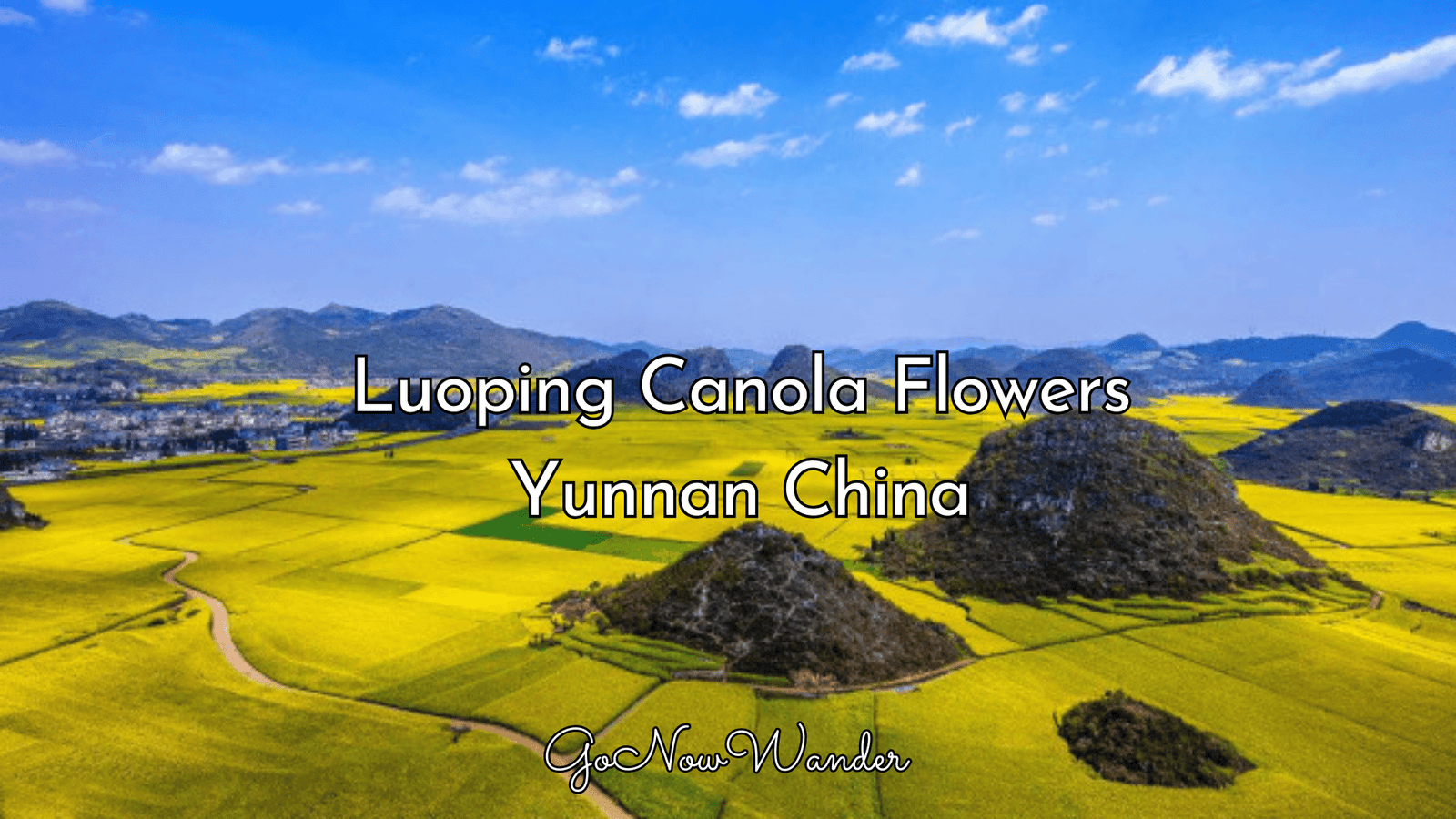
Luoping Canola Flowers Ultimate Travel Guide|Golden Seas and Slow Travel
1. Scenery & Experiences|Golden Sea of Spring
Luoping Canola Flowers are among Yunnan’s most mesmerizing springtime sights. Endless fields of golden blooms spread across valleys like sunlight poured onto the earth. Every breath carries the subtle scent of flowers.
I first visited Luoping in early March, right at peak bloom. Riding a small electric bike along the winding paths through the fields, the breeze brushed my face, carrying the soft fragrance of flowers. At that moment, I almost lost track of time—I just wanted to soak in this golden sea.
Best Time to Visit Luoping Canola Flowers
- March – April: Peak bloom, valleys glowing golden
- Photography tip: Early morning or late afternoon light, with mist and soft sunlight, adds depth and drama
Must-Do Experiences ( Things to Do in Luoping Canola Fields )
- Ride an electric bike or bicycle through the flower fields
- Photograph landscapes combining fields, terraces, and distant mountains
- Participate in local farming experiences
- Watch the morning mist rising over the flowers
- Admire sunsets over the golden fields
2. Key Attractions & Personal Travel Moments
- Jiulong Waterfalls: Surrounded by flowers, perfect for combining water and blooms in photos
- Maluzhai Viewpoint: Offers the best panoramic view of the canola fields
- Luoping Town & Surrounding Villages: Experience local ethnic minority life and the charm of rural Yunnan
My favorite memory is riding to the Maluzhai viewpoint at sunrise. The sun pierced the light mist, the flower fields glowing golden, and the terraced fields layered perfectly like a painting slowly unfolding.
3. Transportation & Local Culture ( Luoping Transportation )
- Kunming → Luoping: 4–5 hours by high-speed train or long-distance bus
- Local transportation: Electric bikes are the most convenient way to explore
- Culture: Yi and Miao ethnic minorities, slow-paced rural lifestyle, opportunities to try farming and local customs
4. Food|Rustic Flavors from the Fields ( Luoping Food )
- Yi-style Cured Meat: Smoky and savory, pairs perfectly with local vegetables
- Sour Soup Fish: Tangy, slightly spicy, very appetizing
- Seasonal Wild Vegetables: Freshly picked, crisp and light
- Farmhouse Snacks: Corn cakes, sticky rice treats, simple but satisfying
5. Culture & Heritage ( Luoping Culture )
- Yi and Miao traditional festivals and folk customs
- Agricultural practices and terraced field layouts
- Photography and slow-living experiences amid the flower fields
6. Accommodation
Luxury:
- Flower-view boutique guesthouses with balconies overlooking the fields
Mid-range:
- Town-based boutique guesthouses with friendly English-speaking staff
Budget:
- Clean and simple inns in Luoping Town, convenient for short stays
7. Suggested Stay & Traveler Type
- Recommended Duration: 1–2 days
- Ideal For:
- Photography enthusiasts
- Spring flower lovers
- Slow-travel seekers
- Photography enthusiasts
- Not Ideal For:
- Fast-paced, city-focused travelers
- Fast-paced, city-focused travelers
8. Must-Do Experiences & Hidden Gems
- Early morning mist over the flower fields
- Sunset over the golden terraces
- Capture village scenes with fields and traditional houses
- Participate in local farming activities: picking vegetables, feeding livestock
Entrance Fees / Costs:
- Most flower areas are free; some viewpoints charge 20–30 RMB (~3–5 USD)
9. Travel Budget
- Accommodation:
- Luxury: 500–1000 RMB (~70–140 USD)
- Mid-range: 250–500 RMB (~35–70 USD)
- Budget: 100–250 RMB (~15–35 USD)
- Luxury: 500–1000 RMB (~70–140 USD)
- Food: 20–80 RMB (~3–12 USD) per person
- Transport: Electric bike rental 80–150 RMB/day
10. Travel Tips
- Spring mornings and evenings can be chilly, bring layers
- Best light for photography: early morning or late afternoon
- Roads in the fields may be slippery—ride carefully
- Respect local customs and farmers’ lives
- Payment: Cash is preferred; some guesthouses accept mobile payments
11. Best Photography Spots
- Maluzhai Viewpoint: Panoramic field view
- Jiulong Waterfalls: Flowers combined with waterfalls
- Village lanes with terraces and flowers
- Flower fields shrouded in morning mist
12. Suggested Combination Itineraries
- Luoping + Yuanyang Rice Terraces (3–4 days): Spring flower fields + classic terrace photography
- Luoping + Jianshui Ancient Town (2–3 days): Golden flower fields + slow town exploration
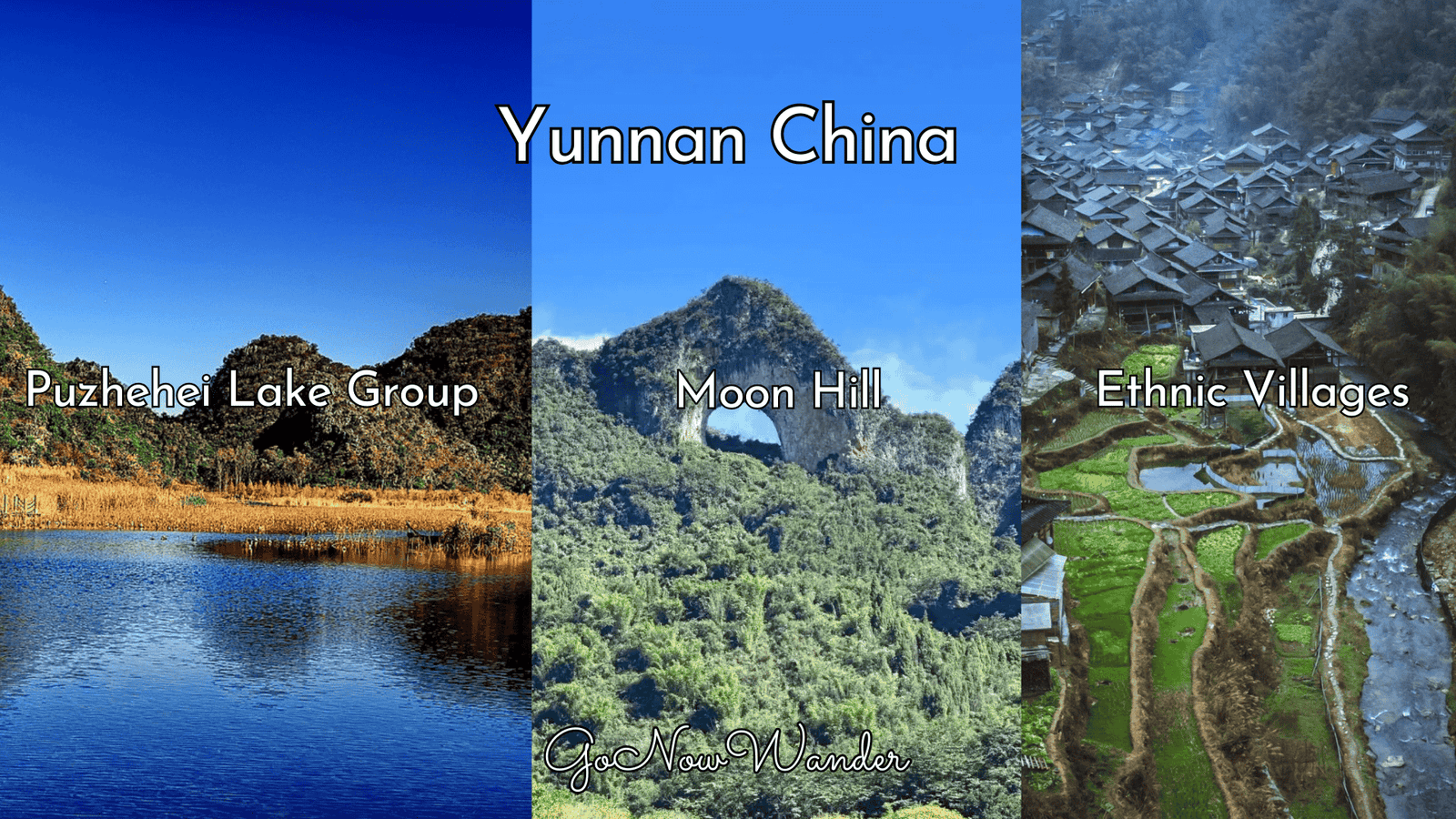
Puzhehei Ultimate Travel Guide|Lakes, Karst Hills & Ethnic Culture
1. Scenery & Experiences|Gentle Lake and Karst Peaks
Puzhehei is a hidden gem in southeastern Yunnan. Lakes, wetlands, and karst peaks weave together like a living painting. In the early morning, mist rises gently from the water as bamboo boats glide across the lake. At sunset, the karst peaks stretch long shadows, reflecting golden light across the water.
I first visited Puzhehei in late spring. The flowers weren’t fully in bloom yet, and the lake was perfectly still. Riding a small boat, the breeze brushed my face, distant mountains appearing like brushstrokes in ink. Time slowed down, and I felt completely at peace with nature.
Best Time to Visit Puzhehei
- March – June: Late spring to early summer, green hills and clear lakes
- September – November: Autumn, crisp light, perfect for photography
- July – August: Rainy season, misty and dreamy, great for moody shots
Must-Do Experiences ( Things to Do in Puzhehei )
- Paddle or take a bamboo raft across the lakes
- Cycle around lakeside paths and village trails
- Photograph karst hills and reflections in the water
- Explore local Bai, Yi, and Miao ethnic villages
- Capture early morning mist and evening sunsets
2. Key Attractions & Personal Travel Moments
- Puzhehei Lake Group: Explore multiple interconnected lakes by boat
- Moon Hill: Offers panoramic views of the lakes and karst peaks
- Ethnic Villages: Experience traditional crafts, music, and local customs
My favorite memory: sitting quietly on a bamboo raft at sunset, the lake reflecting the mountains, a gentle breeze on my face—it felt like having a private conversation with the universe.
3. Transportation & Local Culture (Puzhehei Transportation)
- Kunming → Wenshan → Puzhehei: 5–6 hours by long-distance bus or car
- Local transportation: Electric bikes, bicycles, and boats are the easiest way to explore
- Culture: Yi, Miao, and Bai ethnic minorities, slow-paced rural lifestyle, warm hospitality
4. Food|Fresh, Rustic Flavors (Puzhehei Food )
- Fresh Lake Fish: Sweet and light
- Wild Vegetables & Mushrooms: Crisp and natural
- Ethnic Snacks: Sticky rice, corn cakes, simple but satisfying
- Farmhouse Meals: Authentic, hearty, with a sense of local life
5. Culture & Heritage ( Puzhehei Culture )
- Yi, Miao, and Bai traditional festivals
- Handicrafts like weaving, silverwork, and embroidery
- Farming and fishing traditions embedded in daily life
6. Accommodation
Luxury:
- Lake-view resorts with panoramic views of karst peaks, fully equipped rooms
Mid-range:
- Boutique lakeside guesthouses, English-speaking staff, cozy and characterful
Budget:
- Clean inns in Puzhehei Town, convenient for short stays or travelers on a budget
7. Suggested Stay & Traveler Type
- Recommended Duration: 2–3 days
- Ideal For:
- Nature lovers
- Light cycling or boating enthusiasts
- Photographers
- Travelers interested in ethnic minority culture
- Nature lovers
- Not Ideal For:
- Fast-paced city-focused travelers
- Fast-paced city-focused travelers
8. Must-Do Experiences & Hidden Gems
- Early morning lake mist and reflections
- Bamboo raft or small boat rides
- Cycling around lakes and villages
- Visiting ethnic craft workshops
Entrance Fees / Costs:
- Most lakes and attractions are free; boat rides cost around 50–100 RMB (~7–15 USD)
9. Travel Budget
- Accommodation:
- Luxury: 500–1200 RMB (~70–170 USD)
- Mid-range: 250–500 RMB (~35–70 USD)
- Budget: 100–250 RMB (~15–35 USD)
- Luxury: 500–1200 RMB (~70–170 USD)
- Food: 20–80 RMB (~3–12 USD) per person
- Transport: Boat or electric bike rental 80–150 RMB/day
10. Travel Tips
- Early mornings and evenings can be cool; bring layers
- Roads and paths may be slippery during rain
- Respect local customs and farmers’ daily lives
- Cash is preferred; some guesthouses accept mobile payments
11. Best Photography Spots
- Bamboo raft in the center of the lake
- Moon Hill panoramic viewpoint
- Village lanes among fields and lakes
- Ethnic villages with lakes and karst hills
12. Suggested Combination Itineraries
- Puzhehei + Wenshan Terraces (3–4 days): Lakes and terraces for photography
- Puzhehei + Luoping Canola Flowers (2–3 days): Spring flowers and lake landscapes
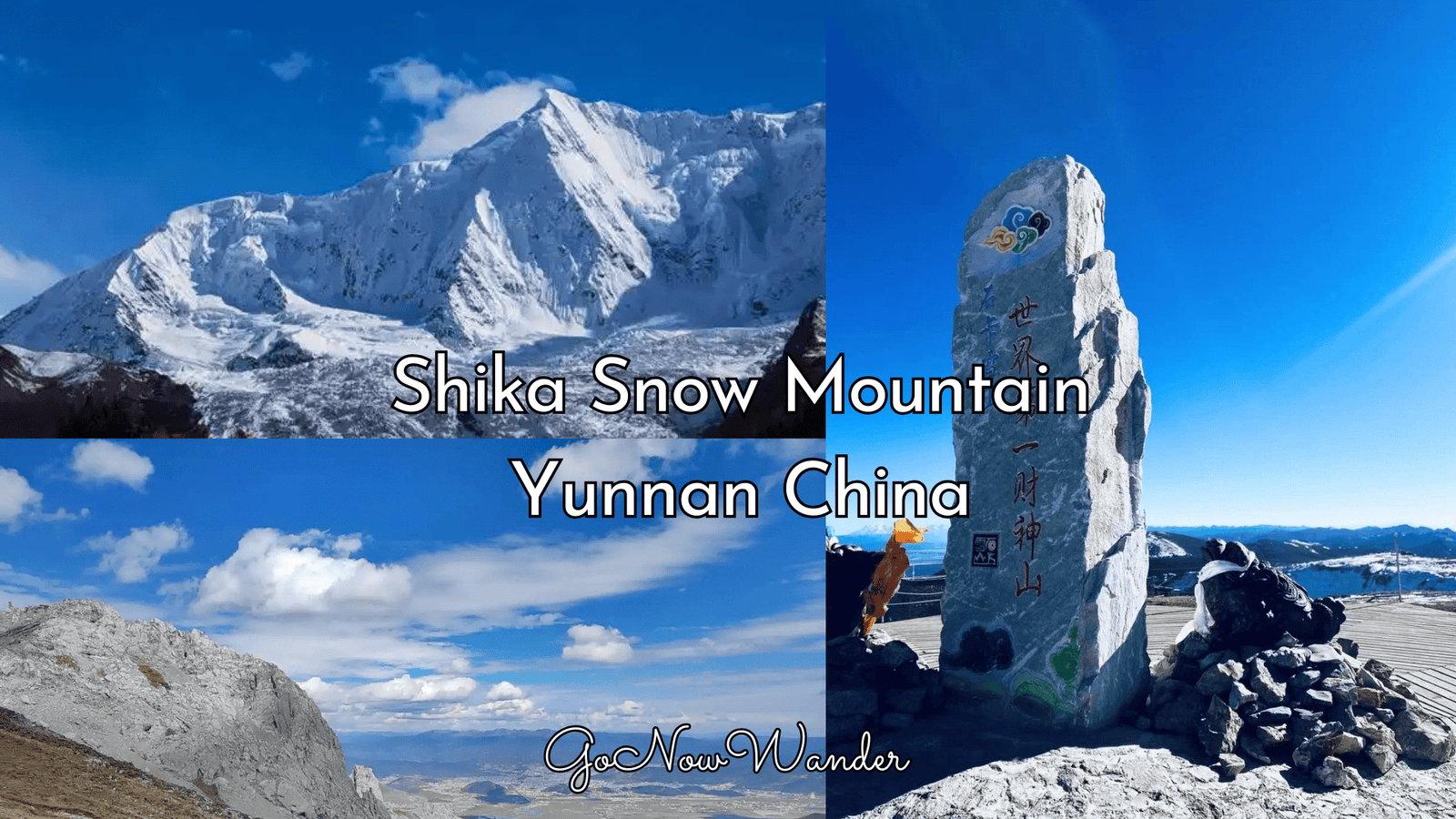
Shika Snow Mountain Ultimate Travel Guide|High-Altitude Snowscapes and Sun-Kissed Peaks
1. Scenery & Experience|Light, Silence, and Snowy Peaks
Shika Snow Mountain, located in eastern Shangri-La, Yunnan, rises to about 4,300 meters and marks the transition between Yunnan and Tibet. Unlike the more commercialized Jade Dragon Snow Mountain, Shika offers tranquility and an untouched highland charm.
The first time I stood at the foot of Shika, the sunlight pierced through thin clouds, illuminating the snowy peaks in soft silver. The wind brushed my face with crisp, clean highland air, and I felt like nature itself had gently cleansed my soul.
Best Time to Visit (Shika Snow Mountain best travel time )
- Oct–Mar: Snow is at its fullest; sunrise and sunset create breathtaking light.
- Apr–Jun: Snow melts and wildflowers bloom along the slopes.
- Jul–Sep: Cloudy rainy season; ideal for capturing misty snow peaks and cloud seas.
Must-Do Activities ( Things to do in Shika Snow Mountain )
- Take the cable car or hike to the observation platform for panoramic views.
- Trek between the alpine meadows and the snow line.
- Capture sunrise/sunset golden peaks and cloud seas.
- Observe Tibetan herders and their traditional lifestyle.
2. Key Spots & Personal Travel Experience
- Cable Car to Snow Mountain: Quick access to the observation platform overlooking valleys.
- Alpine Meadows: Summer brings grazing yaks and blooming wildflowers.
- Sunrise Golden Peak: Early morning sunlight turns snow-capped peaks into pure gold.
I vividly remember watching the sunrise on my first visit: the sky slowly turned pink and orange, and the peak gleamed golden. It felt like a living painting frozen in time.
3. Transportation & Cultural Highlights ( Shika Snow Mountain transportation )
- From Shangri-La → Shika Snow Mountain: About 1-hour drive by private car.
- On-site: Mainly on foot or by cable car.
- Culture: Tibetan pastoral life, traditional tents, yak herding, morning smoke from kitchens.
4. Food|Highland Flavors ( Shika Snow Mountain food )
- Yak meat hotpot or barbecue.
- Tibetan butter tea and barley bread.
- Local mountain mushrooms and vegetables.
5. Culture & Human Touch (Tibetan culture )
- Daily life of Tibetan herders.
- High-altitude festivals and rituals.
- Handicrafts: felt products, yak rope.
6. Accommodation Recommendations
Luxury
- Snow-view resort hotels with panoramic balconies.
Mid-Range
- Tibetan-style courtyard guesthouses near the city or scenic areas.
- English-friendly, attentive service.
Budget
- Youth hostels or clean, simple inns in Shangri-La or nearby villages.
7. Suggested Stay & Suitable Travelers
- Recommended Duration: 1–2 days.
- Best for:
- Snow peak lovers and photographers.
- Light trekking and nature exploration enthusiasts.
- Travelers interested in Tibetan culture.
- Snow peak lovers and photographers.
- Not ideal for:
- Those prone to high-altitude sickness.
- Travelers seeking fast-paced urban trips.
- Those prone to high-altitude sickness.
8. Must-Do Experiences & Hidden Gems
- Sunrise at the golden peak.
- Trekking through alpine meadows.
- Panoramic photography from the cable car observation deck.
- Interacting with Tibetan herders and experiencing daily pastoral life.
Entrance Fees / Costs
- Cable car: approx. 150–200 RMB (~22–30 USD).
- Alpine meadow trekking: free.
9. Travel Budget Reference
- Accommodation:
- Luxury: 700–1,500 RMB (~100–220 USD)
- Mid-range: 400–700 RMB (~60–100 USD)
- Budget: 150–350 RMB (~22–50 USD)
- Luxury: 700–1,500 RMB (~100–220 USD)
- Food: 30–120 RMB (~5–18 USD) per person.
- Transportation: Private car or cable car 100–200 RMB.
10. Travel Tips
- High-altitude UV exposure is strong; bring sunscreen.
- Morning and evening temperatures vary; pack warm layers.
- Be aware of altitude sickness.
- Peak times may require queuing for the cable car.
11. Best Photo Spots
- Sunrise at Golden Peak.
- Cable car observation platform.
- Alpine meadows with grazing yaks.
- Snow line and cloud sea intersection.
12. Nearby Combination Routes
- Shika Snow Mountain + Shangri-La Old Town (2–3 days): Snowy peaks meet Tibetan culture.
- Shika Snow Mountain + Meili Snow Mountain (4–5 days): Deep exploration of high-altitude snow scenery.
- Shika Snow Mountain + Pudacuo National Park (3 days): Combine snow mountains, lakes, and forests in one trip.
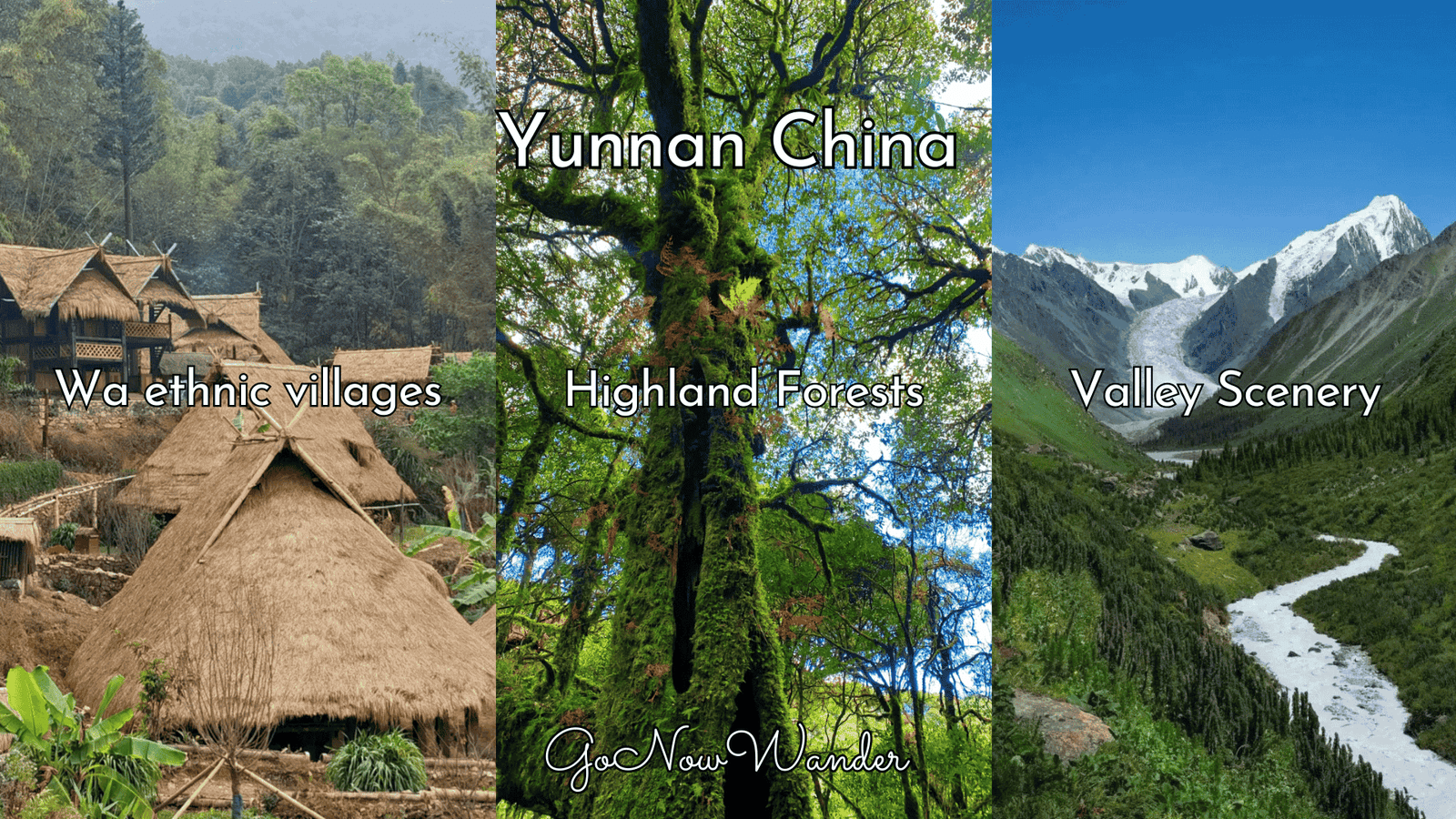
Cangyuan Travel Guide|Wa Ethnic Culture & Pristine Highland Secrets
1. Scenery & Experience|Mountains, Valleys, and Wa Culture
Cangyuan, located in southwest Yunnan, is a primary settlement of the Wa ethnic group and one of Yunnan’s most unspoiled minority regions. Here, the mountains are lush, valleys are deep, and the air is so pure it feels filtered by mountain springs.
The first time I visited Cangyuan, I followed a local guide into a village. The ground beneath my feet was soft earth, the air filled with birdsong and the gentle flow of streams. Misty high mountains loomed in the distance, creating a sense of being cut off from the world, yet profoundly moved—nature and original culture intertwined seamlessly.
Best Time to Visit ( Cangyuan best travel time)
- Oct–Apr: Dry season, clear mountain colors.
- May–Sep: Rainy season, lush greenery and spectacular waterfalls, but roads can be slippery.
Must-Do Activities ( Things to do in Cangyuan )
- Visit Wa ethnic villages and experience local customs.
- Highland trekking and exploration of pristine forests.
- Observe traditional bamboo houses and architecture.
- Interact with village elders to learn about local traditions and festivals.
2. Key Spots & Personal Travel Experience
- Wa Villages: Experience bamboo house living, weaving, and traditional farming culture.
- Highland Forests: Trekking through “natural oxygen bars.”
- Valley Scenery: Early morning mist and sunrise reflections are breathtaking.
I still vividly remember my first sunrise by the river: the water mirrored the pink-orange sky, and villagers slowly moved between bamboo houses. The entire scene was as still and serene as a paused movie.
3. Transportation & Cultural Highlights(Cangyuan transportation)
- From Lincang → Cangyuan: Approx. 3–4 hours by private car or local tour.
- Within the area: Walking between villages is ideal; some spots accessible by e-bike or motorbike.
- Culture: Wa ethnic lifestyle is harmonious with nature—warm, welcoming, yet unhurried.
4. Food|Wa Highland Flavors (Cangyuan food )
- Roasted whole fish: naturally fresh from local rivers.
- Bamboo-tube rice: aromatic with a unique texture.
- Wild vegetables and mountain mushrooms.
- Handcrafted Wa rice wine: slightly sweet and comforting.
5. Culture & Human Touch (Wa ethnic culture )
- Bamboo Houses: Elevated design adapts to mountain humidity.
- Handicrafts: Weaving, wood carving, bamboo tools.
- Festivals: Wa New Year, Mountain Worship Festival, traditional dance and song.
- Lifestyle: Farming, hunting, bamboo harvesting—living naturally in tune with the land.
6. Accommodation Recommendations
Luxury
- Resorts around Lincang or Cangyuan, some offering mountain or valley views.
Mid-Range Homestays
- Village guesthouses with English-speaking hosts.
- Bamboo house style combined with modern comfort.
Budget
- Simple hotels or youth hostels, clean and safe.
- Family-run guesthouses provide authentic local experiences.
7. Suggested Stay & Suitable Travelers
- Recommended Duration: 2–3 days.
- Best for:
- Travelers interested in pristine landscapes and minority culture.
- Hiking enthusiasts and photographers.
- Those seeking tranquil, highland retreats.
- Not ideal for:
- People sensitive to bumpy mountain roads.
- Travelers preferring urban convenience or fast-paced trips.
8. Must-Do Experiences & Hidden Gems
- Visit Wa bamboo houses and experience village life.
- Trek the highland forests, capture river valley landscapes.
- Taste bamboo-tube rice and handcrafted rice wine.
- Participate in Wa festivals (like Mountain Worship Festival, dates vary).
Entrance Fees / Costs
- Village visits: free
- Selected cultural experiences: 50–100 RMB (~7–15 USD)
9. Travel Budget Reference
- Accommodation:
- Luxury: 600–1,200 RMB (~85–170 USD)
- Mid-range: 350–700 RMB (~50–100 USD)
- Budget: 150–300 RMB (~22–45 USD)
- Food: 30–100 RMB (~5–15 USD) per person
- Transportation: Private car or motorbike 100–200 RMB (~15–30 USD)
10. Travel Tips
- High-altitude UV is strong; bring sunscreen.
- Roads can be slippery during rainy season.
- Respect local customs and avoid photographing villagers without permission.
- Temperatures vary; pack layers for warmth.
11. Best Photo Spots
- River valleys at sunrise with morning mist.
- Bamboo villages and farming scenes.
- Mountain streams and waterfalls.
- Wa festival performances and handicraft displays.
12. Nearby Combination Routes
- Cangyuan + Lincang + Tengchong (4–5 days): Minority culture and hot springs & snow mountains.
- Cangyuan + Nujiang Grand Canyon (3–4 days): Highland secrets meet dramatic canyon scenery.
- Cangyuan + Pu’er Tea Mountains (3 days): A combination of culture, nature, and pristine landscapes.