
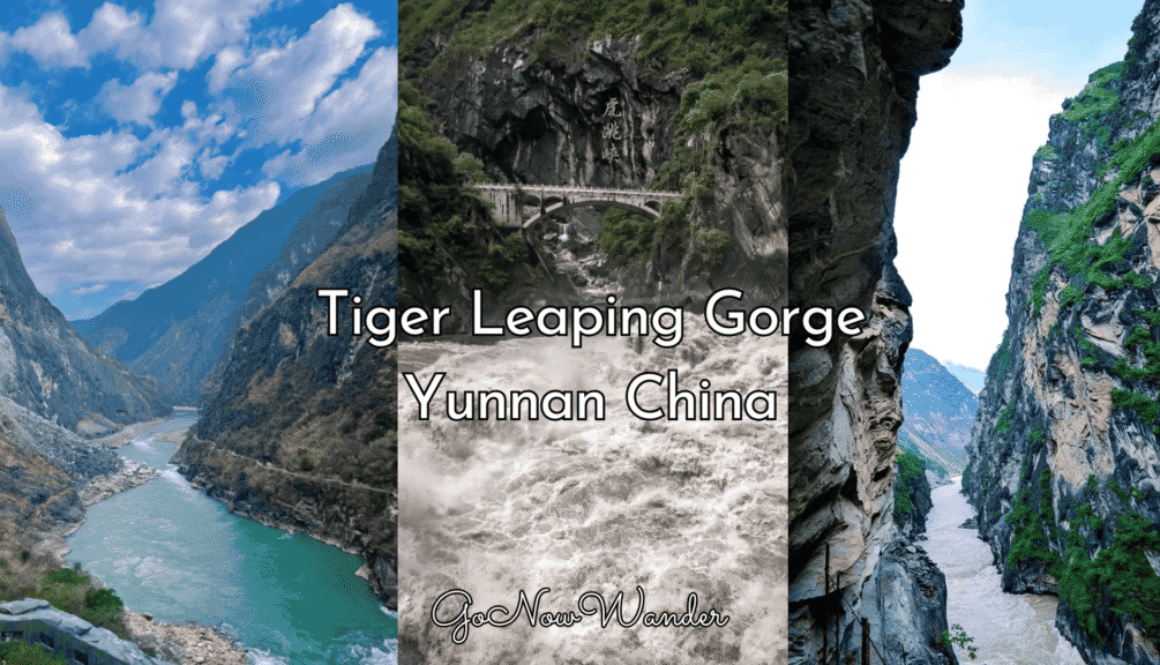
Tiger Leaping Gorge Travel Guide | Must-Visit Destination in Yunnan’s 18-Stop Adventure
Tiger Leaping Gorge Ultimate Travel Guide|Rushing Rivers, Towering Cliffs & Cultural Immersion
1. Scenery & Experiences|Where the Canyon Makes Your Breath Pause
Tiger Leaping Gorge lies along the Jinsha River between Lijiang and Shangri-La, one of the most dramatic river gorges in the world. Meltwater from snow-capped mountains plunges violently through the canyon, flanked by towering cliffs, as if the earth and sky are quietly competing.
The first time I stood on the cliff edge, the roar of the river and the wind brushing my face made my breathing slow naturally. As a Chinese medicine student, I felt the energy of the place—here, the concept of “harmony between humans and nature” becomes tangible.
Best Time to Visit Tiger Leaping Gorge
- March–June: Rivers full, dramatic water flow, perfect for photography
- September–November: Clear skies, crisp air, ideal for hiking and exploring
- July–August: Rainy season; rivers are wild and dynamic, but trails can be slippery
Must-Do Experiences ( Things to Do in Tiger Leaping Gorge )
- Core hiking trail 1–2 days through the gorge
- Capture panoramic views of snow-capped mountains and the Jinsha River
- Visit Naxi villages and experience local culture
2. Key Experiences – My Personal Travel Moments
Hiking the Gorge: Breathing with the River
I first hiked the intermediate trail (~12 km) from Upper Tiger Leaping to Middle Tiger Leaping. Each step revealed the river roaring below and cliffs echoing every sound. The air was crisp, dry, and cold from the snowmelt. It was as if the gorge itself was breathing with me.
Tips:
- Wear non-slip shoes and bring trekking poles
- Start early to avoid afternoon fog
- Core trail takes 4–6 hours; you can overnight midway or return the same day
Panoramic Views of the Gorge: A Photographer’s Paradise
From the observation platforms, you can see the full canyon stretch: rushing river, steep cliffs, and snow-capped mountains. The first time I saw it, I held my breath. Every glance felt alive and cinematic.
Naxi Village Immersion
Walking through Naxi villages, I sipped locally brewed barley wine and chatted with villagers about the Tea Horse Road. Life here is slow, smiles are warm, and the human connection enriches the natural experience.
3. Transportation & Local Culture (Tiger Leaping Gorge Transportation / Naxi Culture)
Getting There:
- Lijiang → Tiger Leaping Gorge: ~2-hour drive, private car or guided day trip
- Shangri-La → Tiger Leaping Gorge: ~4-hour drive
- Core hiking routes: Upper → Middle → Lower Gorge, transportation flexible
Culture:
- Naxi and Han villages dot the gorge
- Rich Tea Horse Road history
- Warm, welcoming locals enhance cultural immersion
4. Food|Warm Highland Flavors (Tiger Leaping Gorge Food )
- Local chicken hotpot: hearty and warming
- Barley cakes (Zanba): energizing and traditional
- Fresh mountain vegetables boiled in spring water
- Naxi homemade alcohol: authentic village flavor
5. Culture & Heritage ( Naxi Culture )
- Traditional Naxi architecture and cobblestone paths
- Tea Horse Road remnants along the gorge
- Village festivals and rituals
- Hiking here is as much a cultural journey as a natural one
6. Accommodation (Tiger Leaping Gorge Accommodation / Where to Stay in Tiger Leaping Gorge)
Luxury:
- Gorge-view boutique lodges: panoramic views of the canyon, ideal for sunrise
- Lijiang high-end hotels: convenient for arrival/departure
Mid-Range / Homestays:
- Middle Tiger Leaping homestays: comfortable, English-friendly
- Village boutique guesthouses: authentic local life experience
Budget:
- Upper/Middle Gorge hostels: clean and safe
- Simple village inns: affordable, ideal for hikers
7. Recommended Stay & Traveler Type
- Stay Duration: 1–2 days (core trail can be half-day or full-day)
- Best For:
- Hiking enthusiasts
- Photographers
- Nature and culture seekers
- Not Ideal For:
- Those afraid of altitude or steep trails
- Travelers wanting rapid “checklist tourism”
8. Must-Do Experiences & Hidden Gems
- Core hike: Upper → Middle → Lower Gorge
- Capture river & mountain panoramas
- Village stopovers: taste barley wine or Zanba
- Sunset observation points
Entrance Fees / Costs:
- Tiger Leaping Gorge ticket: ~65–80 RMB (~10–12 USD)
- Hiking is self-guided; minimal extra cost
9. Travel Budget
- Accommodation:
- Luxury: 1200–2000 RMB (~170–280 USD)
- Mid-range: 400–800 RMB (~55–110 USD)
- Budget: 150–350 RMB (~22–50 USD)
- Food: 40–120 RMB (~6–18 USD) per person
- Transport: Private car ~400–600 RMB/day (~55–85 USD)
10. Travel Tips
- Trails are steep; wear proper shoes
- Altitude may affect some travelers; pace yourself
- Summer months may have fog or sudden rain
- Respect Naxi culture and village customs
- Plan accommodation and transport in advance
11. Best Photography Spots
- Upper Tiger Leaping observation platform
- Core canyon sections near Middle Tiger Leaping
- Sunset along the river
- Villages with terraces and canyon backdrop
12. Suggested Combination Itineraries
- Lijiang + Tiger Leaping Gorge + Shangri-La (4–6 days): Ancient towns, canyon, Tibetan highlands
- Lijiang + Tiger Leaping Gorge (1-day trip): For travelers on a tight schedule
- Tiger Leaping Gorge + Jade Dragon Snow Mountain + Blue Moon Valley: Deep natural scenery immersion
Why Yunnan Is a Traveler’s Paradise
Yunnan has always felt to me like a place where the sky keeps repainting itself. The clouds drift low and full, shifting the color of the mountains from one moment to the next. A beam of light slips across a lake, and suddenly the whole landscape breathes differently.
For first-time visitors, there’s usually the same quiet shock:
this corner of China gathers seasons, cultures, languages, mountains, lakes, and rainforests into one astonishing piece of land.
When you stand in Yunnan, the air has a calm generosity to it. Life moves at a pace that quietly rebels against the world’s obsession with “fast,” yet it never feels slow in a dull way. It feels intentional. Balanced. As if the land is whispering,
you don’t have to rush; you’re allowed to feel again.
Before coming here, many international travelers start with the factual introduction on Wikipedia — I did the same on my first trip:
Yunnan – https://en.wikipedia.org/wiki/Yunnan
It’s a great overview: ethnic diversity, dramatic geography, UNESCO-level biodiversity, alpine to tropical climates…
But the real Yunnan is softer, deeper, and infinitely more human than any page can capture.
When you walk in Dali, those facts turn into sensations.
The wind carries the smell of the lake.
The stone alleys glow under late-afternoon sun.
People smile like they have time — real time — to look at you.
I remember sitting by Erhai Lake when an elderly woman sat next to me. She told me that living near the water helps her live longer. In that moment, I understood something:
Yunnan isn’t just beautiful; it rearranges your sense of what a good life feels like.
Lijiang offers another rhythm entirely. Wooden houses framed by mountains, music drifting from narrow lanes, Naxi elders inviting you to sit and talk as if you’ve known each other for years.
And then there’s Shangri-La.
Morning light there doesn’t rise; it unfurls — gold and cold and wide. Every breath feels like it resets your system.
Travel south to Xishuangbanna, and you step into a rainforest pulse. The air thickens, the plants almost glow, and you suddenly understand why this region holds some of the richest biodiversity on earth.
Yunnan is endlessly varied, endlessly generous.
You don’t need perfect planning.
You don’t need to rush between landmarks.
You just need to show up — open, curious, unhurried — and the place will take care of the rest.
Maybe that’s why so many travelers leave a quiet room in their hearts for Yunnan, even long after the trip ends.
Ultimate Yunnan Overview | 18 Must-Visit Destinations
If it’s your first time visiting Yunnan, you might feel overwhelmed by all the different itineraries: 3-day tours, 5-day tours, 8-day tours… Many attractions overlap, and it’s hard to know where to start. As someone who studied Chinese medicine in Kunming and has traveled through Yunnan three times, I want to share a clear way to approach the province: Yunnan’s most worthwhile destinations can be divided into four tiers, helping you capture the essence while leaving room for deeper exploration.
Top 4 Essential Destinations | Must-See Highlights
These are the most iconic destinations in Yunnan, combining breathtaking landscapes and rich cultural experiences. No matter how many days you have, they’re absolutely worth visiting.
- Dali: Erhai Lake, Cangshan Mountain, slow living, Bai culture. Perfect for slow travel and photography. Recommended stay: 3–5 days.
- Lijiang: Ancient town, Jade Dragon Snow Mountain, Blue Moon Valley, Shuhe Ancient Town — a blend of three travel rhythms. Recommended stay: 3–4 days.
- Shangri-La: Tibetan landscapes, Pudacuo National Park, Songzanlin Monastery. Deep nature and cultural immersion. Recommended stay: 3–5 days.
- Xishuangbanna: Tropical rainforest, Wild Elephant Valley, Dai culture, botanical gardens. Rich in ecology and ethnic culture. Recommended stay: 2–4 days.
These destinations form Yunnan’s “core must-visit” experiences — the quickest way to understand its mountains, rivers, and ethnic diversity.
Gateway City | Kunming
Kunming serves as the main transport hub and entry point to Yunnan, but it also has its own charm: Stone Forest, Dianchi Lake, and a unique city lifestyle.
- If your time is limited, Kunming is ideal for a short stop to experience Yunnan’s blend of urban life and nature.
- Recommended stay: 1–2 days. For those interested in culture, botanical gardens, and night markets, a deeper experience of 3 days works well.
Deep & Essential Highlights | Yunnan’s Inland Secrets
For travelers who love slow travel, nature, and cultural exploration, these destinations offer Yunnan at its most profound:
- Tengchong: Volcanic hot springs, Heshun Ancient Town — a mix of wellness and historical culture.
- Lugu Lake: Serene lake scenery and Mosuo culture — ideal for slow travel and photography.
- Yuanyang Rice Terraces: Hani ethnic terraces — a perfect blend of culture and photography.
- Nujiang (Nu River): Canyons, pristine villages, and ethnic exploration.
- Tiger Leaping Gorge: High mountains, deep gorges, trekking adventures, spectacular views.
Typical stay: 2–4 days. Best for travelers interested in nature, ethnic culture, and outdoor activities.
Advanced / Specialty Destinations | For the Curious Explorer
If you’ve already covered the core and deep highlights, or want a more specialized, off-the-beaten-path experience, these destinations are excellent choices:
- Shaxi Ancient Town: Historic town along the Tea Horse Road.
- Meili Snow Mountain: Snow-capped peaks and photography paradise.
- Jianshui Ancient Town: Historic streets and cultural exploration.
- Luoping Canola Fields: Spring flower photography hotspot.
- Puzhehei: Karst lakes and rural scenery.
- Shika Snow Mountain: Alpine snow scenery and trekking.
- Cangyuan (Wa Culture): Authentic ethnic culture immersion.
These sites are not necessarily for first-time visitors, but they’re treasures for photographers, culture enthusiasts, and deep travelers.
Summary & Travel Recommendations
- First-time in Yunnan: Focus on the Top 4 Essential Destinations + Kunming (5–10 days).
- With more time and interest: Add the Deep & Essential Highlights (Tengchong, Lugu Lake, Yuanyang, Nujiang, Tiger Leaping Gorge).
- For specialty travel / photography / ethnic culture: Include the Advanced / Specialty Destinations.
This tiered approach allows you to experience the most worthwhile and complete 18 destinations in Yunnan, balancing pace and depth.
Yunnan is more than just a checklist — it invites you to slow down, feel the wind, the light, and the stories.