
Dali Travel Guide | Must-Visit Destination in Yunnan’s 18-Stop Adventure
Dali Travel Guide|Where the Wind, Light, and Stories Unfold Slowly
Dali: A Place Where the Wind Speaks First
The first time I arrived in Dali was during my early months studying Traditional Chinese Medicine in Kunming. I wasn’t yet used to Yunnan’s playful climate shifts, nor the way the air carried the scent of flowers even on ordinary streets. And I definitely wasn’t prepared for how gently a city could hold a traveler.
I came back a second time. Then a third. Each visit felt like reopening a well-loved book that somehow gains new pages every time. Dali isn’t just a collection of attractions; it’s a place where the heart finally exhales.
This guide gathers everything I’ve learned across my trips: the landscapes, seasons, culture, food, hotels, itineraries, and tiny moments that make Dali unforgettable for international travelers.
1. Scenery & Experiences|What Dali Feels Like
In Dali, the wind isn’t background noise. It’s the main character.
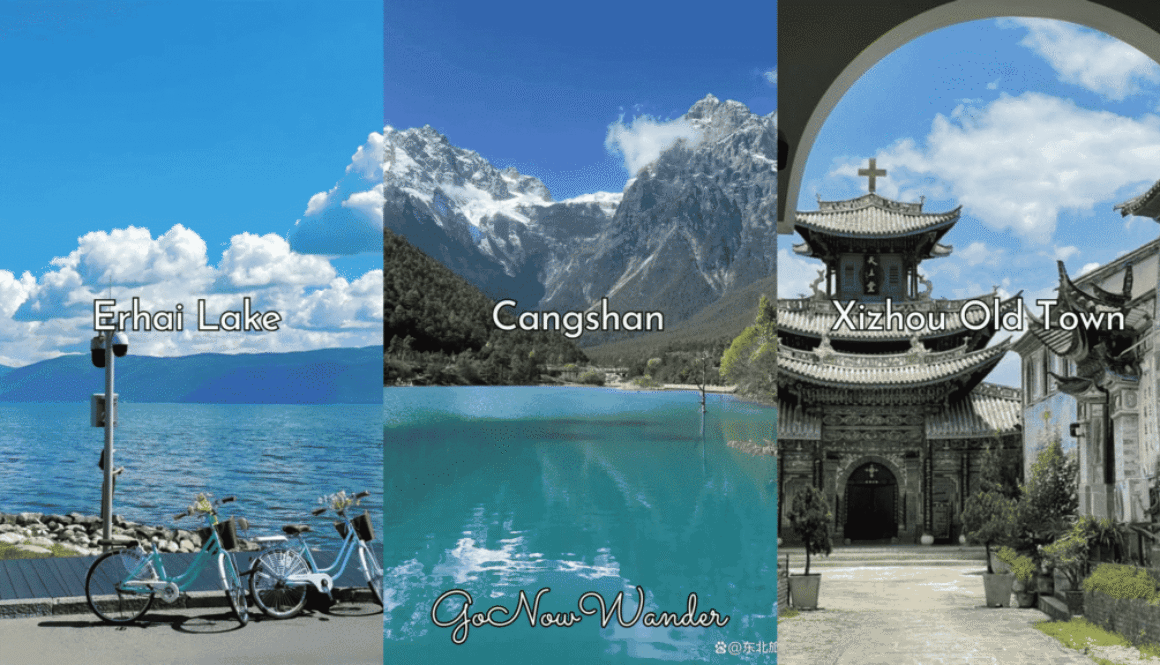
Erhai Lake sits like a still blue heart, and the wind is its pulse. Whether you arrive in spring to breathe in cherry blossoms and young grass, or in autumn to sip a steaming bowl of rice noodles beneath Cangshan’s ridge, Dali never lets you feel like “just a tourist.”
Across my three visits, these scenes still sit vividly in my memory:
- Cycling through Caicun at sunrise, as if the sun was climbing out of the lake
• A quiet boat ride after the rain, the lake smelling faintly of herbs and wet leaves
• Watching layers of cloud peel back slowly from a Cangshan cable car
Dali is a year-round destination, but the best seasons are March–May and September–November: gentle wind, generous sunlight, steady clouds.
Dali weather by season
- Feb–Apr: Blossoms everywhere; a dream season for photography
• May–Jun: Dramatic clouds, incredible mountain-lake light
• Sep–Nov: Clear skies, ideal temperatures; the perfect “live-like-a-local” season
• Winter (Dec–Feb): Crisp, quiet, fewer crowds; the secret season for deep experiences
Unmissable things to do in Dali
- Slow ride around Erhai Lake on an e-scooter
• A sailing or paddle-board experience on quiet days
• Cangshan hiking or taking the cableway into the clouds
• Bai-style tie-dye in Xizhou
• Caicun sunset
• Wandering Dali Old Town’s cafés, bookstores, and indie shops
My favorite ritual as a travel blogger: break the day into gentle pieces. A lakefront walk in the morning, a bowl of Bai-style cold chicken rice noodles in Xizhou at noon, and a sunset at Caicun to close the day. Dali deserves to be experienced slowly, not rushed through as a checklist.
2. Transportation & Culture|Slow Down to See the Real Dali
I always say Dali is the easiest place in Yunnan for foreigners to relax—really relax. Even when my Chinese was clumsy, locals guided me with a kind of soft, effortless hospitality.
How to get to Dali
Flights
• Dali Airport (DLU)
• Direct flights from Kunming, Guangzhou, Chengdu
• International travelers usually fly into Kunming first, then transfer
High-speed rail
• Kunming → Dali: about 2 hours
• Lijiang → Dali: about 1 hour
Within the city
- E-scooter rental is the most flexible option
• Ride-hailing apps are reliable
• Both the East and West sides of Erhai have scenic cycling routes
But the true Dali experience happens only when you slow your pace. Bai people live with a rhythm that feels like wind chimes—unhurried, light, quietly joyful. Sit in a courtyard with a glass of local craft beer, overhear neighbors discussing the day’s wind, and you’ll feel the city doesn’t rush to welcome you. It simply invites you to exist.
3. Food in Dali|Fresh, Clean, Brimming With Sunlight
Dali’s version of Yunnan cuisine tastes especially “clean,” as if polished by wind and lake air.
My personal must-eat list:
- Clay-pot fish: Erhai’s freshness brightens every spoonful
• Grilled rushan cheese: Milky, smoky, comforting
• Chickpea jelly: A bowl that tastes like pure summer
• Bai craft beer: Lighter and breezier than mainstream beers
And maybe it’s my TCM instincts, but I always end up drinking flower teas here—rose, jasmine, Dianhong. They all taste like sunshine filtered through mountains.
4. Culture & Local Life|Understanding Dali’s Soul
Dali is the heartland of the Bai ethnic group. Their aesthetic is naturally elegant:
- White-washed walls, stone, and warm wooden beams
• The Bai “Three Cups of Tea” ritual—bittersweet, reflective, memorable
• A relaxed, elemental approach to life: nature as lifestyle
Dali is also full of new settlers: artists, writers, digital nomads, musicians. Together they create a soft creative ecosystem that feels neither forced nor touristy.
5. Where to Stay in Dali|Foreign-Friendly Hotels
Over my three trips, I tried three different styles of stays.
Luxury Hotels
Hotel Indigo Dali
A beautiful modern stay with sweeping Erhai views, perfect for travelers who love calm, refined spaces.
The Westin Dali
Reliable international standards, great for first-time foreign visitors.
Cunchao Chunhui Seaview Hotel
A tasteful, design-driven lakeside stay.
Mid-range Boutique Stays
Haidilife / Wind Flower Snow Moon Culture Inns
Excellent English communication, warm design, peaceful courtyards. My second trip was in a boutique stay like this, where the sound of wind in the plants became its own kind of music.
Budget Options
Simple, clean guesthouses around the Old Town.
• Chains like Atour, Holiday Inn Express, Hanting
• Friendly hostels in Xizhou, many with English-speaking staff
These are the best places for experiencing “Dali daily life.”
6. How Long to Stay & Who Dali Is Best For
Recommended duration: 3–5 days
If you can, 4 days is the ideal rhythm.
Perfect for travelers who love:
- Slow travel
• Lakeside and mountain scenery
• Cafés, bookstores, local markets
• Light outdoor activities (hiking, cycling)
• Photography
• A softer, alternative lifestyle
Not ideal for
- Travelers who want to “speed-run” 20 attractions in 2 days
Honestly, Dali is the place where I always catch myself thinking:
Maybe I should stay just one more day.
7. Must-Do & Hidden-Gem Experiences (with Fees)
- Bai tie-dye workshop in Xizhou
• Dawn fog at Erhai around 6 AM
• Sunset behind the wheat fields of Xizhou
• Cangshan Cableway + cloud-sea views
• Creative weekend markets near the Old Town
Fees:
• Tie-dye workshop: 60–120 RMB
• Cangshan Cableway: 190–320 RMB depending on route
• Boat experience on Erhai: 150–400 RMB (varies by type)
8. Dali Travel Budget (RMB + USD)
Accommodation
- Luxury: 1200–2500 RMB/night (165–350 USD)
• Mid-range: 450–900 RMB/night (60–125 USD)
• Budget: 200–350 RMB/night (27–50 USD)
Food
- Average meals: 40–120 RMB
• Lakefront restaurants: 150–250 RMB
Transportation
- E-scooter rental: 80–150 RMB/day
• Taxi starting fare: around 8 RMB
9. Useful Tips for Foreign Travelers
- Sunlight is strong year-round
• Windy near the lake; big day-night temperature swings
• Summer showers appear suddenly
• Roads around the lake get slippery in rain
• No e-scooters allowed inside Old Town
• Visa/Mastercard increasingly accepted; WeChat/Alipay now allow international card binding
10. Best Photography Spots
- Caicun Pier at sunset (my top recommendation)
• South Gate of the Old Town in early morning light
• Wheat fields + Bai architecture in Xizhou
11. Easy Route Combinations
- Dali + Lijiang|5-day soft adventure
• Dali + Shaxi + Lijiang|6–7 days for culture lovers
• Dali + full Erhai loop|3–4 days slow-travel trip
Why Yunnan Is a Traveler’s Paradise
Yunnan has always felt to me like a place where the sky keeps repainting itself. The clouds drift low and full, shifting the color of the mountains from one moment to the next. A beam of light slips across a lake, and suddenly the whole landscape breathes differently.
For first-time visitors, there’s usually the same quiet shock:
this corner of China gathers seasons, cultures, languages, mountains, lakes, and rainforests into one astonishing piece of land.
When you stand in Yunnan, the air has a calm generosity to it. Life moves at a pace that quietly rebels against the world’s obsession with “fast,” yet it never feels slow in a dull way. It feels intentional. Balanced. As if the land is whispering,
you don’t have to rush; you’re allowed to feel again.
Before coming here, many international travelers start with the factual introduction on Wikipedia — I did the same on my first trip:
Yunnan – https://en.wikipedia.org/wiki/Yunnan
It’s a great overview: ethnic diversity, dramatic geography, UNESCO-level biodiversity, alpine to tropical climates…
But the real Yunnan is softer, deeper, and infinitely more human than any page can capture.
When you walk in Dali, those facts turn into sensations.
The wind carries the smell of the lake.
The stone alleys glow under late-afternoon sun.
People smile like they have time — real time — to look at you.
I remember sitting by Erhai Lake when an elderly woman sat next to me. She told me that living near the water helps her live longer. In that moment, I understood something:
Yunnan isn’t just beautiful; it rearranges your sense of what a good life feels like.
Lijiang offers another rhythm entirely. Wooden houses framed by mountains, music drifting from narrow lanes, Naxi elders inviting you to sit and talk as if you’ve known each other for years.
And then there’s Shangri-La.
Morning light there doesn’t rise; it unfurls — gold and cold and wide. Every breath feels like it resets your system.
Travel south to Xishuangbanna, and you step into a rainforest pulse. The air thickens, the plants almost glow, and you suddenly understand why this region holds some of the richest biodiversity on earth.
Yunnan is endlessly varied, endlessly generous.
You don’t need perfect planning.
You don’t need to rush between landmarks.
You just need to show up — open, curious, unhurried — and the place will take care of the rest.
Maybe that’s why so many travelers leave a quiet room in their hearts for Yunnan, even long after the trip ends.
Ultimate Yunnan Overview | 18 Must-Visit Destinations
If it’s your first time visiting Yunnan, you might feel overwhelmed by all the different itineraries: 3-day tours, 5-day tours, 8-day tours… Many attractions overlap, and it’s hard to know where to start. As someone who studied Chinese medicine in Kunming and has traveled through Yunnan three times, I want to share a clear way to approach the province: Yunnan’s most worthwhile destinations can be divided into four tiers, helping you capture the essence while leaving room for deeper exploration.
Top 4 Essential Destinations | Must-See Highlights
These are the most iconic destinations in Yunnan, combining breathtaking landscapes and rich cultural experiences. No matter how many days you have, they’re absolutely worth visiting.
- Dali: Erhai Lake, Cangshan Mountain, slow living, Bai culture. Perfect for slow travel and photography. Recommended stay: 3–5 days.
- Lijiang: Ancient town, Jade Dragon Snow Mountain, Blue Moon Valley, Shuhe Ancient Town — a blend of three travel rhythms. Recommended stay: 3–4 days.
- Shangri-La: Tibetan landscapes, Pudacuo National Park, Songzanlin Monastery. Deep nature and cultural immersion. Recommended stay: 3–5 days.
- Xishuangbanna: Tropical rainforest, Wild Elephant Valley, Dai culture, botanical gardens. Rich in ecology and ethnic culture. Recommended stay: 2–4 days.
These destinations form Yunnan’s “core must-visit” experiences — the quickest way to understand its mountains, rivers, and ethnic diversity.
Gateway City | Kunming
Kunming serves as the main transport hub and entry point to Yunnan, but it also has its own charm: Stone Forest, Dianchi Lake, and a unique city lifestyle.
- If your time is limited, Kunming is ideal for a short stop to experience Yunnan’s blend of urban life and nature.
- Recommended stay: 1–2 days. For those interested in culture, botanical gardens, and night markets, a deeper experience of 3 days works well.
Deep & Essential Highlights | Yunnan’s Inland Secrets
For travelers who love slow travel, nature, and cultural exploration, these destinations offer Yunnan at its most profound:
- Tengchong: Volcanic hot springs, Heshun Ancient Town — a mix of wellness and historical culture.
- Lugu Lake: Serene lake scenery and Mosuo culture — ideal for slow travel and photography.
- Yuanyang Rice Terraces: Hani ethnic terraces — a perfect blend of culture and photography.
- Nujiang (Nu River): Canyons, pristine villages, and ethnic exploration.
- Tiger Leaping Gorge: High mountains, deep gorges, trekking adventures, spectacular views.
Typical stay: 2–4 days. Best for travelers interested in nature, ethnic culture, and outdoor activities.
Advanced / Specialty Destinations | For the Curious Explorer
If you’ve already covered the core and deep highlights, or want a more specialized, off-the-beaten-path experience, these destinations are excellent choices:
- Shaxi Ancient Town: Historic town along the Tea Horse Road.
- Meili Snow Mountain: Snow-capped peaks and photography paradise.
- Jianshui Ancient Town: Historic streets and cultural exploration.
- Luoping Canola Fields: Spring flower photography hotspot.
- Puzhehei: Karst lakes and rural scenery.
- Shika Snow Mountain: Alpine snow scenery and trekking.
- Cangyuan (Wa Culture): Authentic ethnic culture immersion.
These sites are not necessarily for first-time visitors, but they’re treasures for photographers, culture enthusiasts, and deep travelers.
Summary & Travel Recommendations
- First-time in Yunnan: Focus on the Top 4 Essential Destinations + Kunming (5–10 days).
- With more time and interest: Add the Deep & Essential Highlights (Tengchong, Lugu Lake, Yuanyang, Nujiang, Tiger Leaping Gorge).
- For specialty travel / photography / ethnic culture: Include the Advanced / Specialty Destinations.
This tiered approach allows you to experience the most worthwhile and complete 18 destinations in Yunnan, balancing pace and depth.
Yunnan is more than just a checklist — it invites you to slow down, feel the wind, the light, and the stories.