
Cangyuan Travel Guide | Must-Visit Destination in Yunnan’s 18-Stop Adventurev
Cangyuan Travel Guide|Wa Ethnic Culture & Pristine Highland Secrets
1. Scenery & Experience|Mountains, Valleys, and Wa Culture
Cangyuan, located in southwest Yunnan, is a primary settlement of the Wa ethnic group and one of Yunnan’s most unspoiled minority regions. Here, the mountains are lush, valleys are deep, and the air is so pure it feels filtered by mountain springs.
The first time I visited Cangyuan, I followed a local guide into a village. The ground beneath my feet was soft earth, the air filled with birdsong and the gentle flow of streams. Misty high mountains loomed in the distance, creating a sense of being cut off from the world, yet profoundly moved—nature and original culture intertwined seamlessly.
Best Time to Visit ( Cangyuan best travel time)
- Oct–Apr: Dry season, clear mountain colors.
- May–Sep: Rainy season, lush greenery and spectacular waterfalls, but roads can be slippery.
Must-Do Activities ( Things to do in Cangyuan )
- Visit Wa ethnic villages and experience local customs.
- Highland trekking and exploration of pristine forests.
- Observe traditional bamboo houses and architecture.
- Interact with village elders to learn about local traditions and festivals.
2. Key Spots & Personal Travel Experience
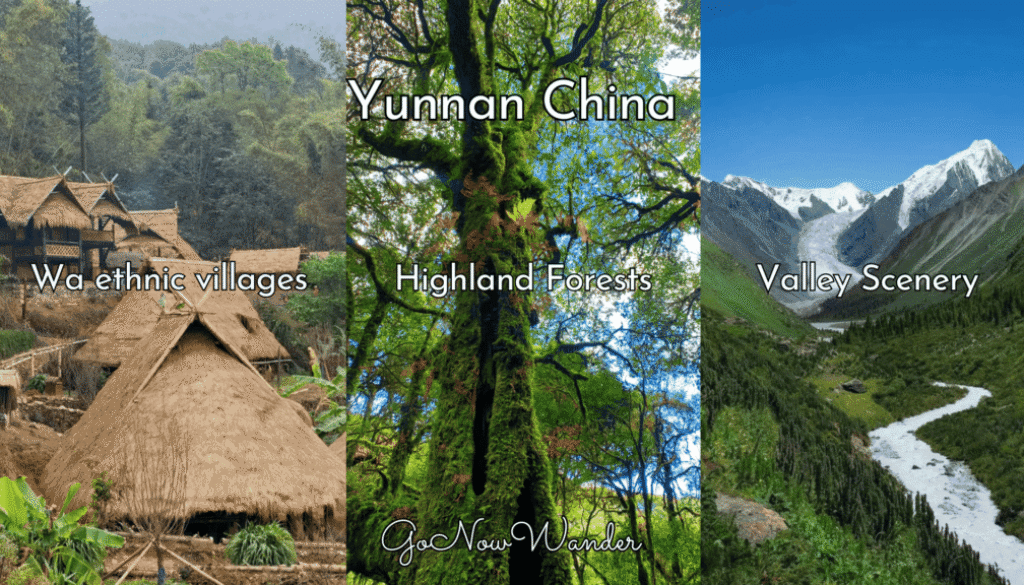
- Wa Villages: Experience bamboo house living, weaving, and traditional farming culture.
- Highland Forests: Trekking through “natural oxygen bars.”
- Valley Scenery: Early morning mist and sunrise reflections are breathtaking.
I still vividly remember my first sunrise by the river: the water mirrored the pink-orange sky, and villagers slowly moved between bamboo houses. The entire scene was as still and serene as a paused movie.
3. Transportation & Cultural Highlights(Cangyuan transportation)
- From Lincang → Cangyuan: Approx. 3–4 hours by private car or local tour.
- Within the area: Walking between villages is ideal; some spots accessible by e-bike or motorbike.
- Culture: Wa ethnic lifestyle is harmonious with nature—warm, welcoming, yet unhurried.
4. Food|Wa Highland Flavors (Cangyuan food )
- Roasted whole fish: naturally fresh from local rivers.
- Bamboo-tube rice: aromatic with a unique texture.
- Wild vegetables and mountain mushrooms.
- Handcrafted Wa rice wine: slightly sweet and comforting.
5. Culture & Human Touch (Wa ethnic culture )
- Bamboo Houses: Elevated design adapts to mountain humidity.
- Handicrafts: Weaving, wood carving, bamboo tools.
- Festivals: Wa New Year, Mountain Worship Festival, traditional dance and song.
- Lifestyle: Farming, hunting, bamboo harvesting—living naturally in tune with the land.
6. Accommodation Recommendations
Luxury
- Resorts around Lincang or Cangyuan, some offering mountain or valley views.
Mid-Range Homestays
- Village guesthouses with English-speaking hosts.
- Bamboo house style combined with modern comfort.
Budget
- Simple hotels or youth hostels, clean and safe.
- Family-run guesthouses provide authentic local experiences.
7. Suggested Stay & Suitable Travelers
- Recommended Duration: 2–3 days.
- Best for:
- Travelers interested in pristine landscapes and minority culture.
- Hiking enthusiasts and photographers.
- Those seeking tranquil, highland retreats.
- Not ideal for:
- People sensitive to bumpy mountain roads.
- Travelers preferring urban convenience or fast-paced trips.
8. Must-Do Experiences & Hidden Gems
- Visit Wa bamboo houses and experience village life.
- Trek the highland forests, capture river valley landscapes.
- Taste bamboo-tube rice and handcrafted rice wine.
- Participate in Wa festivals (like Mountain Worship Festival, dates vary).
Entrance Fees / Costs
- Village visits: free
- Selected cultural experiences: 50–100 RMB (~7–15 USD)
9. Travel Budget Reference
- Accommodation:
- Luxury: 600–1,200 RMB (~85–170 USD)
- Mid-range: 350–700 RMB (~50–100 USD)
- Budget: 150–300 RMB (~22–45 USD)
- Food: 30–100 RMB (~5–15 USD) per person
- Transportation: Private car or motorbike 100–200 RMB (~15–30 USD)
10. Travel Tips
- High-altitude UV is strong; bring sunscreen.
- Roads can be slippery during rainy season.
- Respect local customs and avoid photographing villagers without permission.
- Temperatures vary; pack layers for warmth.
11. Best Photo Spots
- River valleys at sunrise with morning mist.
- Bamboo villages and farming scenes.
- Mountain streams and waterfalls.
- Wa festival performances and handicraft displays.
12. Nearby Combination Routes
- Cangyuan + Lincang + Tengchong (4–5 days): Minority culture and hot springs & snow mountains.
- Cangyuan + Nujiang Grand Canyon (3–4 days): Highland secrets meet dramatic canyon scenery.
- Cangyuan + Pu’er Tea Mountains (3 days): A combination of culture, nature, and pristine landscapes.
Why Yunnan Is a Traveler’s Paradise
Yunnan has always felt to me like a place where the sky keeps repainting itself. The clouds drift low and full, shifting the color of the mountains from one moment to the next. A beam of light slips across a lake, and suddenly the whole landscape breathes differently.
For first-time visitors, there’s usually the same quiet shock:
this corner of China gathers seasons, cultures, languages, mountains, lakes, and rainforests into one astonishing piece of land.
When you stand in Yunnan, the air has a calm generosity to it. Life moves at a pace that quietly rebels against the world’s obsession with “fast,” yet it never feels slow in a dull way. It feels intentional. Balanced. As if the land is whispering,
you don’t have to rush; you’re allowed to feel again.
Before coming here, many international travelers start with the factual introduction on Wikipedia — I did the same on my first trip:
Yunnan – https://en.wikipedia.org/wiki/Yunnan
It’s a great overview: ethnic diversity, dramatic geography, UNESCO-level biodiversity, alpine to tropical climates…
But the real Yunnan is softer, deeper, and infinitely more human than any page can capture.
When you walk in Dali, those facts turn into sensations.
The wind carries the smell of the lake.
The stone alleys glow under late-afternoon sun.
People smile like they have time — real time — to look at you.
I remember sitting by Erhai Lake when an elderly woman sat next to me. She told me that living near the water helps her live longer. In that moment, I understood something:
Yunnan isn’t just beautiful; it rearranges your sense of what a good life feels like.
Lijiang offers another rhythm entirely. Wooden houses framed by mountains, music drifting from narrow lanes, Naxi elders inviting you to sit and talk as if you’ve known each other for years.
And then there’s Shangri-La.
Morning light there doesn’t rise; it unfurls — gold and cold and wide. Every breath feels like it resets your system.
Travel south to Xishuangbanna, and you step into a rainforest pulse. The air thickens, the plants almost glow, and you suddenly understand why this region holds some of the richest biodiversity on earth.
Yunnan is endlessly varied, endlessly generous.
You don’t need perfect planning.
You don’t need to rush between landmarks.
You just need to show up — open, curious, unhurried — and the place will take care of the rest.
Maybe that’s why so many travelers leave a quiet room in their hearts for Yunnan, even long after the trip ends.
Ultimate Yunnan Overview | 18 Must-Visit Destinations
If it’s your first time visiting Yunnan, you might feel overwhelmed by all the different itineraries: 3-day tours, 5-day tours, 8-day tours… Many attractions overlap, and it’s hard to know where to start. As someone who studied Chinese medicine in Kunming and has traveled through Yunnan three times, I want to share a clear way to approach the province: Yunnan’s most worthwhile destinations can be divided into four tiers, helping you capture the essence while leaving room for deeper exploration.
Top 4 Essential Destinations | Must-See Highlights
These are the most iconic destinations in Yunnan, combining breathtaking landscapes and rich cultural experiences. No matter how many days you have, they’re absolutely worth visiting.
- Dali: Erhai Lake, Cangshan Mountain, slow living, Bai culture. Perfect for slow travel and photography. Recommended stay: 3–5 days.
- Lijiang: Ancient town, Jade Dragon Snow Mountain, Blue Moon Valley, Shuhe Ancient Town — a blend of three travel rhythms. Recommended stay: 3–4 days.
- Shangri-La: Tibetan landscapes, Pudacuo National Park, Songzanlin Monastery. Deep nature and cultural immersion. Recommended stay: 3–5 days.
- Xishuangbanna: Tropical rainforest, Wild Elephant Valley, Dai culture, botanical gardens. Rich in ecology and ethnic culture. Recommended stay: 2–4 days.
These destinations form Yunnan’s “core must-visit” experiences — the quickest way to understand its mountains, rivers, and ethnic diversity.
Gateway City | Kunming
Kunming serves as the main transport hub and entry point to Yunnan, but it also has its own charm: Stone Forest, Dianchi Lake, and a unique city lifestyle.
- If your time is limited, Kunming is ideal for a short stop to experience Yunnan’s blend of urban life and nature.
- Recommended stay: 1–2 days. For those interested in culture, botanical gardens, and night markets, a deeper experience of 3 days works well.
Deep & Essential Highlights | Yunnan’s Inland Secrets
For travelers who love slow travel, nature, and cultural exploration, these destinations offer Yunnan at its most profound:
- Tengchong: Volcanic hot springs, Heshun Ancient Town — a mix of wellness and historical culture.
- Lugu Lake: Serene lake scenery and Mosuo culture — ideal for slow travel and photography.
- Yuanyang Rice Terraces: Hani ethnic terraces — a perfect blend of culture and photography.
- Nujiang (Nu River): Canyons, pristine villages, and ethnic exploration.
- Tiger Leaping Gorge: High mountains, deep gorges, trekking adventures, spectacular views.
Typical stay: 2–4 days. Best for travelers interested in nature, ethnic culture, and outdoor activities.
Advanced / Specialty Destinations | For the Curious Explorer
If you’ve already covered the core and deep highlights, or want a more specialized, off-the-beaten-path experience, these destinations are excellent choices:
- Shaxi Ancient Town: Historic town along the Tea Horse Road.
- Meili Snow Mountain: Snow-capped peaks and photography paradise.
- Jianshui Ancient Town: Historic streets and cultural exploration.
- Luoping Canola Fields: Spring flower photography hotspot.
- Puzhehei: Karst lakes and rural scenery.
- Shika Snow Mountain: Alpine snow scenery and trekking.
- Cangyuan (Wa Culture): Authentic ethnic culture immersion.
These sites are not necessarily for first-time visitors, but they’re treasures for photographers, culture enthusiasts, and deep travelers.
Summary & Travel Recommendations
- First-time in Yunnan: Focus on the Top 4 Essential Destinations + Kunming (5–10 days).
- With more time and interest: Add the Deep & Essential Highlights (Tengchong, Lugu Lake, Yuanyang, Nujiang, Tiger Leaping Gorge).
- For specialty travel / photography / ethnic culture: Include the Advanced / Specialty Destinations.
This tiered approach allows you to experience the most worthwhile and complete 18 destinations in Yunnan, balancing pace and depth.
Yunnan is more than just a checklist — it invites you to slow down, feel the wind, the light, and the stories.